Does Homeowners Insurance Cover Pool Leaks?
Sometimes yes, often no — it depends on what caused the leak and what got damaged. Here’s how homeowners insurance usually treats pool leaks in Arizona.
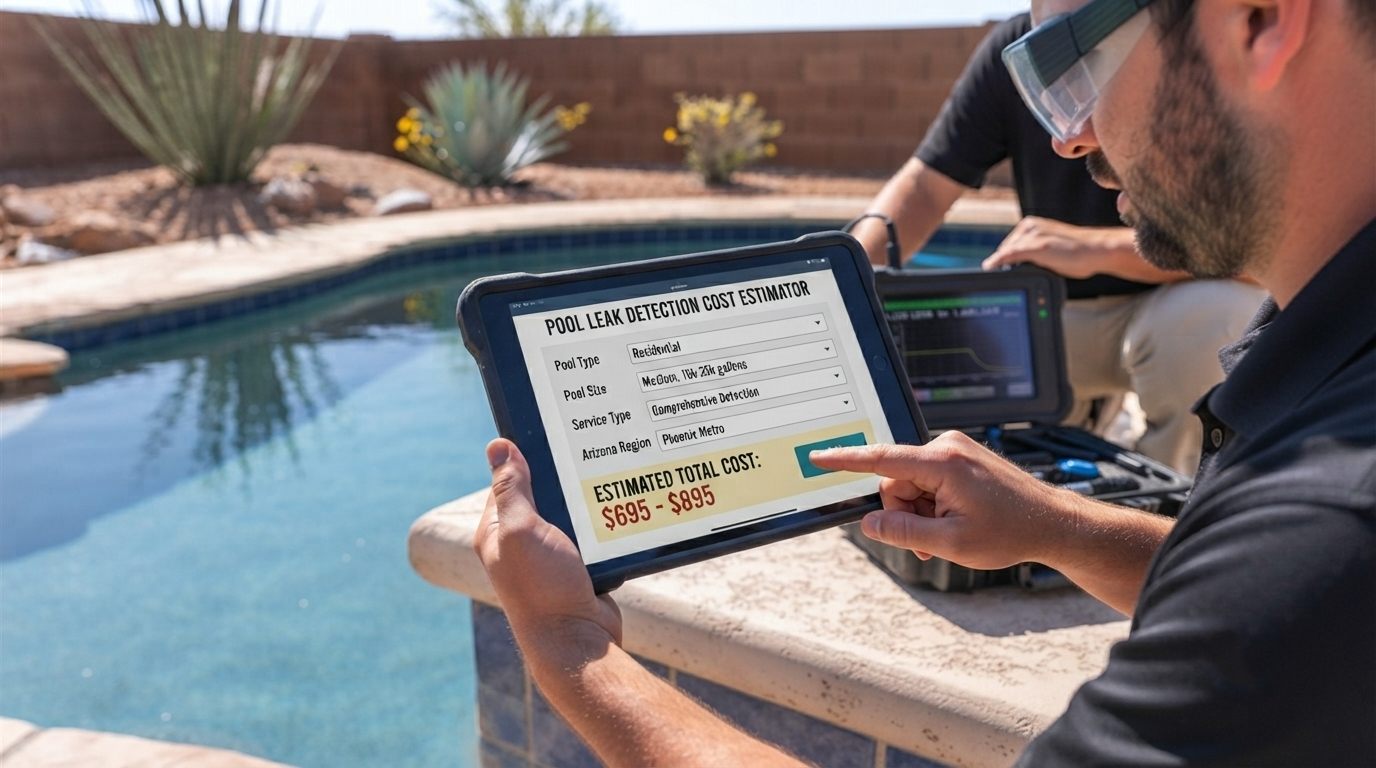
Homeowners insurance usually won’t cover the leak repair itself if it’s from gradual wear or lack of maintenance. It’s more likely to help when a leak causes sudden, accidental damage to covered property — and some policies cover the cost to access the leak (like tearing out a deck). Coverage varies a lot, so always check your specific policy.
Wondering whether homeowners insurance covers pool leaks? The honest answer is “it depends” — mostly on what caused the leak and what it damaged. Insurance tends to cover sudden, accidental events, not slow wear and tear. Here’s a plain-English breakdown so you know what to expect before you call your insurer.
This is general information, not insurance advice — your policy and situation are what actually decide coverage. Always confirm with your own insurer.
What’s More Likely to Be Covered
Policies differ, but coverage is more common when a leak is sudden and accidental. Situations that may be covered include:
- Sudden, accidental damage caused by the leak — for example, water that suddenly damages a covered structure.
- Damage to the home or other structures from escaping water, depending on your policy’s terms.
- Access costs — some policies help pay to tear out and replace decking or concrete to reach the leak, even if the pipe itself isn’t covered.
- Damage from a covered peril — if something like a covered event caused the pipe to fail.
What’s Usually Not Covered
Most standard policies exclude the things that cause the majority of pool leaks:
- Gradual leaks and slow seepage — the classic “wear and tear” exclusion.
- Lack of maintenance — damage insurers feel could have been prevented.
- The pool structure itself — many policies treat the pool shell and plumbing as excluded or limited.
- The repair of the leaking pipe or fitting — often on you, even when related damage is covered.
In other words, the slow underground leak that’s most common in Arizona pools is usually not covered — but the sudden damage it might cause could be. This is exactly why acting early matters, since a leak that’s left alone can get worse and cause the kind of damage that’s harder to claim.
Why Detection Helps a Claim
If you do file, documentation is everything — and a professional detection provides it. A written report that identifies the leak, its cause, and the date gives your insurer clear evidence to work from. Trying to claim on a vague “the pool is losing water” is far weaker than a documented, located leak. That report also helps separate what insurance might cover from what you’ll pay out of pocket, which our guides to detection cost and repair cost can help you estimate.
What to Do If You Think You Have a Claim
A sensible order of operations protects both your pool and your claim:
- Document everything — photos, dates, and your water-loss notes.
- Get a professional detection so you have a written report of the leak and its cause.
- Read your policy or call your insurer to ask specifically about water-damage and pool coverage.
- Ask about access costs — even if the pipe isn’t covered, tear-out and replacement sometimes are.
Once you know where the leak is, you can weigh your options clearly — here’s what happens after a pool leak is found. And when you’re ready to get that documented diagnosis, a professional pool leak detection service gives you the report a claim depends on.
Frequently Asked Questions
Does insurance cover a slow pool leak?
Usually not. Slow, gradual leaks fall under wear-and-tear exclusions in most standard policies. Coverage is more likely for sudden, accidental damage than for a leak that developed over time.
Will insurance pay to find the leak?
Detection is typically an out-of-pocket cost, but it’s worth it — the written report is what supports any claim on the resulting damage. Some policies also help with access costs like removing decking.
Does it cover water damage to my house from the leak?
Possibly, if the damage was sudden and accidental and the source isn’t excluded. Damage to covered structures is more likely to qualify than the pool plumbing itself. Check your policy’s water-damage terms.
Should I file a claim for a pool leak?
It depends on the cost versus your deductible and whether the cause is covered. A documented detection helps you decide — and gives your insurer something concrete to evaluate.
The Bottom Line
Insurance rarely covers a gradual leak repair, but may help with sudden damage or access costs — and a documented detection is what makes any claim stronger. Always confirm with your own insurer.
Not sure what’s leaking yet? Take our free 60-second assessment to see the likely source before you talk to anyone.