Pool Leak Detection Red Flags to Watch For
Most leak detection companies are honest — but a few cut corners or oversell. Here are the warning signs that tell you to slow down and ask more questions.
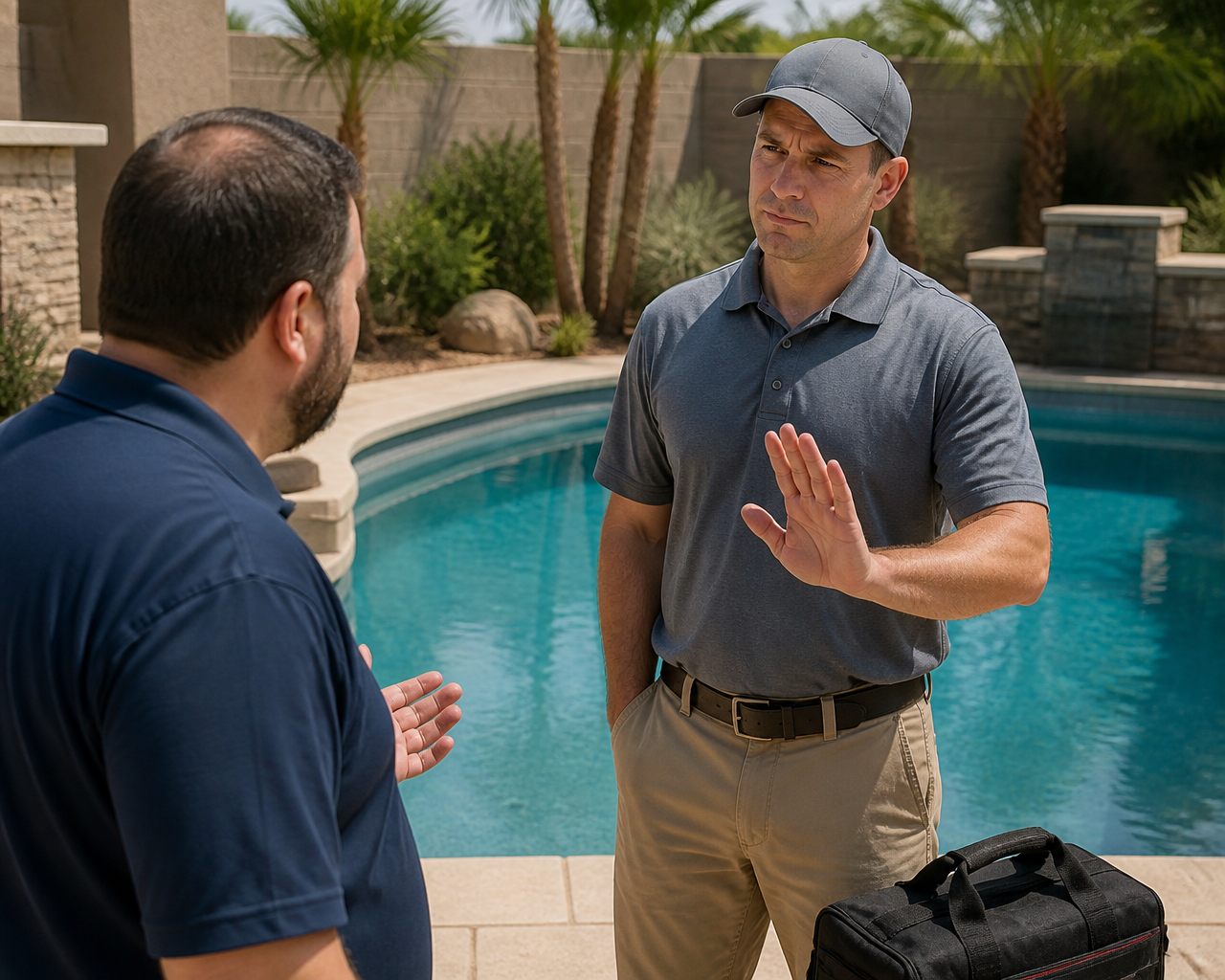
The biggest pool leak detection red flags are a company that can’t explain how it finds leaks, one that leads with “we need to drain the pool” before any testing, no written report, no license or insurance, and high-pressure sales pushing you into an immediate expensive repair. Any of these is a reason to pause and get a second opinion.
Hiring the wrong company can cost you more than the leak itself. Knowing the common pool leak detection red flags helps you spot a corner-cutter or an upsell artist before you’ve handed over a dime. Most companies are honest — but these warning signs are worth watching for at every stage.
Red flags show up in three places: before the visit, during the work, and in the quote you’re handed. Here’s what to watch for in each.
Red Flags Before They Arrive
You can screen out a lot of trouble on the phone. Be wary if a company:
- Won’t explain how they find leaks. A real pro will mention pressure, dye, and acoustic testing. “We’ll just take a look” is not a method.
- Can’t or won’t quote a clear fee. Vague pricing up front often means surprise charges later.
- Isn’t licensed or insured. That leaves you exposed if something is damaged during testing.
- Pressures you to book immediately. Urgency is a sales tactic, not a diagnosis.
These are exactly the things a short list of questions to ask before hiring will surface in a two-minute call.
Red Flags During the Job
Once someone’s at your pool, watch how they actually work. Warning signs include:
- They lead with “we need to drain it.” Modern detection finds most leaks with the pool full — draining first, before testing, is a major red flag.
- No real testing. If they poke around and declare a leak without pressure or dye testing, they’re guessing.
- They can’t show you the exact spot. A vague “it’s somewhere in the plumbing” isn’t a located leak.
- They jump straight to a big repair. Diagnosing and then immediately upselling a major excavation, before confirming the source, is a classic move.
Real detection is a methodical process — here’s how pool leak detection actually works, so you know what good looks like.
Red Flags in the Quote or Report
The paperwork tells its own story. Be cautious if:
- There’s no written report. You should leave with the leak’s location and a recommended fix in writing.
- The price is wildly off. A quote far above normal is a warning — and one far below can mean a “look” instead of a real test. Compare against typical detection costs.
- They pressure you to sign now. “This price is only good today” is a sales gimmick, not a fair offer.
- The repair and detection are bundled with no breakdown. You want to see what you’re paying to find versus fix — that’s the point of separating detection from repair.
How to Protect Yourself
Avoiding a bad experience comes down to a few habits:
- Ask how they find leaks before booking, and expect a clear answer.
- Get the fee and what’s included in writing up front.
- Insist on being shown the exact leak and a written report.
- Don’t approve a big repair the same day you get the diagnosis — take time to compare.
Do those four things and most red flags never get a chance to cost you. When you want a straightforward, no-pressure diagnosis, a reputable professional pool leak detection service will happily meet every one of these standards.
Keep reading: What Happens After a Pool Leak Is Found
Frequently Asked Questions
Is wanting to drain my pool always a red flag?
Not always — a few structural cases genuinely need it. But it should come after testing, not before. Leading with “we have to drain it” before running any test is the red flag.
How do I know if a quote is fair?
Compare it against typical detection pricing and make sure it’s itemized. A fair quote explains what’s included and separates the cost to find the leak from the cost to fix it.
What if I already hired a company that seems shady?
You can pause before approving any repair. Ask for the written findings, and get a second opinion before committing to a big fix — a second detection is far cheaper than a wrong repair.
Are cheap detection deals a scam?
Not necessarily, but a rock-bottom price can mean a quick look instead of real testing. Ask exactly what’s included and whether you get a written report before assuming it’s a bargain.
The Bottom Line
Watch for vague methods, “drain it first,” no written report, and high-pressure sales — those red flags separate the guessers from the pros.
Want to walk into any quote already informed? Take our free 60-second assessment to see the likely source of your leak first.