What Is Pool Leak Detection?
How the pros find exactly where your pool is losing water — without guessing or tearing up your yard.
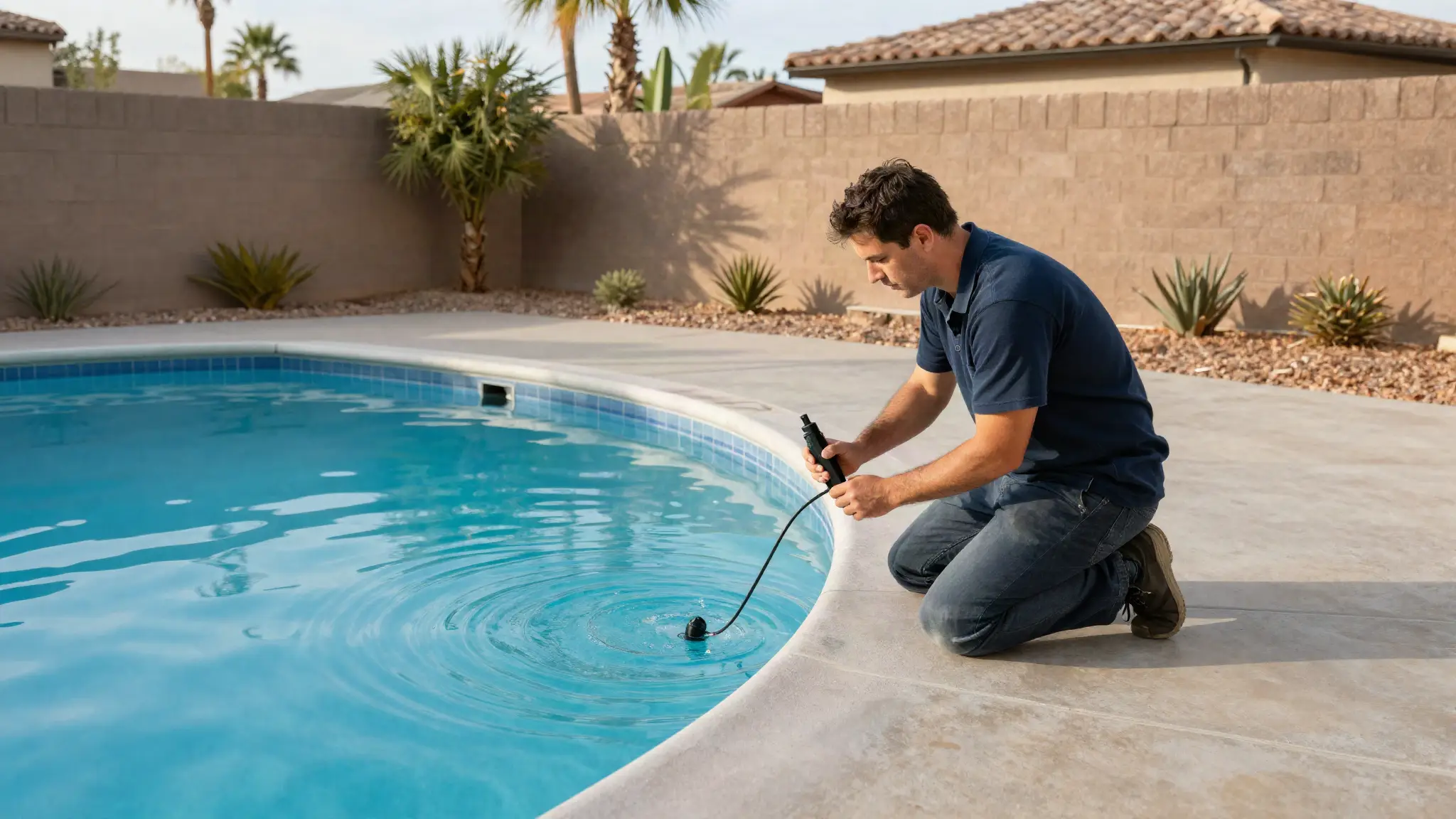
Pool leak detection is the process a specialist uses to find exactly where your pool is losing water. Using pressure tests, dye tests, and electronic listening equipment, they pinpoint whether the water is escaping from the plumbing, the equipment, or the pool structure — so the right repair can be made the first time, without guessing.
If your pool keeps dropping and you’re not sure why, pool leak detection is how you get a straight answer. In plain terms, it’s the process a trained specialist uses to find exactly where your pool is losing water — the plumbing, the equipment pad, or the pool shell itself — before anyone spends money on a repair.
Think of it as diagnosis before treatment. A doctor doesn’t prescribe surgery based on a guess, and a good pool pro doesn’t recommend digging up your yard or replacing a pump until they’ve confirmed where the water is actually going. That one step — finding the leak first — is what separates a fair repair bill from an expensive mistake.
What Pool Leak Detection Actually Means
Every pool loses a little water to evaporation and splash-out. A leak is different: it’s water escaping through a crack, a loose fitting, a worn seal, or a damaged pipe. Pool leak detection is simply the work of locating that exact spot.
The reason it’s a real skill is that water is sneaky. A wet area in your yard doesn’t mean the leak is right underneath it — water travels through soil and along pipes before it surfaces. So the job isn’t “spot the puddle.” It’s narrowing down the source with the right tests.
What a Specialist Does During a Detection
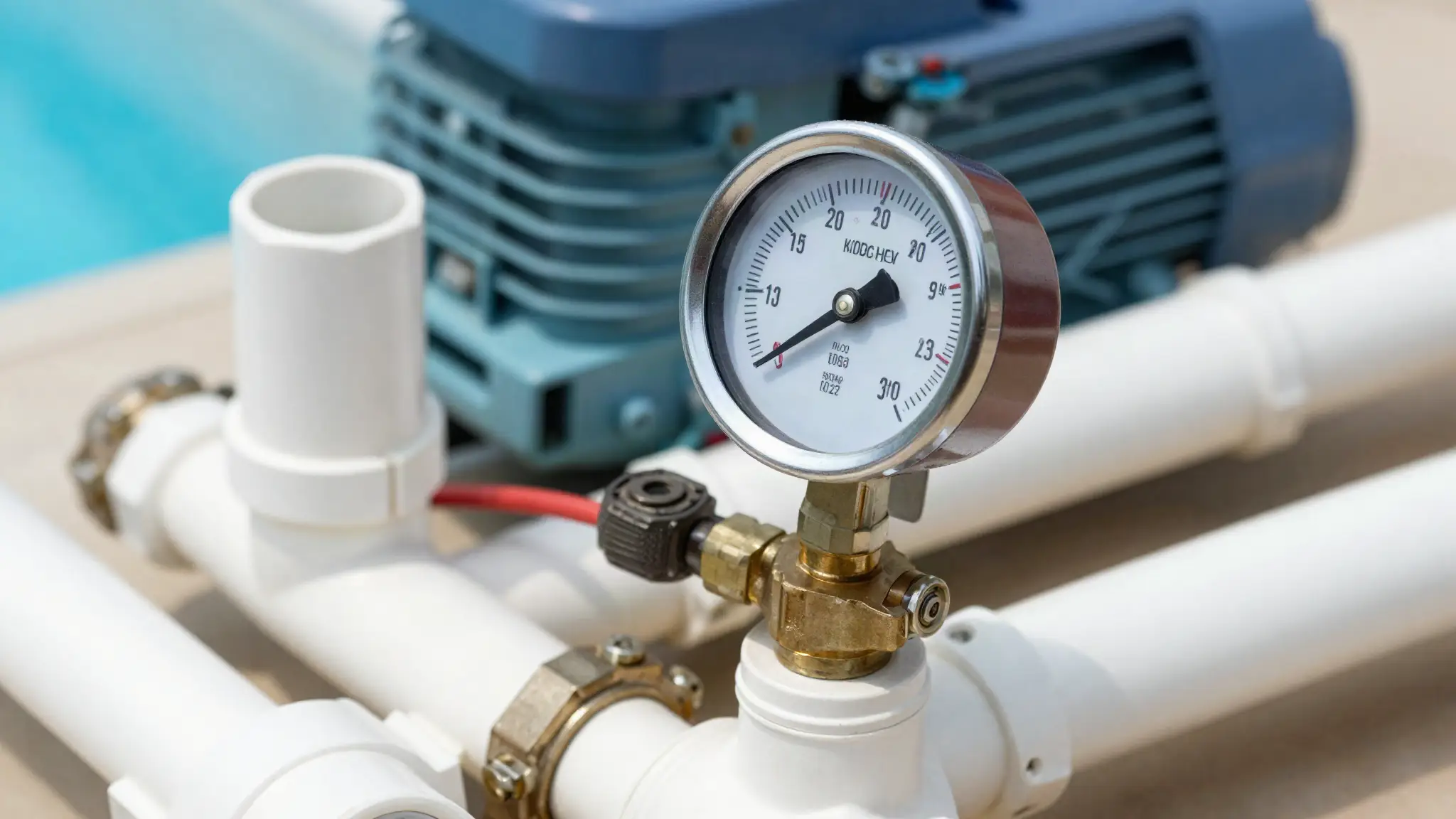
Depending on your pool and symptoms, a technician may use a few different methods:
- Pressure testing — sealing off plumbing lines to see if they hold pressure, which points to leaks in return lines, suction lines, and underground pipes.
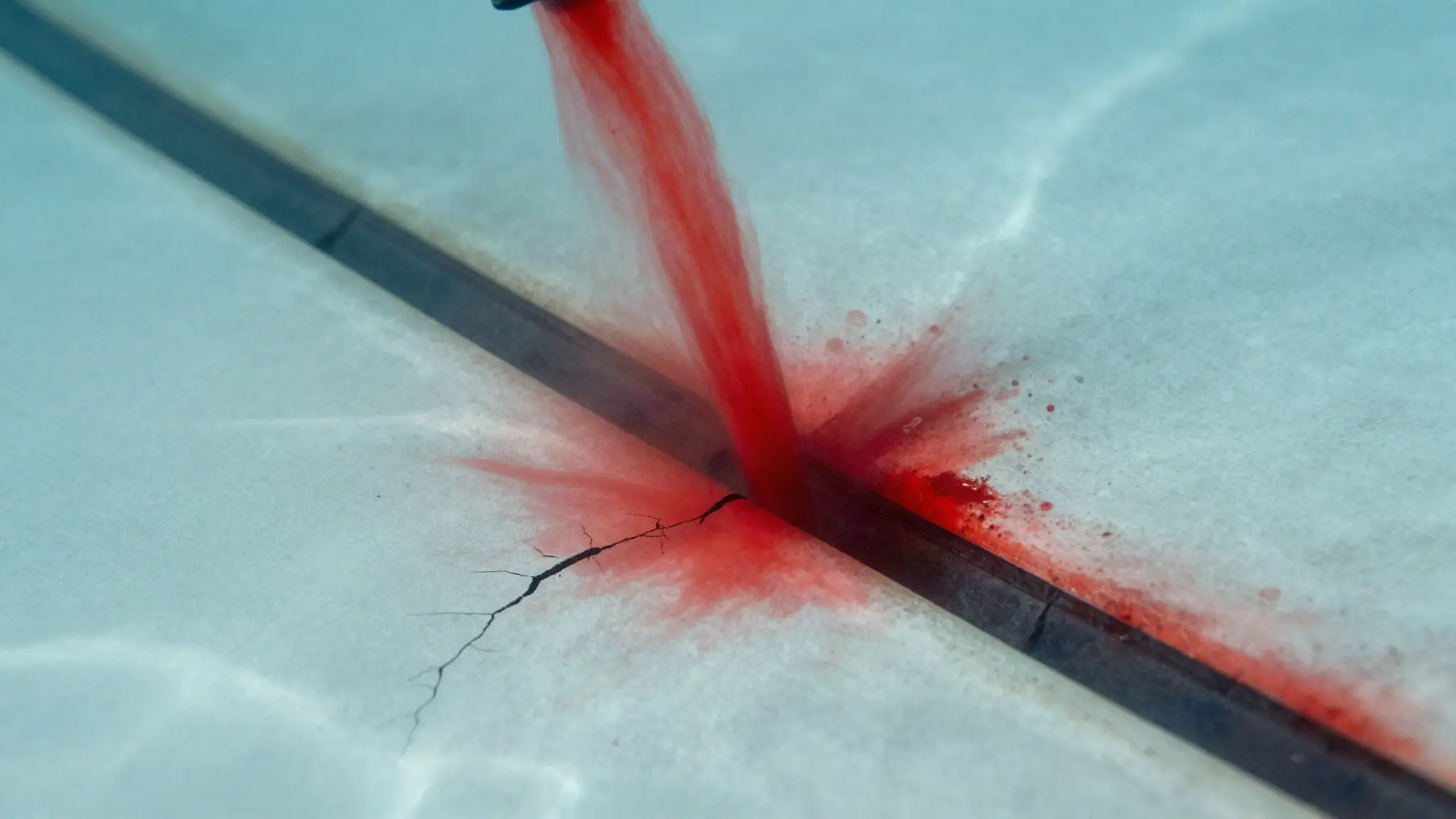
- Dye testing — releasing a small amount of dye near a suspected spot to see if water is pulling through a crack, skimmer, light, or fitting.
- Electronic and acoustic listening — specialized equipment that picks up the faint sound of water escaping, helping pinpoint a leak without unnecessary digging.
The goal isn’t to use every tool available — it’s to pick the right test for your symptoms. If you want the full step-by-step, our complete walkthrough of how pool leak detection works covers it in detail.
Why Finding the Leak Comes Before Fixing It
Here’s where a lot of money gets wasted. When a pool loses water, it’s tempting to assume the worst and start replacing things — a new pump, a new liner, a big patch job. But if you replace a pump that was working fine, you’ve spent money and still have a leak.
Detecting the leak first tells you three things:
- Where the water is actually going
- What the real problem is
- What a fair repair should cost
That’s why detection and repair are two separate steps — and why the order matters. Once the leak is found, our guide to what pool leak repairs cost helps you judge whether an estimate is reasonable.
How Do You Know If You Even Need It?
You don’t call for detection just because the water dropped a little on a hot week. It’s worth looking into when you notice any of these:
- Water loss faster than normal evaporation
- You’re constantly topping the pool off
- Wet areas that won’t dry out
- An equipment pad that stays damp
- A water bill that jumps for no clear reason
Not sure if what you’re seeing is a real leak? Our guide to the warning signs your pool has a leak walks through exactly what to look for.
Can You Check for a Leak Yourself First?
Yes — and it’s a smart move before you call anyone. A simple bucket test can tell you whether you’re losing water faster than evaporation, and a quick look around the equipment pad can rule out an obvious drip. Our at-home pool leak tests show you how.
That said, DIY has its limits. Once the water is disappearing underground or through the pool structure, that’s when a professional pool leak detection service earns its keep — because the biggest DIY mistake is spending money fixing the wrong thing.
One homeowner we talked to assumed a daily drop meant a cracked pool and a five-figure repair. A detection turned up a leaking pump seal — a small fix that cost a fraction of what she’d braced for. That’s the whole point of finding the leak before you pay to fix it.
Frequently Asked Questions
Is pool leak detection the same as pool leak repair?
No. Detection is finding where the leak is; repair is fixing it. They’re two separate steps, and finding the leak first is what keeps you from paying for the wrong repair.
Do I need pool leak detection, or can I just watch the water level?
If the loss is minor and matches normal evaporation, you may just be seeing summer heat. But if you’re constantly adding water, see wet spots, or the level keeps dropping, detection tells you what’s actually happening before it gets worse.
Does finding a leak mean draining the pool?
Usually not. Most detection is done with the pool full, using pressure and dye tests and listening equipment. Draining is a last resort, not a starting point.
The Bottom Line
Pool leak detection is simply finding the truth before you spend money — where the water is going and what it’ll take to fix. It’s the cheapest step you can take, because it stops you from guessing.
If you think your pool might be leaking, the fastest way to get a sense of what’s going on is to take our free 60-second assessment — it points you toward the likely cause before you talk to anyone.