Pool Leak Symptoms: How to Tell If Your Pool Has a Leak
Is your pool losing water — or is something actually wrong? Here’s how to read the signs before you spend a dollar.
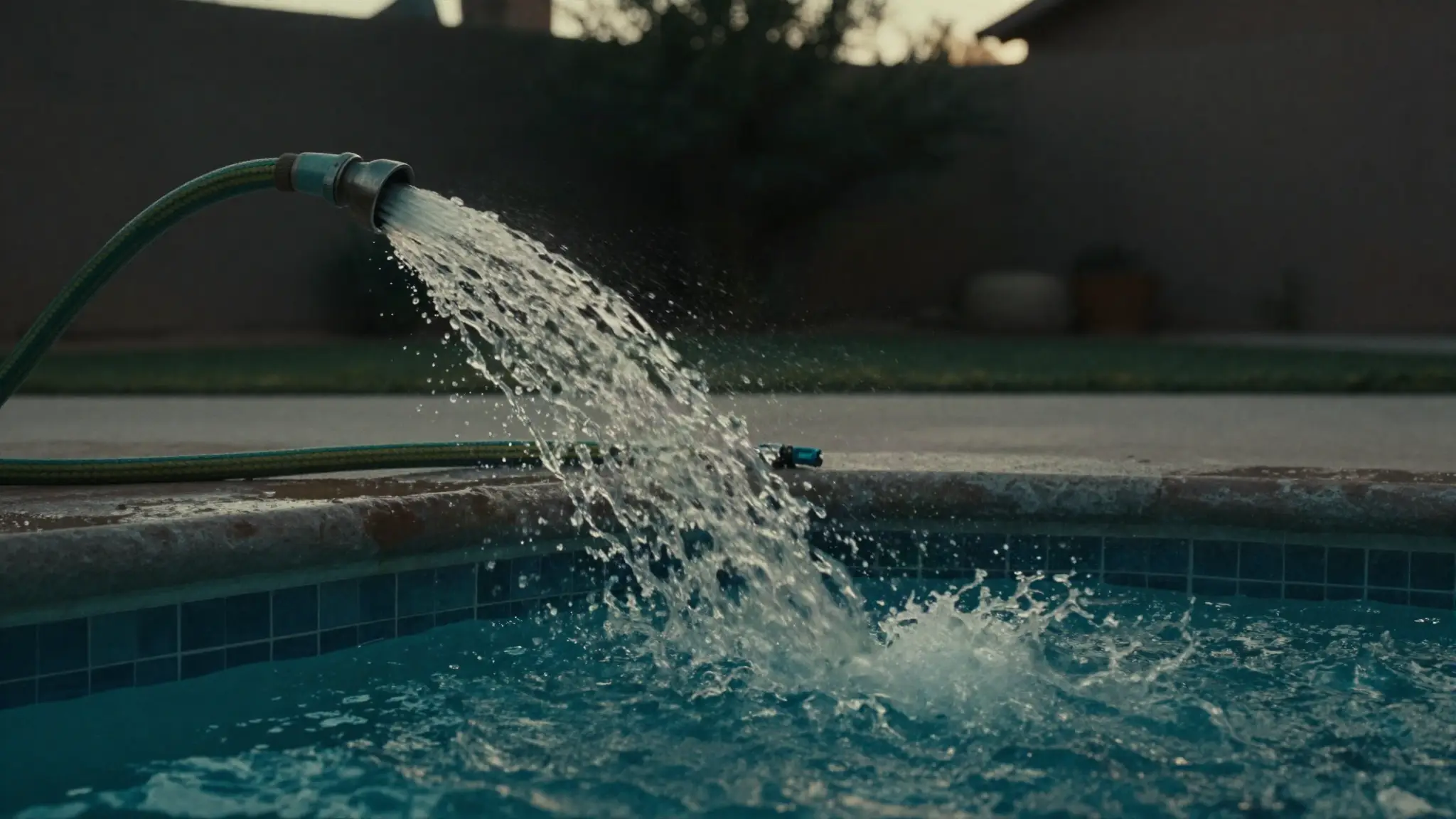
You walk outside with your morning coffee and something catches your eye. Your pool looks… lower. Maybe it’s only an inch. Maybe you’ve been adding water every few days and telling yourself, “it’s probably just the Arizona heat.”
Then the questions start. Is this normal? Am I about to spend thousands of dollars? Do I actually have a leak, or am I overthinking it?
The truth is, every pool loses some water. Between evaporation, splash-out, and kids turning the backyard into a water park, it’s completely normal to top off your pool once in a while. But there comes a point where “normal” turns into something else.
The good news? Most pools don’t go from perfectly fine to catastrophic overnight. They usually leave clues first — you just need to know what to look for. In this guide we’ll walk through the most common pool leak symptoms, explain what they could mean, and help you decide when it’s time to bring in a professional. And if you want to understand the whole process end to end, our complete pool leak detection guide covers what happens after the symptoms point to a real leak.
How Much Water Loss Is Normal in a Pool?
This is the first question almost every pool owner asks — and it’s a good one. A little water loss is completely normal. In fact, during a hot Arizona summer, your pool can lose about ¼ to ½ inch of water per day from evaporation alone. Wind, low humidity, direct sunlight, and how often the pool is used all play a role. Your pool may also lose water from:
- Kids splashing and cannonballs (the neighborhood favorite)
- Backwashing the filter
- Cleaning or vacuuming
- Water carried away on swimsuits and pool toys
None of that means you have a leak. What isn’t normal is needing to grab the hose every couple of days because the water keeps disappearing. If you’re constantly adding water or the level is dropping much faster than it used to, it’s worth taking a closer look.
- How Much Water Loss Is Normal in a Swimming Pool?
- Is Your Pool Losing Water or Is It Just Evaporation?
The Biggest Signs Your Pool May Have a Leak
A single symptom doesn’t always mean your pool is leaking. But if you start noticing two or three of these together, there’s a much better chance something needs attention. Common pool leak symptoms include:
- Your water level drops faster than usual.
- You’re adding water every few days.
- Your water bill suddenly goes up.
- Wet or soggy areas appear around the pool.
- Your equipment pad never seems to dry out.
- Air bubbles are coming from the return jets.
- The pool loses water overnight.
- The water level always stops at the same spot.
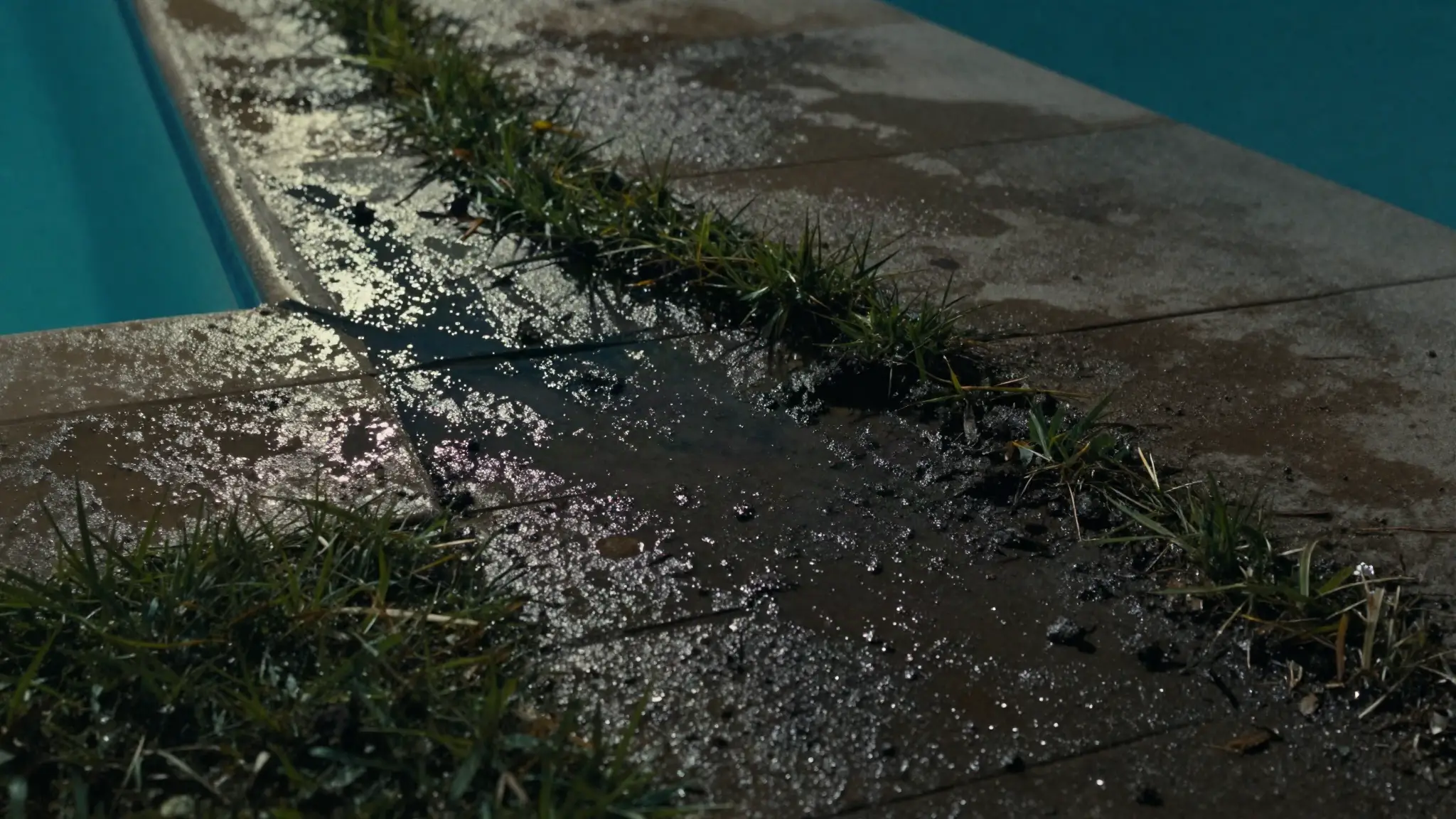
Some of these point toward plumbing. Others may suggest an equipment issue or a problem with the pool itself. The important thing is not to jump to conclusions — the symptom tells you where to start looking, not necessarily where the leak actually is. Our guide to what causes pool leaks breaks down each possibility.
What To Do If You Think Your Pool Has a Leak
Don’t panic. And don’t let someone convince you to replace a bunch of expensive equipment before anyone has confirmed where the leak actually is. Here’s a better approach.
Step 1: Confirm the water loss.
Before assuming the worst, compare your pool’s water loss to normal evaporation. A simple bucket test is a great place to start.
Step 2: Look for obvious clues.
Walk around your pool. Check the equipment pad. Look for wet spots. See if the water always drops to the same level. Sometimes the signs are easier to spot than you think.
Step 3: Don’t start replacing random parts.
This is where a lot of homeowners waste money. A leaking pump, cracked skimmer, broken return fitting, and underground plumbing leak can all cause similar symptoms — but they require completely different repairs. Replacing parts without finding the source is just guessing.
Step 4: Get help if the symptoms continue.
If you’ve ruled out evaporation and your pool keeps losing water, it’s time to have the leak properly located. Finding the source first usually leads to a faster, less expensive repair.
Is Your Pool Losing Water Overnight?
Losing water during the day isn’t unusual — the sun is beating down, the temperature is over 100 degrees, and evaporation is working overtime. Overnight is different. Once the sun goes down, evaporation slows way down too. So if your pool is still losing a significant amount of water while everyone is asleep, that’s a stronger sign that something else may be going on. Common possibilities include:
- A plumbing leak
- A leak in the pool shell
- Equipment that’s leaking after the pump shuts off
- A skimmer or return fitting that’s allowing water to escape
It doesn’t automatically mean you have a major problem — but it’s definitely worth paying attention to.
Why Is My Pool Water Level Dropping Every Day?
If you’re dragging the hose out every day, your pool is trying to tell you something. Daily water loss usually means the same thing is happening over and over again. Maybe it’s a small plumbing leak that leaks every time the pump runs. Maybe it’s an equipment leak slowly dripping all day. Or maybe your pool is simply losing more water than normal because of the weather.
The key is looking at the whole picture. Are you also seeing wet spots? Has your water bill gone up? Do you notice air bubbles in the return jets? The more symptoms you have, the easier it becomes to narrow down what’s actually happening.
Wet Spots Around Your Pool: What Do They Mean?
A soggy patch of grass. A damp spot next to the deck. Soil that never seems to dry out. It’s easy to see something like that and think, “well… I found the leak.” Maybe. But maybe not.
One thing that surprises a lot of homeowners is that water doesn’t always show up where it’s leaking. It can travel through the ground before it finally reaches the surface, which means the wet spot you’re looking at could be several feet away from the actual problem. And wet ground doesn’t always mean a pool leak either — broken irrigation lines, poor drainage, or overwatering your landscaping can create the same symptoms. That’s why it’s important to look at the wet area alongside everything else you’re noticing, not by itself.
- Wet Spots Around Your Pool: What They Could Mean
- Why Is the Ground Around My Pool Always Wet?
When Does Your Pool Lose Water? This Tells You a Lot.
One of the easiest ways to narrow down a leak is to pay attention to when your pool loses water. You don’t need to be a leak detection expert — just noticing a pattern can provide helpful clues.
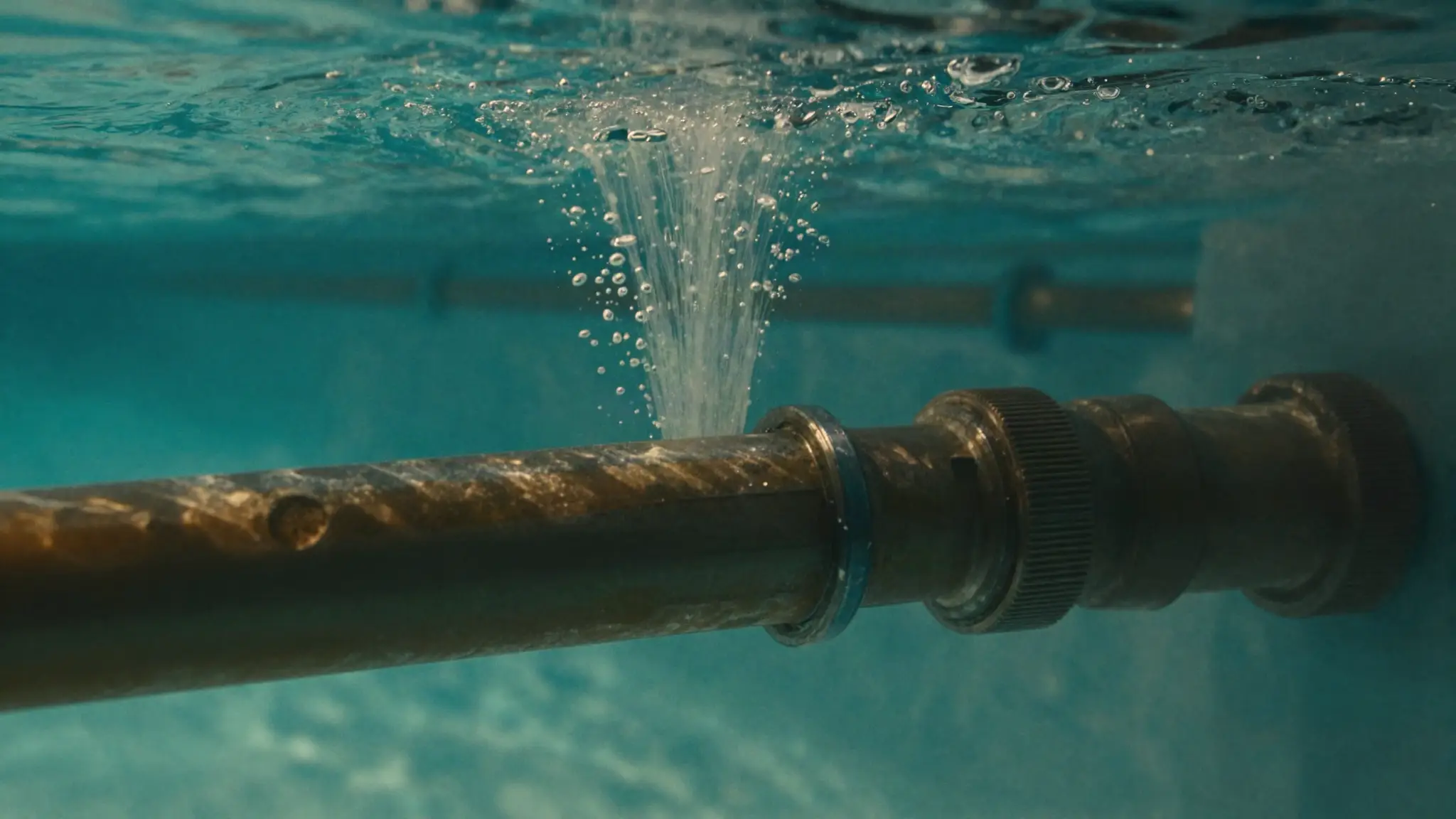
Your pool loses water when the pump is off
If the water keeps dropping even when the pump isn’t running, the leak could be somewhere in the pool itself — the pool shell, the skimmer, a return fitting, a light niche, or a suction-side plumbing issue. That doesn’t guarantee one of those is the problem; it just helps point the inspection in the right direction.
- Why Is My Pool Losing Water When the Pump Is Off?
Your pool loses water only when the pump is running
This usually points somewhere different. If the leak only appears while water is moving through the plumbing, there’s a better chance the issue is on the pressure side of the system — return lines, underground plumbing, equipment connections, or valves and fittings. Again, it’s not a diagnosis; it’s another clue that helps narrow down the possibilities.
- Why Is My Pool Losing Water Only When the Pump Is Running?
Does Your Pool Always Stop at the Same Spot?
This is one of the biggest clues homeowners miss. If your pool keeps dropping to the exact same level and then suddenly stops, pay attention — that stopping point can help narrow down where the leak might be.
Water stops at the skimmer
If the water level settles right around the bottom of the skimmer opening, the skimmer or the plumbing connected to it may need to be inspected.
Water stops at the return jets
If the water consistently stops around the return fittings, those fittings or the plumbing behind them could be part of the problem.
Water stops at the pool light
Pool lights are a surprisingly common place for leaks to develop. If the water level settles near the light fixture, the niche or conduit behind the light may need a closer look.
- Why Does My Pool Water Stop Dropping at the Skimmer?
- Why Does My Pool Water Stop Dropping at the Return Jets?
- Why Does My Pool Water Stop Dropping at the Pool Light?
Pool Equipment Leak Symptoms
Not every pool leak is hiding underground. Sometimes the problem is sitting out in the open. Your equipment pad is home to your pump, filter, heater, valves, and plumbing connections. As these parts age, seals wear out, fittings loosen, and small leaks can develop. Common warning signs include:
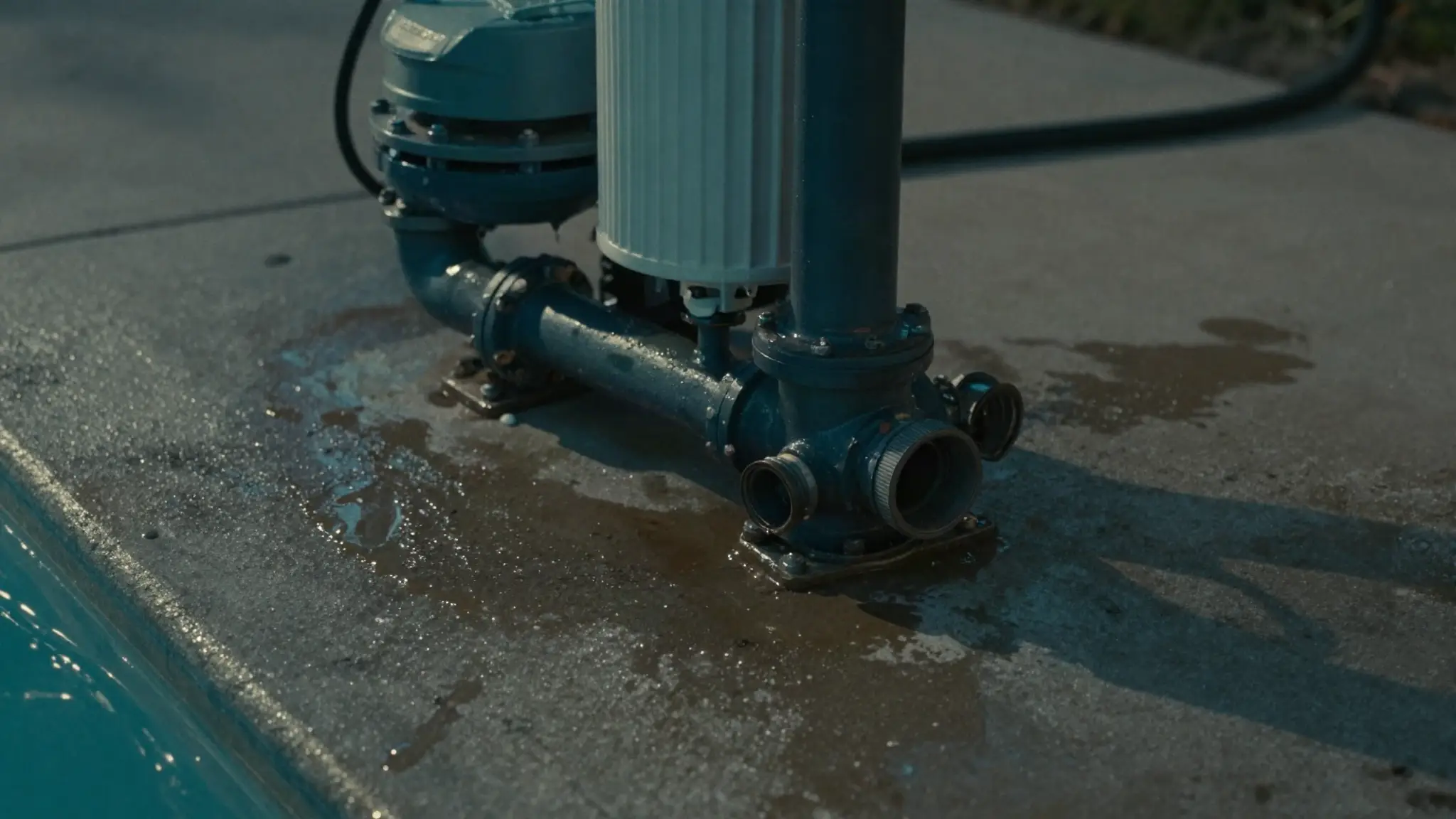
- Water pooling around the equipment pad
- Dripping from the pump or filter
- Water spraying from plumbing connections
- Air bubbles in the pump basket
- The pump losing prime
- Rust or mineral buildup around equipment
The good news is that equipment leaks are often easier to repair than underground plumbing leaks — many are simple pool leak repairs. The challenge is confirming that’s actually where the water is coming from before replacing parts.
- Why Is My Pool Pump Leaking Water?
- How to Tell If Your Pool Equipment Is Leaking
Signs Your Pool Plumbing May Be Leaking
Pool plumbing spends its entire life underground, so it’s easy to forget it’s even there — until something goes wrong. Unlike an equipment leak, you usually can’t see an underground plumbing leak. Instead, you notice the symptoms:
- The pool loses more water while the pump is running.
- Wet spots appear in the yard.
- Air keeps getting into the system.
- The pump struggles to maintain pressure.
- Your water bill suddenly jumps.
Because the plumbing is buried beneath your deck or landscaping, it’s almost impossible to know exactly where the leak is without proper testing. That’s why digging based on a guess usually ends up costing more than finding the leak first.
- How to Tell If Your Pool Plumbing Is Leaking
Structural Pool Leak Warning Signs
Finding a crack in your pool can be stressful. Most homeowners immediately jump to the worst-case scenario — “my pool is falling apart.” Fortunately, that’s not always true. Many cracks are cosmetic and don’t leak at all — our pool structure leaks guide covers each type. Others do need attention, but you won’t know which is which just by looking. Some warning signs that deserve a closer look include:
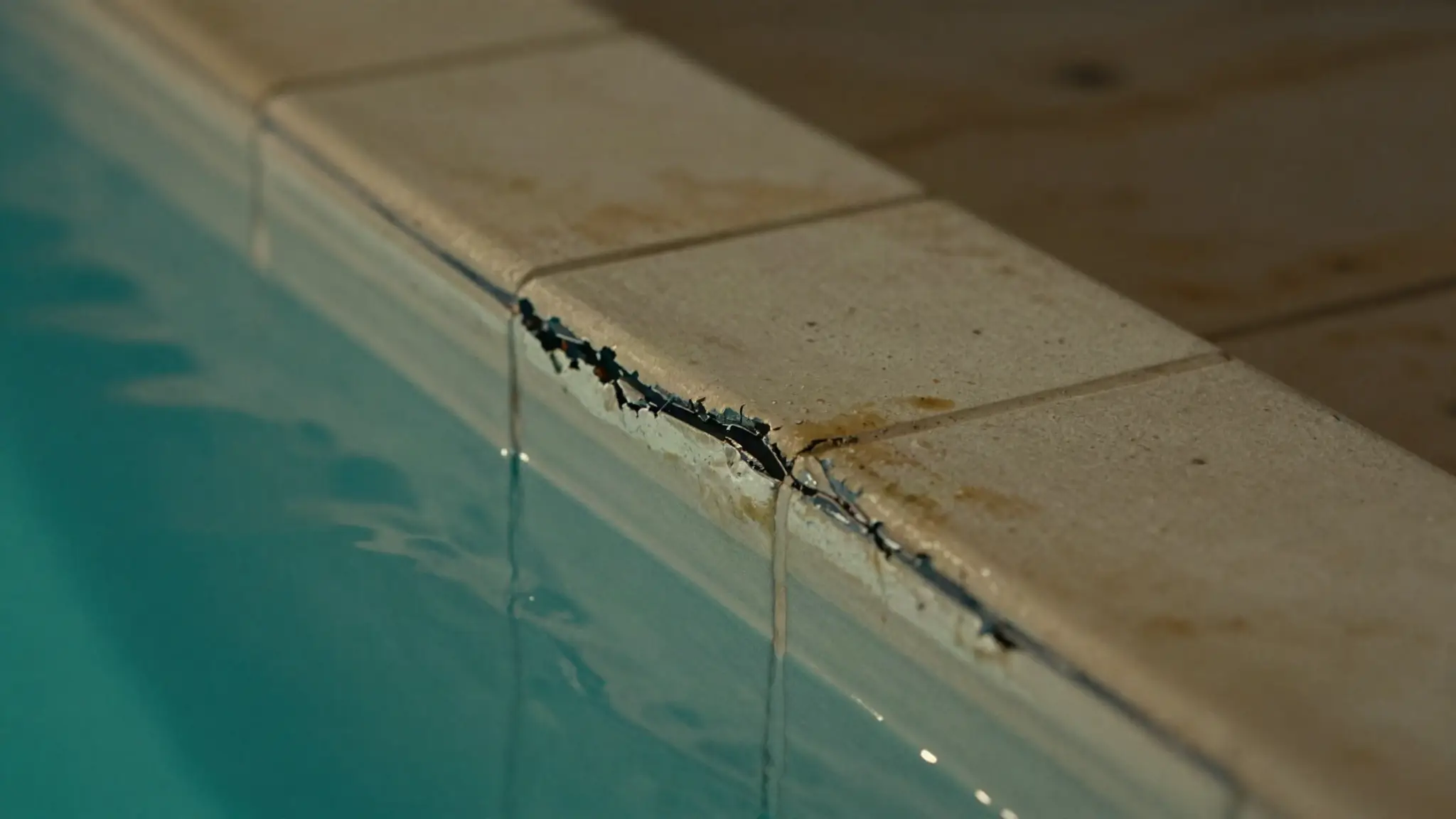
- Cracks that seem to be getting larger
- Water loss along with visible cracks
- Loose or missing tiles
- Wet soil around the outside of the pool
- Sections of the deck that are sinking or shifting
The important thing to remember: a crack doesn’t automatically mean you need a major repair. It simply means it’s worth finding out whether that crack is actually allowing water to escape — which is exactly what structural crack diagnosis is for.
- Cracks in My Pool: Are They Causing a Leak?
- Loose or Missing Pool Tiles: Could They Be the Problem?
- Why Is My Pool Deck Sinking or Cracking?
Pool Leak Symptoms by Pool Type
Not every pool leaks in the same way. The type of pool you own can change where problems are most likely to happen — a concrete pool, fiberglass pool, and vinyl liner pool all have different materials and weak points.
Concrete pool leak symptoms
Concrete pools are extremely durable, but over time they can develop issues from age and movement: cracks in the pool shell, damaged plaster, loose tile, leaking plumbing behind the structure, and issues around lights or fittings. Many surface cracks are cosmetic — the question is whether water is escaping through the damaged area.
Fiberglass pool leak symptoms
Fiberglass pools have fewer structural issues than some other types, but they can still leak — usually water loss around fittings, cracks or damage in the shell, plumbing connection issues, or problems around steps and attachments. Because fiberglass pools are one manufactured piece, a leak isn’t always obvious from the surface.
Vinyl pool leak symptoms
Vinyl liner pools have their own common leak points: water dropping faster than expected, tears or holes in the liner, wrinkles or movement in the liner, and leaks around fittings, lights, or returns. Sometimes the leak is easy to spot; other times a small hole hides underwater and slowly drains thousands of gallons.
- Pool Leak Symptoms by Pool Type (Concrete, Fiberglass & Vinyl)
Weird Signs That Might Point to a Leak
Some pool leak symptoms aren’t as obvious as a dropping water level. Homeowners often search because they notice something strange but aren’t sure if it connects to a leak. Let’s look at a few common ones.
White calcium deposits around your pool
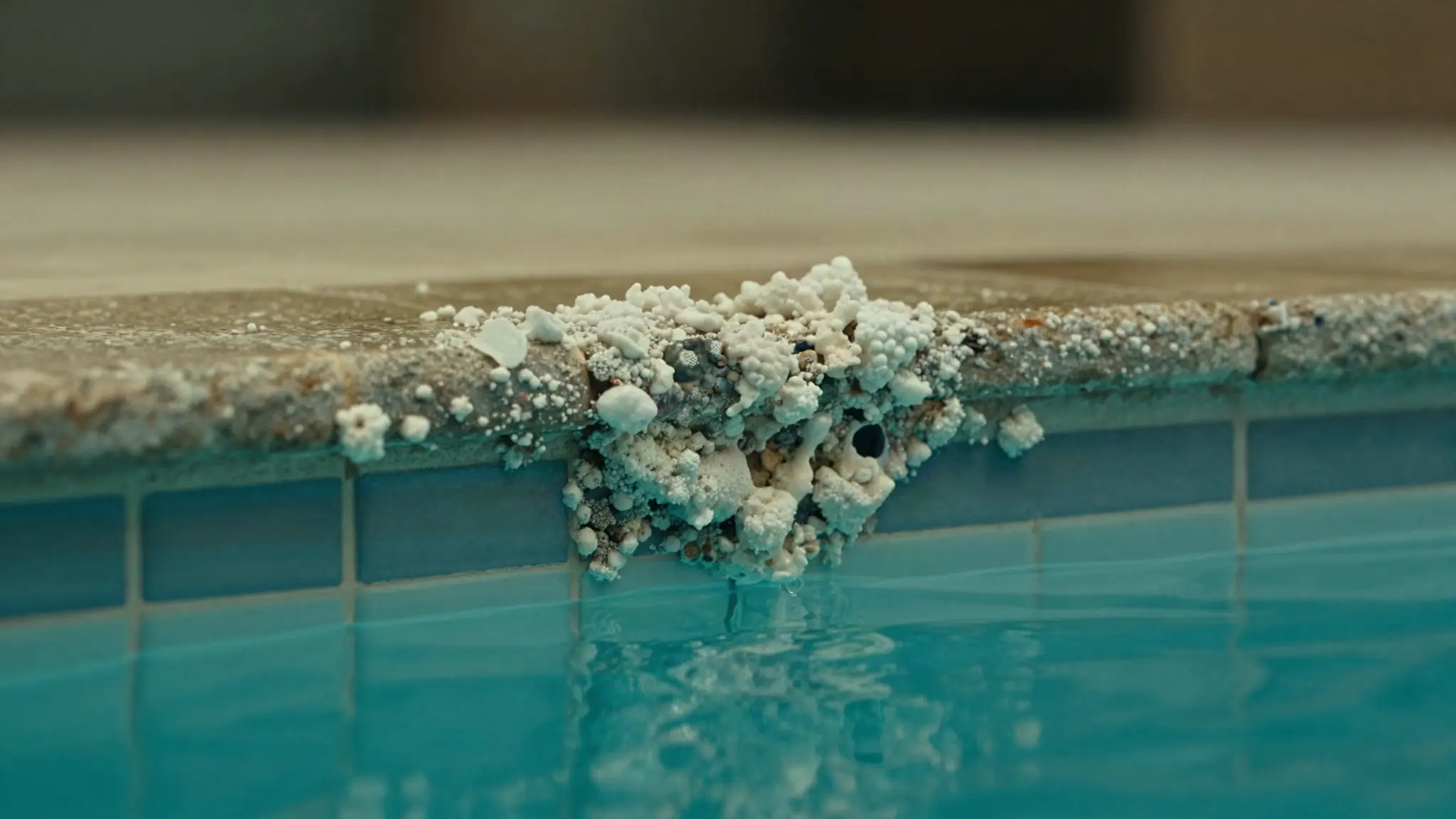
Seeing white crusty buildup around your pool can make you wonder, “is water escaping somewhere?” Sometimes calcium deposits come from normal water chemistry, evaporation, or mineral buildup. But if you notice deposits appearing near cracks, fittings, or areas where water seems to be moving, it’s worth investigating.
- White Calcium Deposits Around the Pool: Is It a Leak?
A suddenly higher water bill
A higher water bill doesn’t always mean your pool is leaking — it could be increased usage, landscaping needs, seasonal changes, or irrigation problems. But if your habits haven’t changed and you’re constantly adding water to your pool, a leak becomes a possibility. Small leaks can waste a surprising amount of water over time.
- Why Is My Water Bill Suddenly Higher?
Your spa is losing water
If you have an attached spa, don’t assume the pool and spa share the same problem. Spas have their own jets, plumbing lines, valves, and equipment connections — a spa can leak even when the pool itself is fine. That’s the focus of spa leak detection.
- How to Tell If Your Spa Is Leaking
Should You Stop Using Your Pool If You Think It’s Leaking?
The answer depends on what’s happening. If your pool is losing a small amount of water and everything appears normal, you may not need to stop using it immediately. However, you should pay closer attention if:
- The water level is dropping quickly
- The pump is struggling
- You notice electrical issues around lights or equipment
- The pool is approaching a dangerously low water level
Running pool equipment without enough water can create additional problems. And if you suspect an electrical issue — especially around underwater lights or equipment — it’s better to stop using the pool until it’s checked. The goal isn’t to panic. It’s simply to avoid turning a small problem into a bigger one.
Wondering what it'll cost? Our guide to what pool leak repairs cost covers the price ranges by problem.
- USGS — Evaporation & the Water Cycle — How fast open water evaporates — the baseline your pool’s water loss is measured against.
- EPA WaterSense — Pool Water Efficiency — U.S. EPA on pool water loss from evaporation versus an actual leak.
- University of Arizona Cooperative Extension — Water Conservation — Arizona-specific guidance on outdoor and pool water use in a hot, dry climate.
Frequently Asked Questions
How do I know if my pool has a leak?
Common signs include losing water faster than normal, adding water frequently, wet areas around the pool, higher water bills, air bubbles in the system, or the water stopping at the same level repeatedly.
How much water loss is normal in a pool?
Some water loss is expected from evaporation, weather, and normal pool use. If you’re constantly adding water or losing more than expected, it may be worth investigating.
Why does my pool lose water overnight?
Overnight water loss can be a sign of a leak because evaporation slows when the sun goes down. Possible causes include plumbing leaks, equipment leaks, or structural issues.
Can a pool leak fix itself?
No. While some leaks may appear to slow down when the water reaches a certain level, the underlying issue usually remains.
Can I find a pool leak myself?
You can check for some obvious signs and perform basic tests like a bucket test. However, locating hidden plumbing or structural leaks usually requires professional equipment.
What is the most common sign of a pool leak?
The most common sign is simply losing water faster than normal and needing to refill the pool more often than you should.
Should I repair a pool leak immediately?
It depends on the severity, but ignoring a leak too long can lead to wasted water and potentially more expensive repairs.
Don’t Guess. Understand What Your Pool Is Telling You.
A pool losing water doesn’t automatically mean you’re facing a huge repair bill. Sometimes it’s evaporation. Sometimes it’s a simple equipment issue. Sometimes it’s a plumbing or structural problem that needs attention.
The biggest mistake homeowners make is jumping straight into repairs before understanding what’s actually happening. The first step isn’t spending money — it’s getting answers. Once you know which symptoms you have, the next move is to have the leak properly located so any repair is based on facts, not guesses.