What Causes Pool Leaks? Every Common Cause Explained
Your pool is losing water — but where is it actually coming from? Here’s every common cause, in plain English.
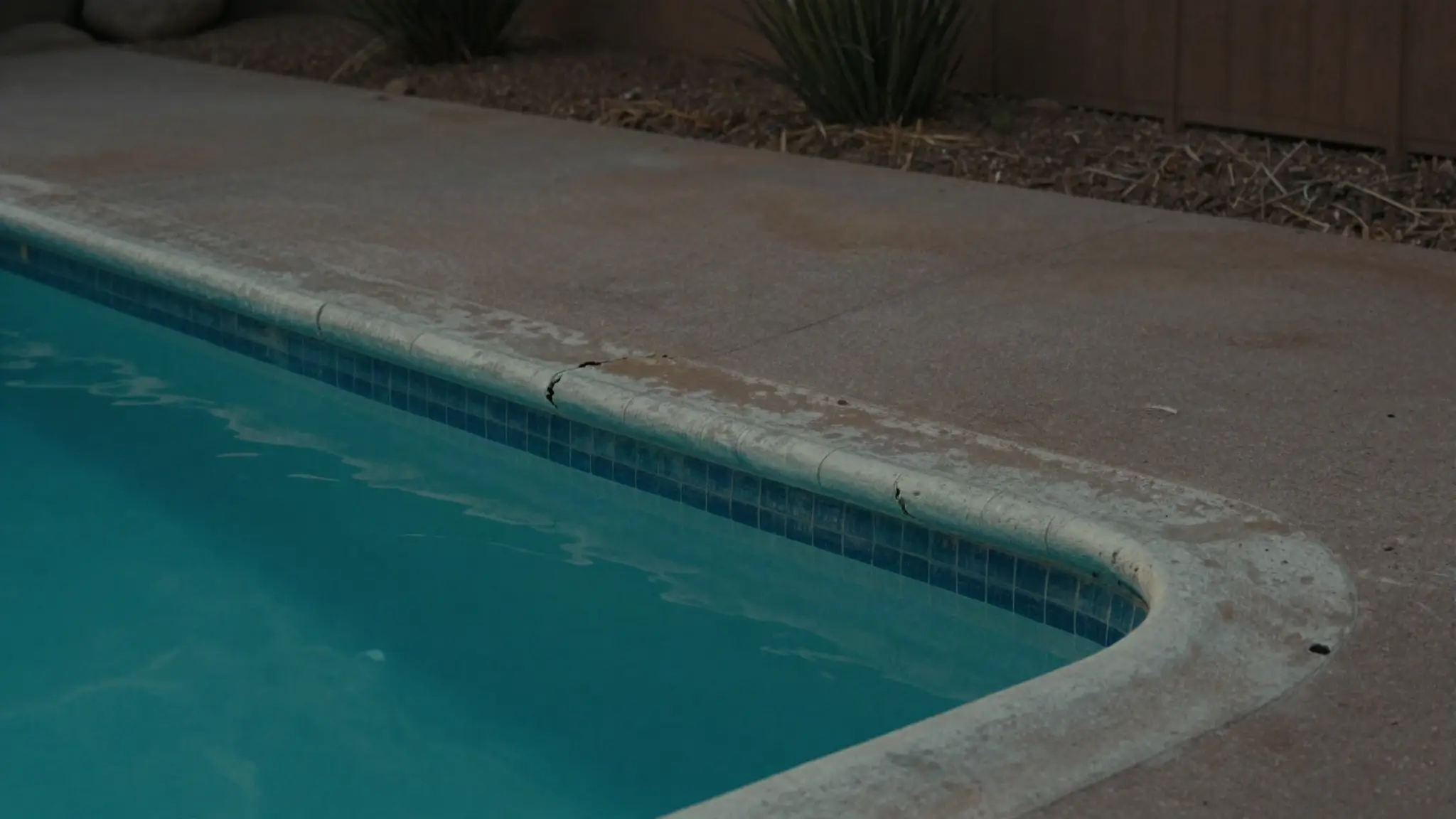
If you’re adding water every few days, you’ve probably already started imagining the worst. Maybe you’ve noticed a wet spot in the yard. Maybe there’s a crack in the plaster. Or maybe the water level just keeps getting lower and you have no idea why.
Here’s the frustrating part about pool leaks: the place where you notice the problem usually isn’t where the leak actually is. That soggy patch of grass doesn’t automatically mean there’s a broken pipe underneath it. A crack in the pool doesn’t always mean the shell is leaking. Even a dropping water level doesn’t guarantee a major repair ahead of you.
Pools are made up of dozens of different parts, and water can travel a surprising distance before it finally shows itself. The good news? Once you understand the most common places leaks happen, it’s much easier to know what questions to ask and what to test yourself. If you’re not yet sure whether you even have a leak, start with our guide to pool leak symptoms — then come back here to understand the cause.
The 5 Main Places Pool Leaks Usually Come From
Almost every pool leak falls into one of these five categories:
- Plumbing leaks — in the pipes that move water between your pool and the equipment, above ground or buried.
- Equipment leaks — your pump, filter, heater, and valves all handle water under pressure, and seals wear out.
- Pool structure leaks — cracks in the shell, damaged plaster, or loose tile.
- Fittings & fixtures — skimmers, return jets, pool lights, and main drains all pass through the pool wall.
- Water features & other systems — attached spas, waterfalls, and auto-fill systems have their own plumbing.
If you’re not sure which category your leak falls into, don’t worry — that’s exactly what professional leak detection is designed to figure out. And if you want the full walkthrough of how the process works, see our complete pool leak detection guide.
- What Is Pool Leak Detection?
- How Do You Know If Your Pool Has a Leak?
Underground Plumbing Leaks
When most homeowners hear the words “pool leak,” this is what they picture — a broken pipe buried somewhere under the deck. While that does happen, it’s only one possibility. Your pool has several underground lines carrying water back and forth between the pool and the equipment, and a leak can develop almost anywhere along that system.
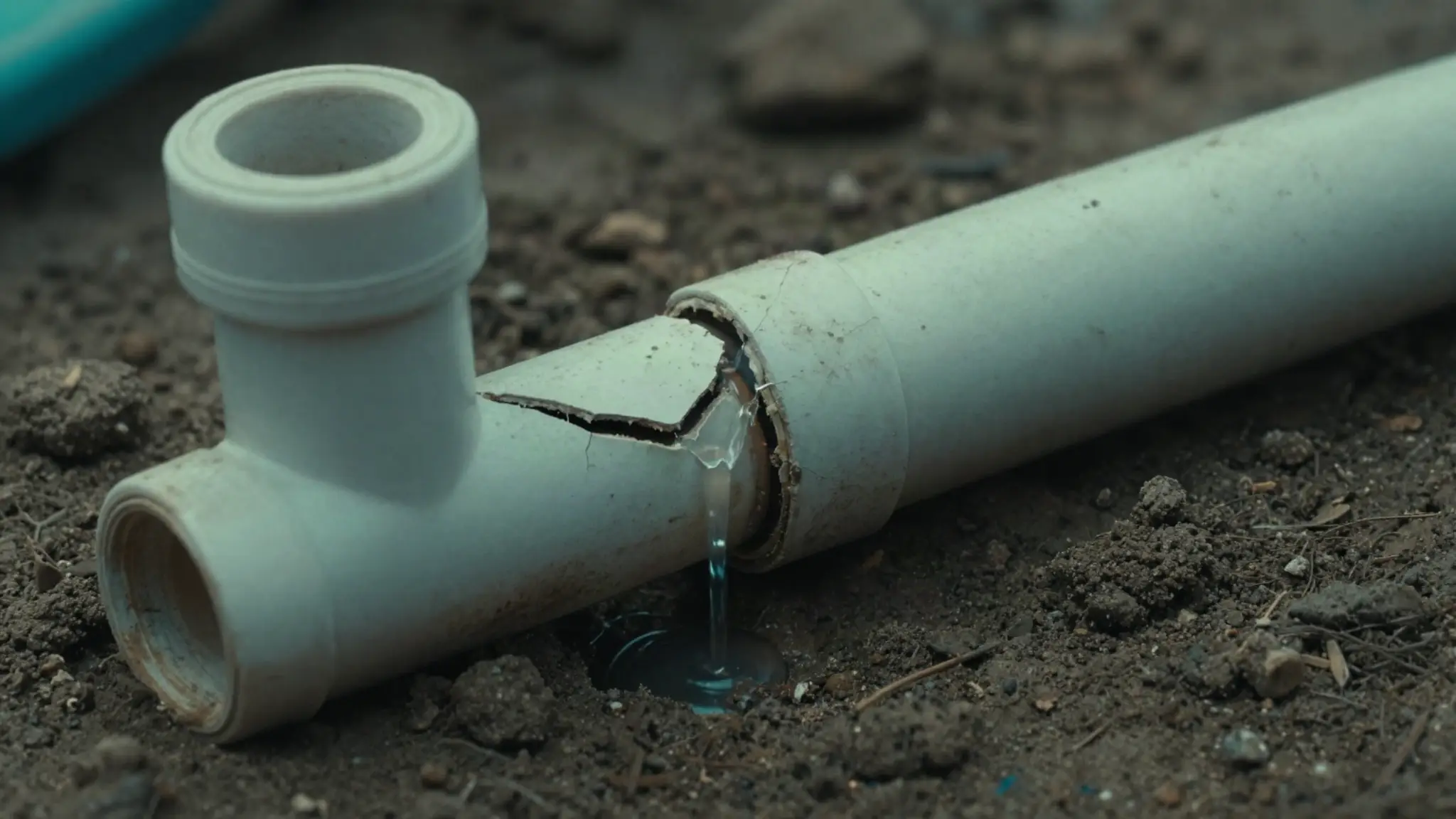
Some of the most common causes include aging PVC pipe, shifting soil, poor glue joints, cracked fittings, tree roots, and years of pressure changes. One clue homeowners often notice is that the pool loses more water when the pump is running — because pressurized plumbing is in use while the system is on. Other signs include wet areas around the pool, air bubbles in the return jets, the pump losing prime, and constantly adding water. Remember: water doesn’t always surface directly above the leak — it can travel through the soil first, which is why underground pipe leak detection uses pressure testing.
- How to Tell If Your Pool Plumbing Is Leaking
- Underground Pool Plumbing Leaks: Causes, Symptoms & Detection
Pool Equipment Leaks
Not every leak is hiding underground — sometimes the problem is sitting in plain sight next to your pool. Your equipment pad contains several components that move thousands of gallons of water every day. As they age, seals wear out, plastic becomes brittle, and fittings start dripping. Many are straightforward pool leak repairs once the source is confirmed.
Pool pump leaks
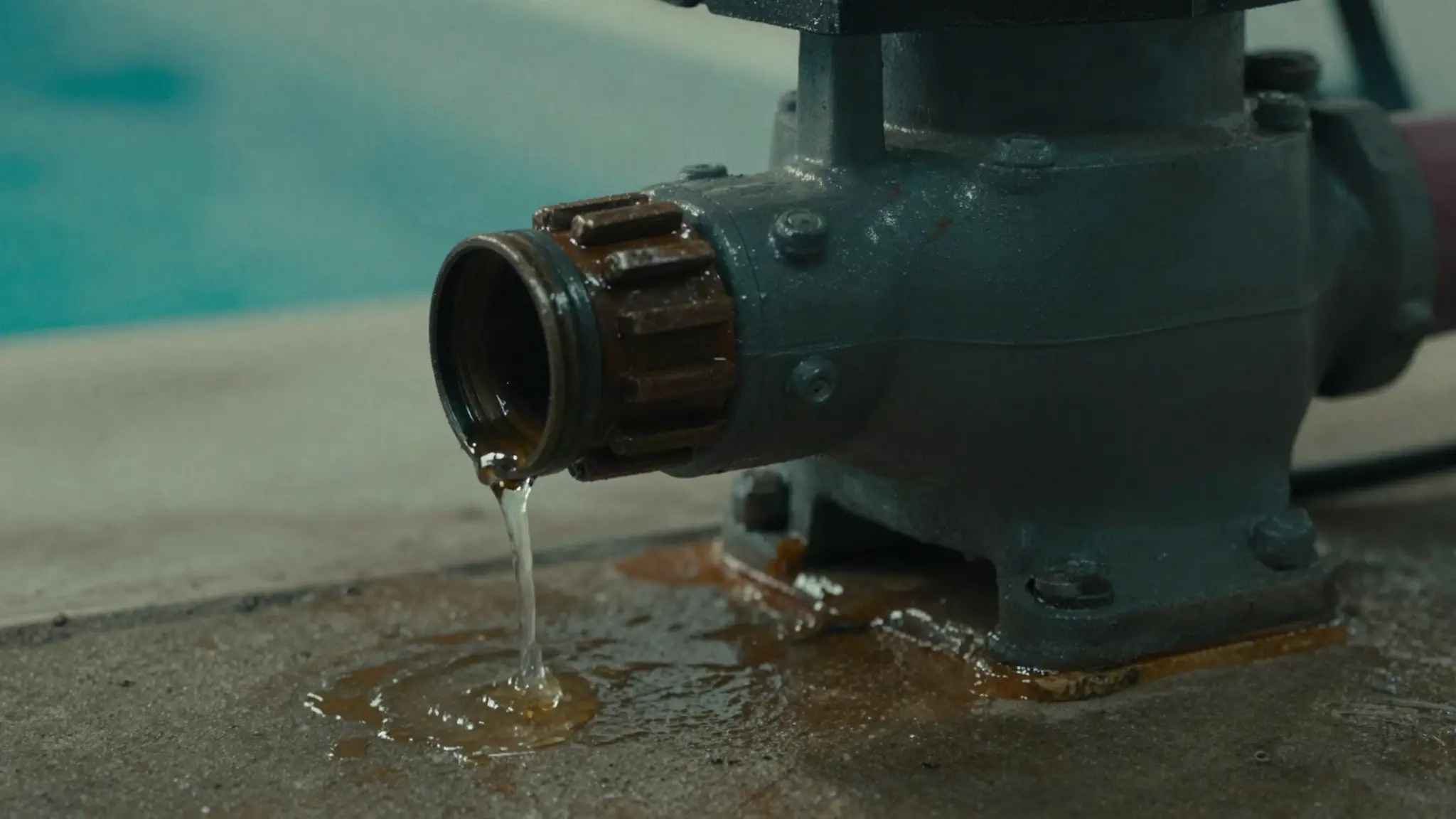
Pumps are one of the most common places for leaks — usually from worn shaft seals, a cracked pump housing, loose unions, damaged O-rings, or drain plugs. Some leaks only appear while the pump is running, which makes them easy to miss.
Pool filter leaks
Your filter is built to handle pressure, but over time cracked filter tanks, worn gaskets, loose clamps, failing O-rings, and plumbing connections can leak. Sometimes the repair is as simple as replacing a seal.
Pool heater leaks
A heater leak can come from inside the unit or the plumbing connected to it — corrosion, internal heat-exchanger failure, loose connections, or worn seals. If water is collecting underneath the heater, have it inspected before assuming the whole unit needs replacing.
Pool valve leaks
Valves control where water flows, and like any moving part they wear out — aging seals, cracked valve bodies, worn internal parts, or loose fittings. Many valve repairs are relatively straightforward once the source is identified.
- Why Is My Pool Pump Leaking?
- Why Is My Pool Filter Leaking?
- Why Is My Pool Heater Leaking?
- Why Are My Pool Valves Leaking?
Skimmer Leaks
Your skimmer is one of the hardest-working parts of your pool — constantly pulling water off the surface and sending it to the pump. Because it’s built into the pool wall, it’s also one of the most common places for leaks to develop. Over time, the plastic skimmer and the concrete around it expand and contract at different rates, and that movement can create small gaps where water slowly escapes.
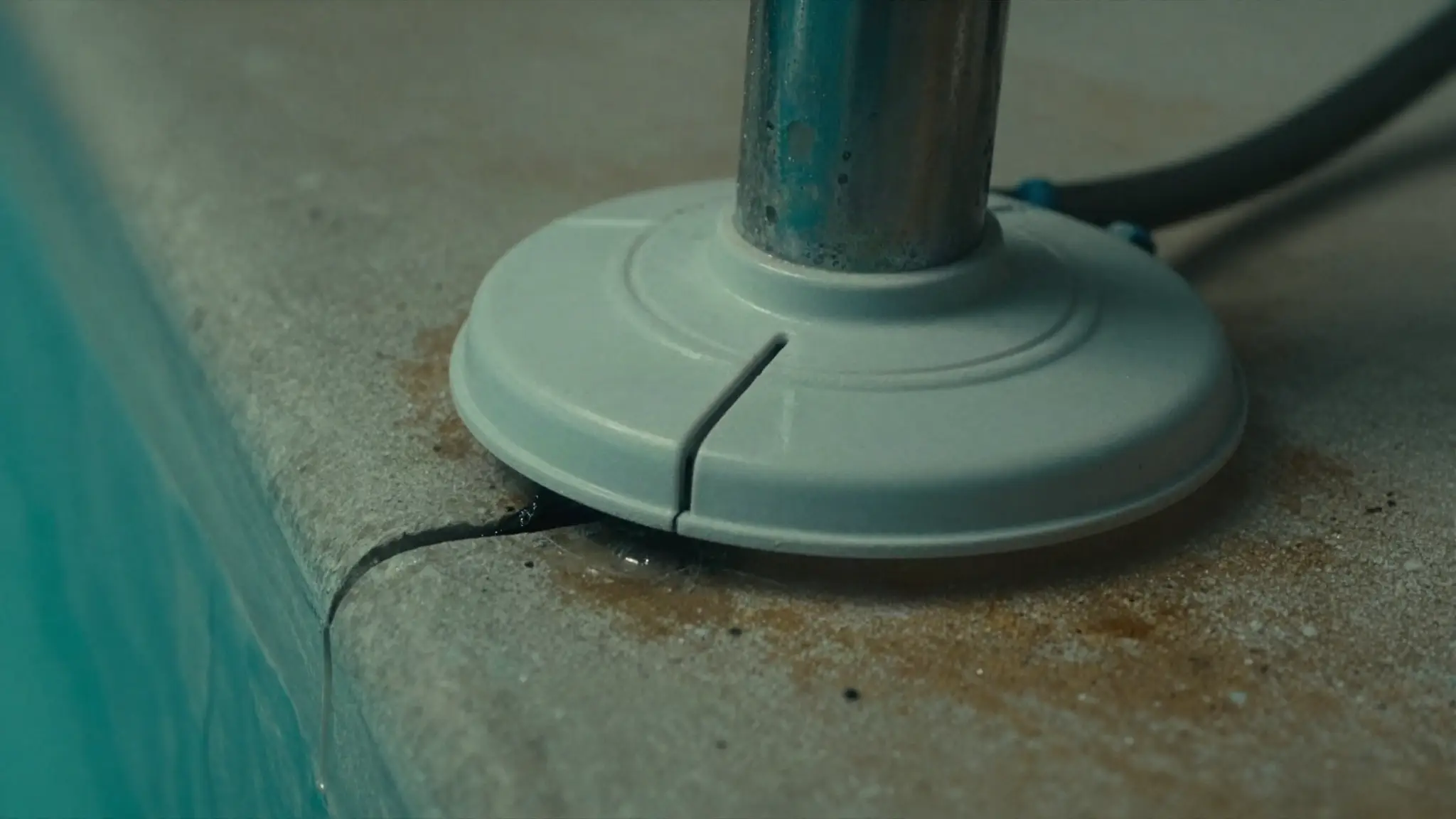
Other common causes include cracks in the skimmer body, separation between the skimmer and pool shell, failed sealant, and aging materials. One clue many homeowners notice is that the water level always seems to stop dropping right around the skimmer opening — a strong hint, but not proof, since other leaks can create similar symptoms.
- Pool Skimmer Leaks: Causes, Signs & Solutions
Return & Suction Line Leaks
Return line leaks
After your water passes through the filter, it’s pushed back into the pool through the return lines. Because these pipes are under pressure whenever the pump runs, a damaged return line often leaks more while the system is on. Common causes are broken underground pipes, cracked fittings, poor glue joints, shifting soil, and age. Signs include losing more water while the pump runs, air bubbles from the return jets, wet spots near the pool or equipment, and trouble maintaining pressure.
Suction line leaks
Suction lines do the opposite — they pull water from the pool to the pump. When these leak, they often pull air into the system instead of pushing water out, creating a different set of symptoms: air bubbles in the pump basket, the pump losing prime, reduced circulation, and strange pump noises. Because they don’t always leave obvious wet spots, they can be tricky to diagnose without professional testing.
- Pool Return Line Leaks: Causes & Symptoms
- Pool Suction Line Leaks: Causes & Symptoms
Main Drain Leaks
The main drain sits at the bottom of your pool and helps circulate water through the filtration system. Thankfully, main drain leaks are less common than many homeowners think. When they do happen, the cause is usually a cracked drain fitting, the plumbing connected to the drain, or a failed seal around the drain assembly. Many homeowners panic assuming a main drain leak means draining or tearing the pool apart — but professional leak detection confirms whether the drain is actually leaking before anyone talks major repairs.
- Pool Main Drain Leaks: Causes & Warning Signs
Pool Light & Light Niche Leaks
Pool lights surprise a lot of homeowners. The light itself usually isn’t the problem — the leak is often around the housing behind it (the light niche) or inside the conduit that protects the electrical wiring. Common causes include failed seals, aging conduit, cracks around the niche, and improper installation.
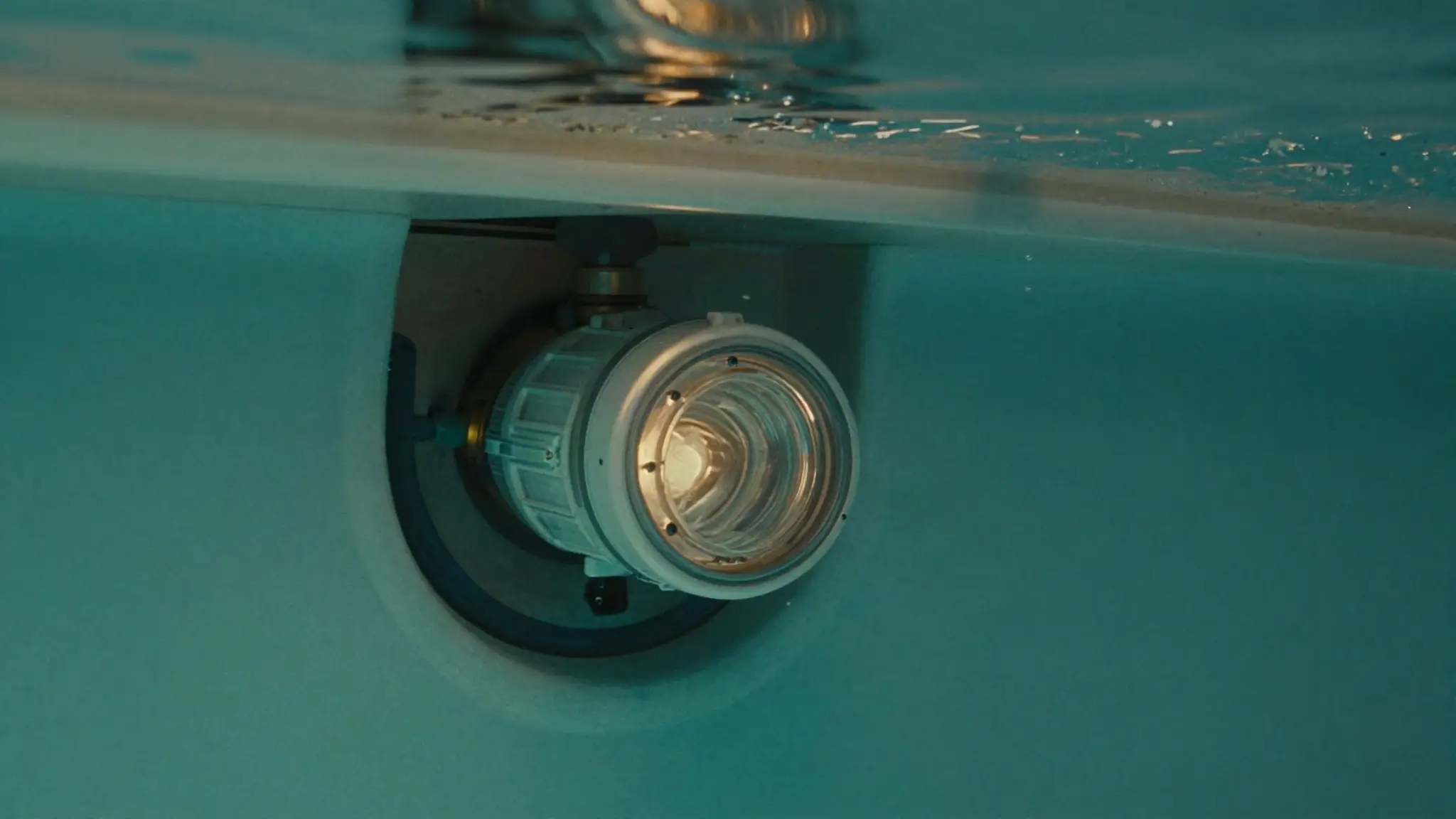
A clue many homeowners notice is that the water level stops dropping right around the height of the pool light. Again, that’s a clue — not a diagnosis. The only way to know for sure is to test it.
- Pool Light Leaks: Causes & Why They Happen
- Pool Light Niche Leaks: Causes & Symptoms
Structural Pool Leaks
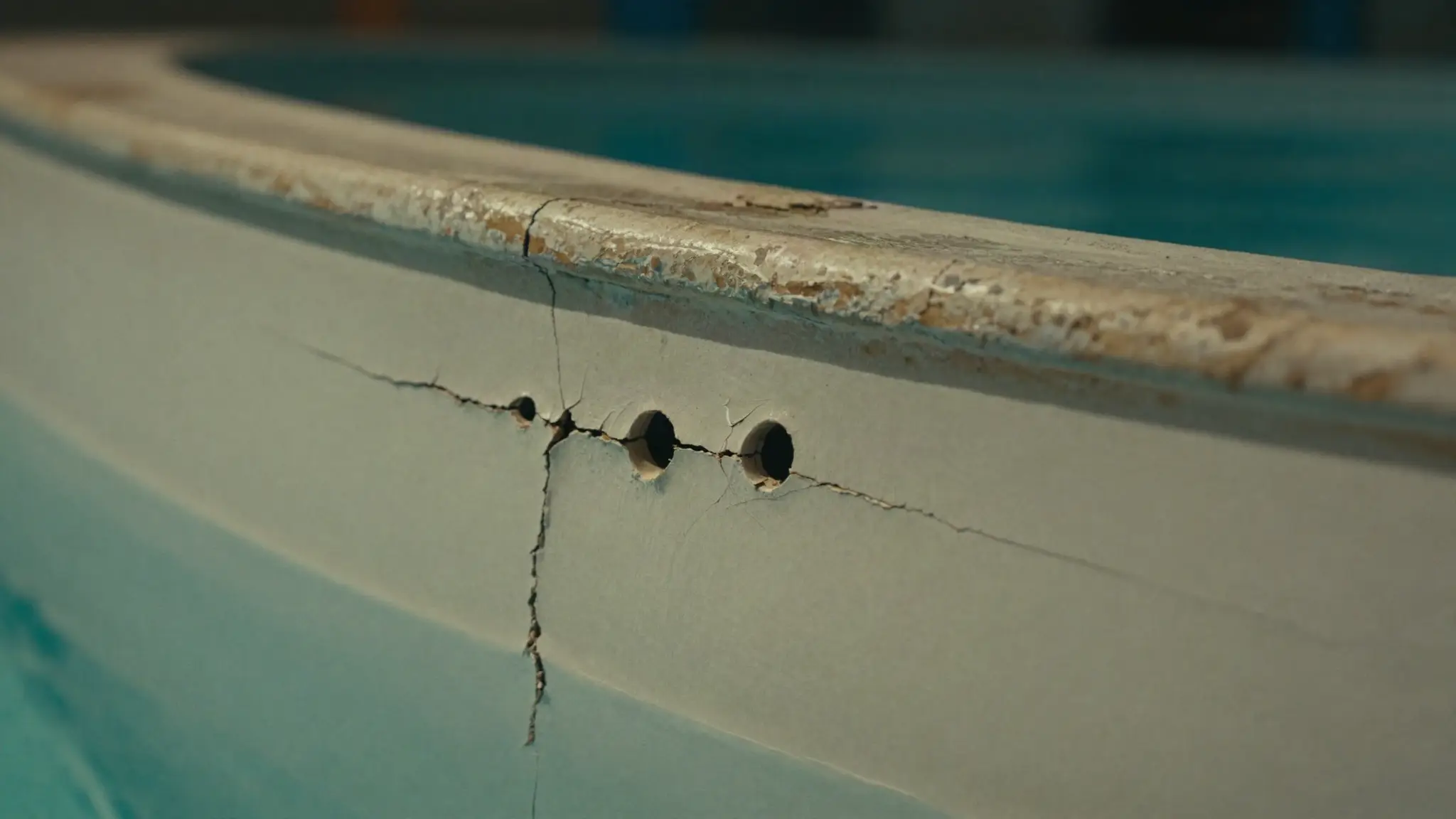
Finding a crack in your pool is enough to make anyone nervous — the first thought is usually “this is going to cost a fortune.” The truth is a little more reassuring: not every crack leaks, and not every leaking crack is a major structural problem. Pool structures naturally move over time, and Arizona’s heat, shifting soil, and years of expansion and contraction can create small cosmetic cracks that never leak.
Concrete cracks
Concrete and gunite pools develop cracks from soil movement, settlement, age, and structural stress. Some are cosmetic; others need professional crack repair.
Plaster problems
Plaster protects your pool’s surface but doesn’t last forever — surface cracks, hollow spots, and areas where plaster is separating. Not every plaster issue leaks, but damaged plaster shouldn’t be ignored.
Tile & coping problems
Loose tiles don’t always mean a leak — sometimes it’s worn grout or aging materials. Other times, movement around the pool creates openings where water escapes. Common issues: loose tile, missing grout, cracked coping, and failed expansion joints.
- Concrete Pool Cracks: Causes & Why They Happen
- Pool Plaster Problems That Can Cause Leaks
- Can Pool Tiles Cause Water Leaks?
- Pool Coping Leaks: Causes & Signs
Vinyl Liner & Fiberglass Pool Leaks
Vinyl liner pool leaks
If you own a vinyl liner pool, your leak will usually come from different places than a concrete pool — the liner itself is often the culprit. Common causes are small tears, punctures, aging vinyl, and loose fittings around returns or skimmers. The good news is that many liner leaks can be repaired without replacing the entire liner.
Fiberglass pool leaks
Fiberglass pools are incredibly durable but not leak-proof. Most fiberglass leaks happen around plumbing connections, return fittings, skimmers, lights, and small shell damage. Actual shell failures are less common than many homeowners fear — confirm the source through proper testing before assuming the shell has cracked.
- Vinyl Liner Pool Leaks: Causes & Warning Signs
- Fiberglass Pool Cracks: Causes & Common Problems
Pool Features That Can Leak
When most people think about pool leaks, they picture the pool itself. But if your pool has extra features, those can leak too.
Waterfalls
Waterfalls look great, but they add more plumbing, fittings, and seals — any of which can wear out. Common causes: cracked plumbing, loose fittings, worn seals, and small cracks hidden behind the rockwork. Because waterfalls recirculate water, a leak can be hard to spot until the pool loses water more quickly than normal.
Attached spas
An attached spa has its own plumbing, jets, valves, and fittings, so it can leak even if the pool is perfectly fine — the focus of spa leak detection. Signs: the spa loses water faster than the pool, the level stops at the same point every time, or the leak worsens when the spa runs.
Automatic fill systems
Sometimes homeowners think they don’t have a leak because the water always looks full — the auto-fill system keeps replacing the lost water, so the problem stays hidden while the water bill climbs. If your fill valve seems to run more than usual, it’s worth finding out why.
- Why Is My Waterfall Losing Water?
- Why Is My Spa Leaking?
- Automatic Fill System Problems That Look Like Pool Leaks
Why Pool Leaks Become More Common as Pools Age
Pools don’t suddenly wake up one day and decide to leak — most problems happen slowly. Rubber seals dry out. PVC pipes shift slightly. Plaster ages. Equipment wears down. Years of Arizona heat cause everything to expand and contract thousands of times. That doesn’t mean an older pool is a bad pool; it just means more parts have had more time to wear out. A well-maintained 25-year-old pool may have fewer problems than a neglected 10-year-old one. The takeaway: age increases the chances of a leak, but maintenance often makes the biggest difference.
Can You Prevent Pool Leaks?
You can’t prevent every leak — but you can catch many of them before they turn into expensive repairs. A few simple habits go a long way:
- Keep an eye on your water level.
- Fix small equipment leaks early.
- Replace worn O-rings and seals.
- Don’t ignore wet spots around the pool.
- Pay attention if your water bill suddenly increases.
- Have unusual symptoms checked before approving repairs.
Think of it like changing the oil in your car — a little maintenance today can save you from a much bigger bill later.
How Do You Know What’s Actually Causing It?
Here’s the frustrating part: many different leaks create the exact same symptoms. A dropping water level doesn’t automatically mean underground plumbing. A crack doesn’t automatically mean structural damage. A wet spot doesn’t automatically mean the pipe below it is broken. That’s why experienced leak detection companies don’t guess — they work through the possibilities one by one using visual inspections, pressure testing, dye testing, electronic listening equipment, and acoustic leak detection. Each test eliminates possibilities until the real source is confirmed, because the right repair depends entirely on what’s actually leaking — not what someone thinks is leaking.
- How Does Pool Leak Detection Work?
- How Do Pool Leak Detection Companies Find Leaks?
What Happens After You Find the Cause?
Once the leak has been confirmed, everything gets much easier. Instead of wondering what’s wrong, you can focus on the repair that actually solves the problem. In most cases: the technician explains exactly where the leak is, recommends the repair options, gives you an estimate before any work begins, and you decide whether to move forward. Sometimes it’s a relatively inexpensive repair; sometimes it’s a larger project. Either way, you’ll be making a decision based on evidence instead of guesswork.
- What Happens After the Leak Is Found?
Once you know the cause, see how much each type of repair typically costs so no estimate catches you off guard.
- Arizona Geological Survey — Earth Fissures & Land Subsidence — How Arizona ground movement and subsidence can crack pool shells and underground pipes (Univ. of Arizona).
- EPA WaterSense — Leak Detection & Flow Monitoring — Common leak points and how leaks are detected (U.S. EPA).
- ENERGY STAR — Pool Pumps — Pump and equipment basics — a frequent source of equipment-side leaks (EPA/DOE).
Frequently Asked Questions
What is the most common cause of a pool leak?
Equipment leaks, underground plumbing issues, skimmers, return fittings, and structural cracks are among the most common causes. The only way to know for sure is to locate the leak first.
Can a pool leak fix itself?
No. In fact, most leaks slowly get worse over time. Waiting usually leads to more water loss and, in some cases, more expensive repairs.
Are pool leaks always expensive to fix?
Not at all. Some repairs involve replacing a seal or fitting and cost far less than homeowners expect. Others are more involved. That’s why it’s important to identify the leak before talking about repair costs.
How do I know where my pool is leaking?
The symptoms can point you in the right direction, but they can’t confirm the source. Professional leak detection is designed to pinpoint the exact location before repairs begin.
Can a cracked pool always be repaired?
Many cracks can be repaired successfully. The best repair depends on whether the crack is cosmetic, structural, or actually causing the leak.
Does an old pool leak more often?
Older pools are more likely to develop leaks simply because materials wear out over time. Regular maintenance can greatly reduce the risk.
Should I repair a pool leak right away?
If you know your pool is leaking, it’s usually better to deal with it sooner than later. Even a slow leak can waste a surprising amount of water and may lead to additional damage if ignored.
Don’t Pay for Repairs Until You Know What You’re Fixing
A pool leak is stressful enough without wondering if you’re about to spend money on the wrong repair.
The good news is that most leaks can be found. And once you know where the water is escaping, you can make a much smarter decision about what to do next. If you think your pool has a leak, don’t let anyone jump straight to expensive repairs without showing you what’s actually wrong. Start by understanding your symptoms, then let the leak be properly located — so any repair is based on evidence, not guesswork.