Pool Structure Leaks: Cracks, Plaster, Tile & Shell Damage
Found a crack in your pool? Don’t assume the worst yet — not every crack means your pool is failing.
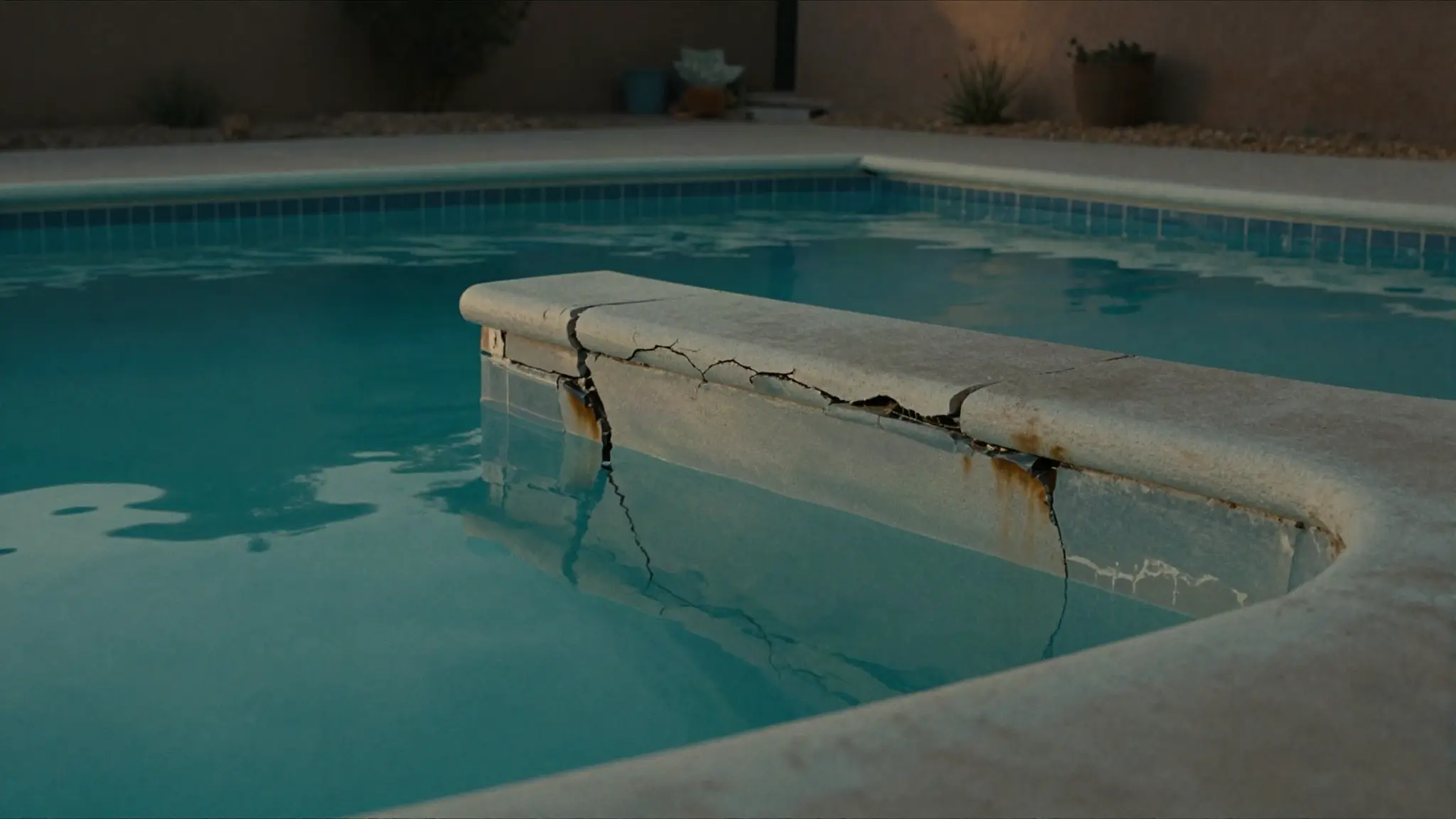
You walk outside to enjoy your pool and notice something that wasn’t there before. A crack across the plaster. A loose tile. A white chalky stain. Maybe the ground next to the pool feels damp. It’s enough to make anyone wonder if they’re about to get hit with a five-figure repair bill.
The truth is, not every crack means your pool is structurally damaged. Not every missing tile means water is leaking. And not every wet spot points to a failing pool shell. The challenge is that many structural problems look alike, even when they’re caused by completely different issues.
In this guide we’ll walk through the most common types of pool structure leaks, what causes them, the warning signs to watch for, and when it’s time to call a professional. By the end you’ll have a much better idea of what you’re looking at — and what to do next. (If you’re still not sure the leak is structural at all, start with the signs of a pool leak or the full list of what causes pool leaks.)
What Is a Pool Structure Leak?
A pool structure leak happens when water escapes through part of the pool itself rather than through the plumbing or equipment. Instead of a leaking pipe or pump, the water is finding a path through the pool’s physical structure — cracks in the concrete shell, fiberglass damage, tears in a vinyl liner, damaged plaster, loose tile or failing grout, cracked skimmers, pool light niches, or expansion joints. Some of these are easy to spot; others hide in plain sight for months before anyone realizes they’re allowing water to escape.
- What Is a Pool Structure Leak?
- Structural Pool Leaks vs. Plumbing Leaks
- Complete Guide to Pool Leak Detection
Is Every Pool Crack a Problem?
Thankfully, no. Pools expand, contract, and settle over time — it’s completely normal for older pools to develop small surface imperfections that never become serious. The key is knowing the difference between a cosmetic crack and one that’s affecting the structure.
Cosmetic cracks
These usually affect only the surface finish, such as plaster or coating. They’re often thin and shallow, limited to the surface, stable over time, and not causing water loss. They may not look great, but many don’t require immediate repair.
Structural cracks
Structural cracks go deeper into the pool shell and deserve closer attention. Warning signs include: the crack keeps getting larger, your pool is losing water, the surrounding deck is shifting, wet soil develops nearby, or the crack appears on both the wall and floor. That doesn’t automatically mean your pool is failing — but it does mean it’s worth having inspected before making assumptions.
- Structural Pool Cracks vs. Cosmetic Cracks
- How to Tell If a Pool Crack Is Leaking
What Causes Pool Structure Problems?
Pools are built to last for decades, but they’re constantly dealing with movement, weather, water pressure, and changing soil. The most common reasons structural issues develop:
- Ground movement. The ground beneath your pool naturally shifts over time, and even small changes stress the shell and surrounding materials.
- Soil settlement. If the soil under part of the pool settles unevenly, it creates pressure that can lead to cracking or movement.
- Tree roots. Large roots change the moisture in the soil and can contribute to movement around a pool.
- Age and normal wear. Aging plaster, loose tiles, worn grout, and expansion joints that no longer seal — a normal part of owning a pool 15–20+ years old.
- Freeze damage. Less common in Arizona, but freezing temperatures can damage structures if water expands inside cracks or materials.
- Can Ground Movement Cause Pool Cracks?
- Can Tree Roots Damage a Pool Structure?
- How Freeze-Thaw Cycles Damage Pool Structures
Concrete Pool Cracks: The Most Common Concern
Concrete pools are incredibly durable, but also rigid — when the ground moves or the structure is stressed, cracks can develop. Common locations include the pool floor, side walls, corners, steps, and the bond beam around the top.
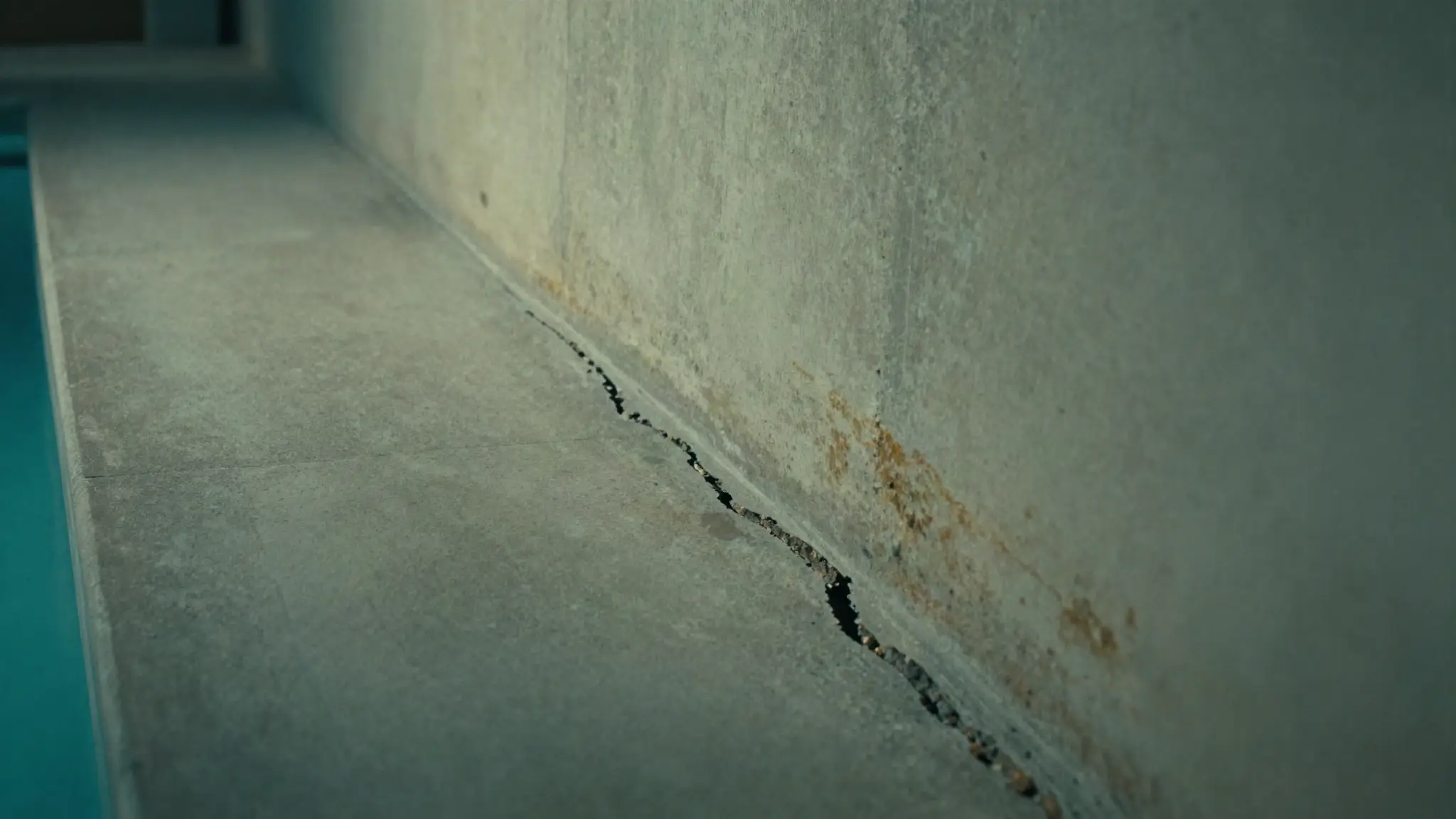
A crack by itself doesn’t tell the whole story. What’s more important is whether it’s changing over time or allowing water to escape. Watch for a crack that’s getting longer or wider, water loss that continues day after day, wet soil near the pool, or sections of deck beginning to settle. Many concrete cracks can be repaired successfully with structural crack repair once the actual cause has been identified.
- Concrete Pool Cracks: Causes, Symptoms & Repairs
- Pool Bond Beam Cracks
Fiberglass & Vinyl Pool Leaks
Fiberglass pool cracks
Fiberglass pools don’t usually crack for the same reasons as concrete. Because the shell is more flexible, problems often show up around stress points, plumbing connections, or areas where the pool has shifted — surface cracks in the finish, stress cracks around fittings, bulging or movement in sections, or damage from improper installation or ground movement. Not every visible crack means the shell has failed; the real question is whether the crack is allowing water to escape.
Vinyl liner pool leaks
Vinyl liner pools are different because the liner itself keeps the water in — and the structure underneath may be perfectly fine. Leaks often come from small tears or punctures, aging brittle vinyl, separation around returns/skimmers/lights, or damage from equipment or sharp objects. The frustrating part is that a small puncture can be hidden underwater or behind wrinkles. Signs include a dropping water level, wrinkles appearing, the liner pulling away from the wall, or visible tears. A worn liner doesn’t always mean the whole pool needs replacing.
- Fiberglass Pool Cracks: Causes, Symptoms & Repairs
- Vinyl Liner Leaks: Causes, Symptoms & Repairs
Pool Plaster Problems: Cracks, Peeling & Spalling
One of the most confusing parts of pool leaks is knowing whether you’re looking at a surface problem or a deeper structural issue. Pool plaster naturally wears down over time — small cracks, rough patches, discoloration, peeling, and spots where the finish separates. But not every plaster problem means your shell is damaged.
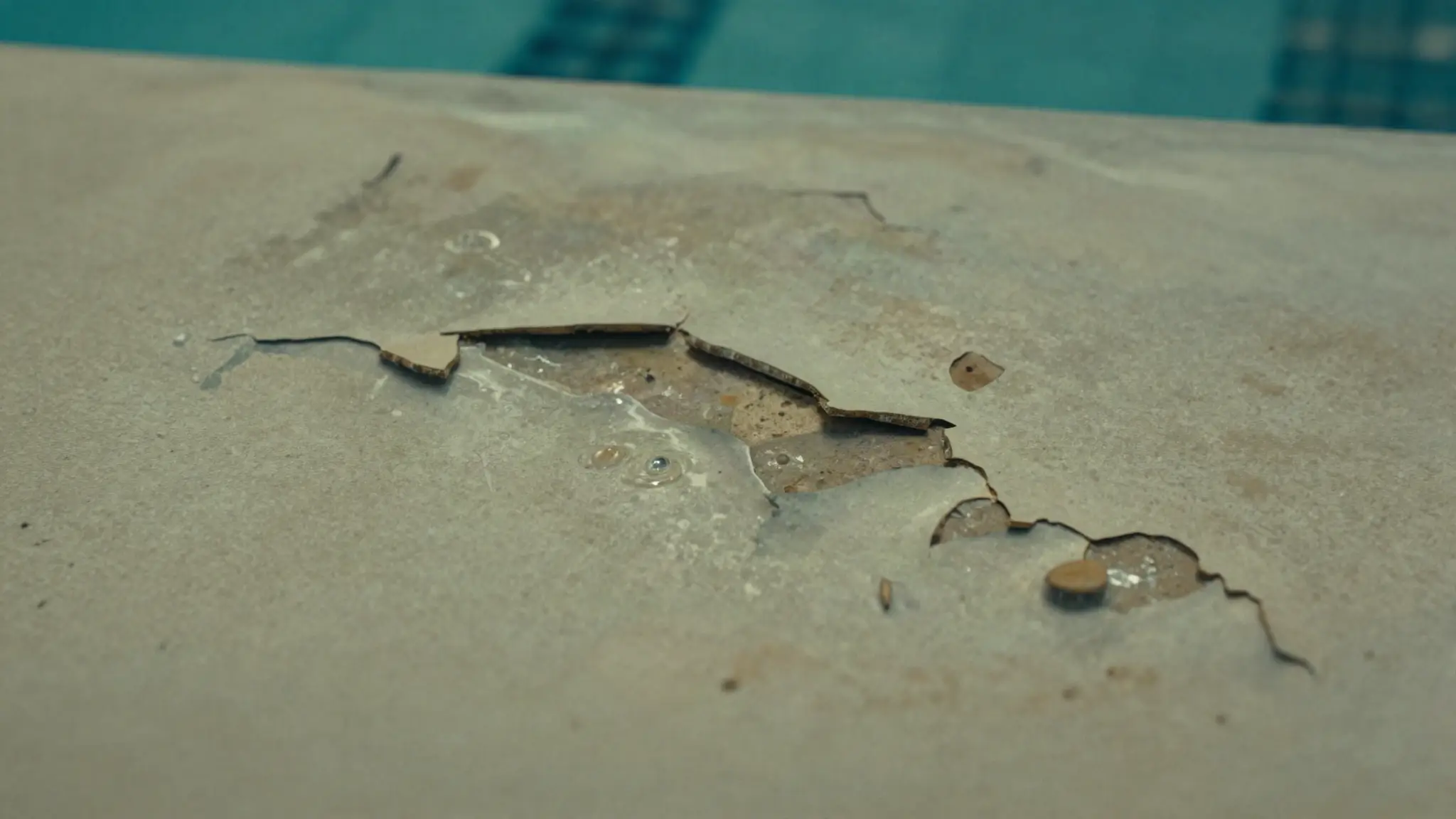
Plaster cracks
Small cracks happen from age, movement, installation problems, or normal expansion and contraction. The important question is whether the crack is only in the finish or extends deeper.
Plaster delamination
This is when plaster begins separating from the surface underneath — hollow-sounding areas, bubbling, flaking sections, or large patches of damaged finish.
Surface spalling
Spalling occurs when the pool surface begins breaking down and pieces of the finish deteriorate. Before assuming you need a complete resurfacing, it’s important to understand exactly what’s failing — a pool that needs a small repair shouldn’t be treated like a full renovation.
- Pool Plaster Cracks
- Pool Plaster Delamination
- Pool Surface Spalling Explained
Pool Tile, Grout & Coping Leaks
The areas around your pool that seem small can create bigger problems. Tiles, grout, and coping protect the edges of your pool and keep water where it belongs. When they fail, water can sometimes find a way behind the surface.
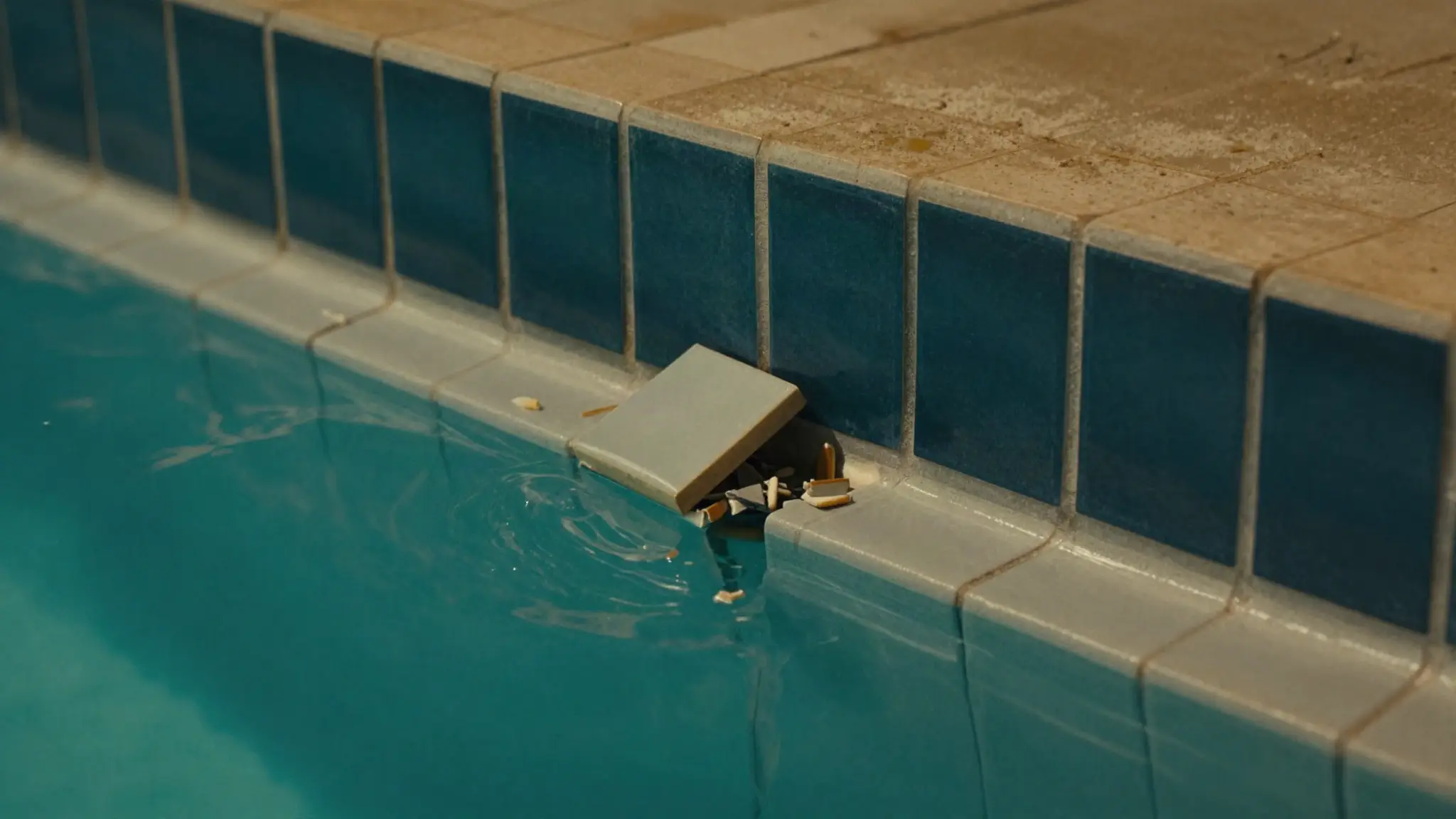
Loose or missing tiles
Tiles loosen from age, movement, water getting behind them, or failed adhesive. A missing tile doesn’t automatically mean your pool is leaking, but it’s worth investigating if it appears alongside water loss.
Grout leaks
Grout deteriorates over time, especially where water moves constantly. Damaged grout can allow moisture behind the surface around tile lines, steps, water features, and pool edges.
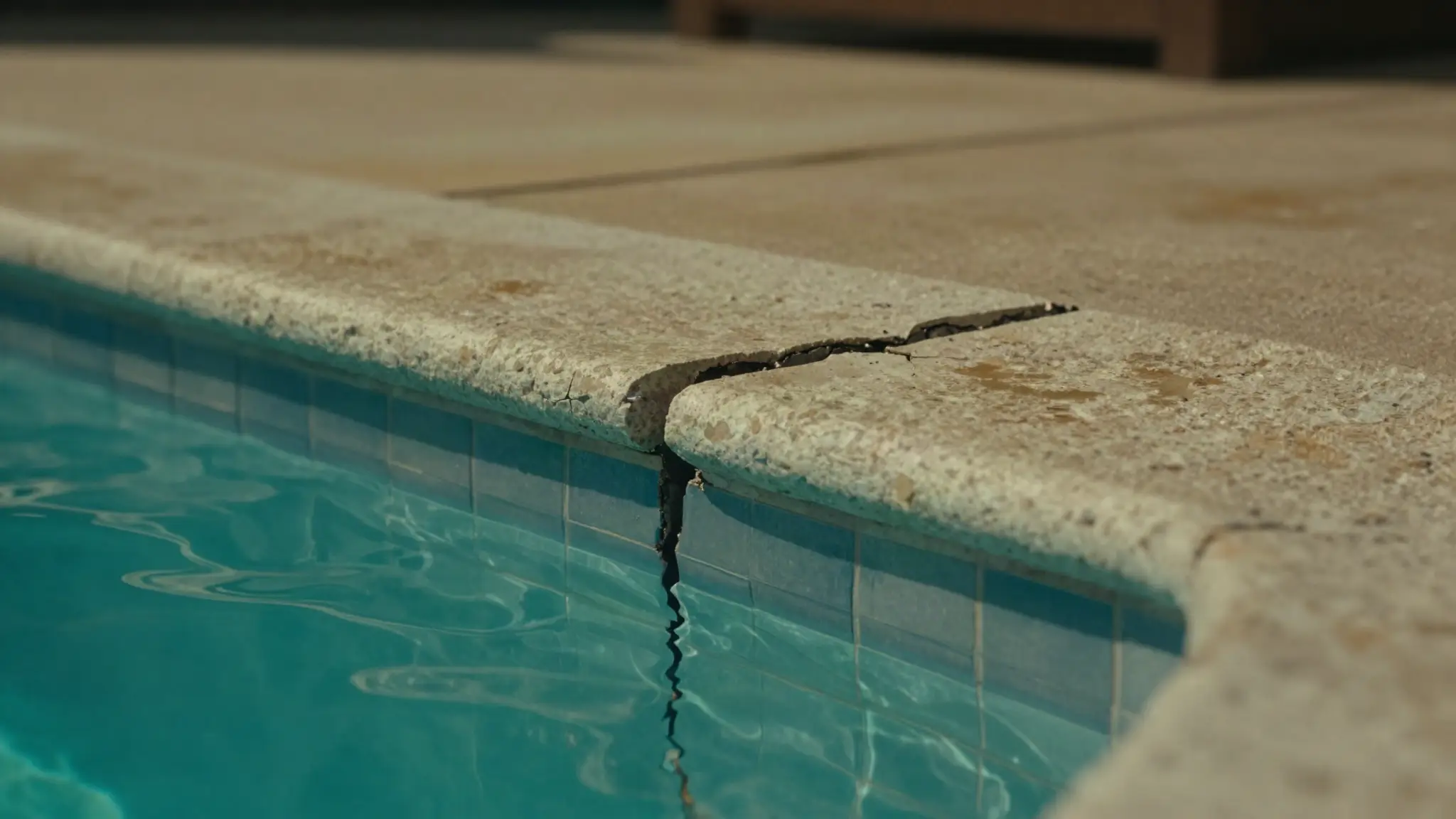
Coping leaks
Coping is the material around the top edge of your pool. When it separates, cracks, or fails, water can move into areas it shouldn’t — look for loose coping stones, cracks around the pool edge, or water collecting behind the coping.
- Loose or Missing Pool Tiles: Could They Be the Problem?
- Pool Grout Leaks
- Pool Coping Leaks
Other Structure Areas That Can Leak
Not every structural leak comes from the main pool shell — several smaller components connected to the structure can become problem areas.
Pool light niches
Pool lights sit inside a housing called a niche, and over time the seals can fail and let water escape. Common signs: water loss stopping near the light level, moisture around the fixture, and problems that seem impossible to locate.
Skimmer body cracks
The skimmer is built into the side of your pool and constantly handles water movement, so the body or its connections can crack over time. Signs include the water level stopping near the skimmer opening, wet areas around the skimmer, and visible damage.
Steps, benches & spa spillways
Built-in features can also develop leaks — steps, benches, attached spas, and spillways. Because these connect to the pool structure, leaks can be difficult to identify without proper testing (an attached spa is the focus of spa leak detection).
- Pool Light Niche Leaks
- Pool Skimmer Body Cracks
- Pool Step & Bench Cracks
- Pool Spa Spillway Leaks
Signs Your Pool Structure May Be Leaking
Seeing a crack or damaged area doesn’t automatically mean you have a structural leak. The bigger question is: is water actually escaping from that area? Some signs that may point toward a structural leak:
- Your water level keeps dropping and evaporation doesn’t explain the loss.
- A crack appears to be changing — getting longer, wider, changing shape, or appearing in multiple areas.
- Wet areas around the pool — though water can travel through soil and appear away from the actual source.
- Water stops dropping at a certain level — at the skimmer, a return jet, or the pool light. That stopping point helps narrow down where the problem may be.
- How to Tell If Your Pool Crack Is Leaking
- Calcium Deposits Around the Pool: Are They a Sign of a Leak?
Can a Pool Crack Get Worse If You Ignore It?
Sometimes. Not every crack becomes a major problem — some cosmetic cracks stay unchanged for years without causing water loss. However, a crack that is allowing water to escape shouldn’t be ignored, because water movement can lead to soil erosion around the pool, additional movement, larger damaged areas, and more expensive repairs later. The challenge is knowing which type of crack you have: from the surface, a homeowner usually can’t tell how deep it goes, whether water is moving through it, or whether it’s cosmetic or structural. The goal isn’t to panic every time you see a crack — it’s to understand what the crack is actually doing.
- Can a Pool Crack Get Worse If You Ignore It?
How Professionals Test Structural Leaks
Finding a crack is only part of the process — the bigger question is whether that crack is actually causing the leak. A professional inspection may include a close visual inspection (crack location, size, shape, surrounding areas, and signs of movement), dye testing to see whether water is moving through a suspected area, pressure testing nearby plumbing to rule out other causes, and a water-loss evaluation (does it lose water with the pump on or off? does it stop at a certain level?). The goal isn’t simply finding something that looks damaged — it’s confirming the actual source of water loss before repairs begin. That’s exactly what our complete pool leak detection guide covers.
- How Professionals Test Structural Pool Leaks
Can You Inspect a Pool Structure Yourself?
There are several things you can safely do before calling a professional: take pictures of cracks, measure changes over time, monitor water loss, look for wet areas around the pool, and check if tiles or coping are moving. This information can actually help a technician diagnose the problem faster. However, avoid cutting into plaster, draining the pool to inspect the shell, removing structural materials, or attempting major crack repairs — a small mistake can turn a repair problem into a much larger project. DIY inspection is useful for gathering information; it’s not a replacement for properly diagnosing a structural leak. (For the full at-home routine, see our DIY pool leak testing guide.)
- DIY Pool Structure Leak Inspection
Does a Structural Leak Mean You Need a New Pool?
This is probably the biggest fear homeowners have — they find a crack and immediately think “is my pool ruined?” Usually, that’s not the first conclusion. Many pool structure problems can be repaired depending on the type of pool, the location of the damage, the cause, and how severe it is. A small crack and a major structural failure are two completely different situations. The mistake many homeowners make is jumping straight to the most expensive possibility before knowing what they’re dealing with. Before approving major work, ask: what exactly is damaged? Is it causing water loss? What repair options are available? Why is this repair recommended? A good specialist should explain the problem clearly without making you feel pressured.
Pool Structure Leak Repair Costs
The cost depends on what failed and how difficult the repair is — pool type, location of damage, repair method, accessibility, and labor. In general: lower-cost repairs include small tile repairs, minor surface fixes, seal repairs, and small fitting issues; medium repairs may include crack injections, plaster repairs, and localized surface restoration; higher-cost repairs can involve major shell repairs, extensive structural work, resurfacing, or larger reconstruction. The important thing is making sure you’re paying for the correct repair — a homeowner who fixes the wrong problem can spend thousands and still have the original leak.
- Pool Structure Leak Repair Costs
Repair or Resurface? How to Know
Many homeowners confuse pool repairs with resurfacing — they’re not the same. A repair focuses on a specific problem: a crack, a leak source, damaged tile, or failed coping. Resurfacing replaces or restores a large portion of the pool’s interior finish. Resurfacing may make sense when the plaster is reaching the end of its lifespan, surface damage is widespread, or multiple areas are failing. A repair may make more sense when the issue is isolated, the surface is otherwise in good condition, or the problem has a specific cause. The right choice depends on the actual condition of your pool — not just its age.
- When Does a Pool Need Replastering Instead of Repair?
- When Should You Repair vs Resurface a Pool?
When Should You Call a Professional?
A professional evaluation makes sense when your pool continues losing water, a crack appears to be growing, you suspect shell damage, the deck around the pool is moving, you can’t determine the cause, or repairs involve major structural components. The biggest mistake homeowners make is trying to fix the visible problem without confirming the actual source — a crack may be the cause, or it may simply be where the damage became visible. Getting the diagnosis right first usually prevents wasted money and unnecessary repairs.
Before you approve any work, see what structural pool repairs typically cost.
- Arizona Geological Survey — Earth Fissures & Land Subsidence — How Arizona soil movement and subsidence crack pool shells, decks, and plumbing (Univ. of Arizona).
- EPA WaterSense — Pool Water Efficiency — U.S. EPA on how pools lose water, including through the structure.
- University of Arizona Cooperative Extension — Water Conservation — Arizona soil and water conditions that affect pool structures.
Frequently Asked Questions
Are all pool cracks serious?
No. Many cracks are cosmetic. Others can allow water loss or indicate movement. The difference depends on the location, depth, and whether water is escaping.
How do I know if my pool crack is leaking?
Signs include continued water loss, wet areas around the pool, or the water level consistently stopping near the crack location.
Can a cracked pool be repaired?
In many cases, yes. The repair depends on the pool type, damage location, and severity.
Can a pool crack cause water loss?
Yes. Some cracks allow water to escape, while others only affect the surface appearance.
How much does structural pool repair cost?
Costs vary depending on the repair needed. Small repairs may be relatively affordable, while major structural work can become significantly more expensive.
Do structural pool repairs require draining the pool?
Not always. Many repairs can be completed without fully draining the pool.
Should I repair or resurface my pool?
It depends on whether the problem is isolated damage or widespread surface deterioration.
Can I fix a pool crack myself?
Small cosmetic repairs may be possible, but leaking or structural cracks should be evaluated before attempting repairs.
Don’t Ignore the Problem. Understand It First.
Finding a crack, missing tile, or damaged area around your pool can be stressful — but the worst decision is making an expensive repair before understanding what’s actually happening.
Not every crack means your pool is failing. Not every damaged surface means you need a complete renovation. The first step is figuring out whether you have a cosmetic issue, a repairable leak, a structural problem, or a completely different cause. Understanding the problem first helps you ask better questions, avoid unnecessary repairs, and make a smarter decision. Keep learning with our complete pool leak detection guide, the pool leak symptoms guide, or what causes pool leaks.