The First Signs of a Pool Leak Most Homeowners Miss
By the time a leak is obvious, it’s often been going for weeks. Here are the quiet, easy-to-miss early signs that a pool leak is just getting started.
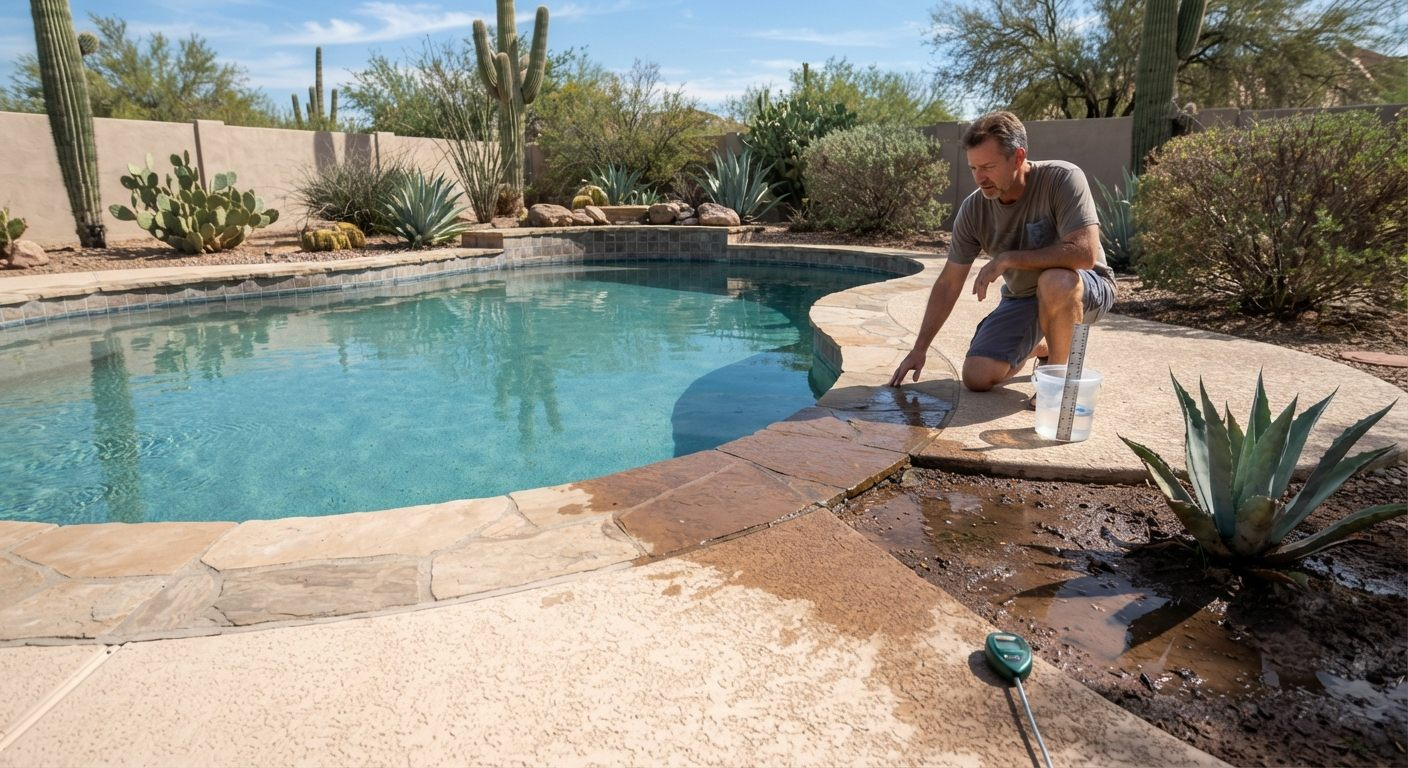
The earliest signs of a pool leak are easy to miss: topping off a little more often, an auto-fill that runs longer, chemicals that drift out of balance faster, a faint calcium line on the tile, or a slightly higher water bill. None of these scream “leak,” which is exactly why a small problem often runs for weeks before anyone notices.
Most people catch a pool leak only when it’s obvious — a visibly low pool or a soggy yard. But the first signs of a pool leak are far quieter, and spotting them early can save you money and hassle.
The tricky part is that these early clues look like everyday pool ownership. Here’s what to watch for before a small leak becomes a big one.
The Subtle Signs Most People Overlook
Individually, each of these is easy to explain away. Together, they’re worth a closer look:
- You’re adding water a little more often. Not a dramatic drop — just topping off every few days instead of once a week.
- The auto-fill runs longer. If you can hear it cycling more than it used to, it’s quietly replacing lost water.
- Chemicals drift faster. Fresh fill water dilutes your chlorine and throws off the balance sooner than normal.
- A faint calcium line appears. A thin chalky streak on the tile or below a fitting hints at water seeping and evaporating.
- Your water bill creeps up. A small but steady increase with no change in habits is a classic early tell.
- A damp spot that keeps coming back. One small area of decking or soil that never quite dries out.
Why These Signs Get Missed
Early leaks hide because they look normal. In Arizona’s heat, a little extra evaporation is expected, so a bit more topping off rarely raises alarm.
An auto-fill makes it worse. It silently keeps the pool full, so the water level never looks low even while water is escaping.
And because the loss is gradual, there’s no single dramatic moment to notice. The problem simply grows in the background, which is why our full list of pool leak signs is worth a periodic check.
Where Early Leaks Usually Start
Small leaks tend to begin at the pool’s weak points long before they’re visible. Knowing the usual suspects helps you take the early signs seriously.
- A worn pump seal or O-ring at the equipment pad — often the very first drip.
- A hairline crack at the skimmer throat or along the tile line.
- A loosening return fitting where water re-enters the pool.
- The pool light conduit, a common hidden starting point.
None of these are dramatic at first. That’s exactly why the early signs above deserve a second look rather than a shrug.
How to Tell an Early Leak From Normal Loss
The fastest way to separate a real leak from ordinary evaporation is a bucket test. It measures both at once, so any extra loss is the leak.
It also helps to know your baseline. Our guide to how much water loss is normal gives you the numbers to compare against.
If you’d rather run a few quick checks yourself first, finding a pool leak yourself walks through the simple ones step by step.
What These Early Signs Are Not
It’s worth staying level-headed. A single hot, windy week can boost evaporation and mimic an early leak all on its own.
A one-time chemistry swing after a big pool party isn’t a red flag either. The pattern that matters is a steady trend — several small signs pointing the same way, week after week.
Why Catching It Early Matters
An early leak is almost always the cheapest version of the problem. A small crack or worn seal caught now is a minor repair.
Left alone, that same leak wastes more water each week and can undermine the deck or worsen a crack over time. Acting on the first signs isn’t about panic — it’s simply the least expensive path.
What to Do If You Spot One
Don’t panic, and don’t ignore it. Start by turning off the auto-fill and marking your water level for a few days to see the real rate of loss.
If the loss looks like more than evaporation and you can’t find an obvious cause, that’s the point to bring in a pro. A professional pool leak detection service can confirm the source quickly, and our pool leak symptoms guide ties every clue together.
A Two-Minute Weekly Habit
The easiest way to catch a leak early is to track your water level on purpose. Put a small piece of tape at the waterline once a week.
If the pool keeps dropping to the same spot, or your auto-fill and water bill are climbing together, you’ll spot the trend long before it turns into a real problem.
Keep reading: Wet Spots Around Your Pool: What They Could Mean
Frequently Asked Questions
What is usually the very first sign of a pool leak?
Needing to add water a little more often than usual is typically the earliest sign. It’s subtle, which is why it’s so often mistaken for normal evaporation until other clues appear.
Can an auto-fill hide an early leak?
Yes — that’s one of the most common reasons early leaks go unnoticed. The filler keeps the pool topped off, so the level never looks low even as water escapes. Watch your water bill instead.
Do chemicals really change when there’s a leak?
They can. Constant fresh fill water dilutes chlorine and shifts your balance faster than normal, so if you’re chasing your chemistry more than usual, a leak is worth ruling out.
How soon should I act on an early sign?
Run a bucket test as soon as you suspect something. If it confirms real loss, address it promptly — early leaks are the cheapest and easiest to fix.
The Bottom Line
The first signs of a pool leak are quiet — a bit more topping off, a busier auto-fill, drifting chemistry, a faint calcium line — and catching them early is what keeps a small fix small.
Noticing one or two of these? Take our free 60-second assessment to see the most likely source before it grows.