Wet Spots Around Your Pool: What They Could Mean
A patch of ground that never dries out is one of the clearest outdoor signs of a pool leak — but not the only explanation. Here’s how to read it.
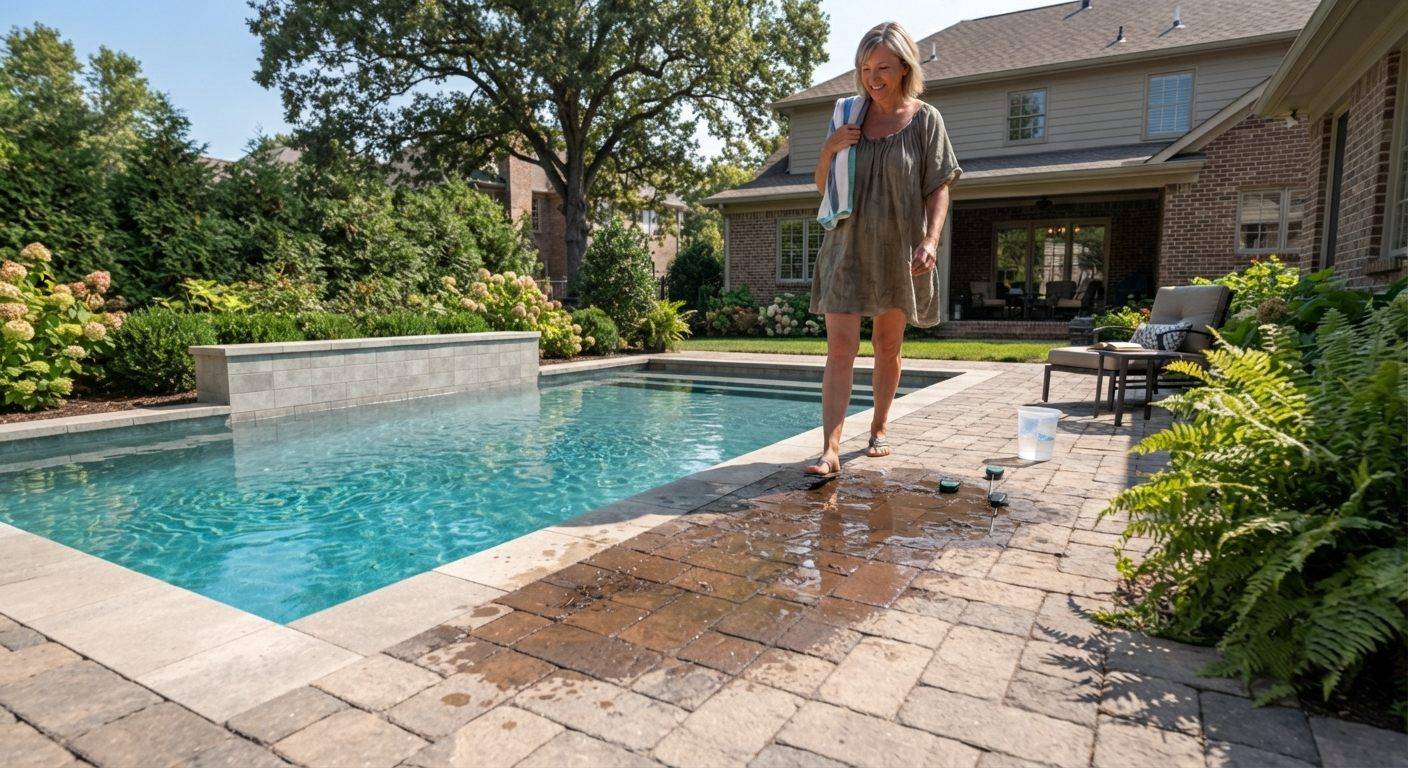
A wet spot that won’t dry out around your pool usually means water is escaping underground — often from a leaking plumbing line or a crack in the shell. It can also be harmless (irrigation, splash-out, or drainage), so the tell is a patch that stays damp even when the pool and sprinklers are off.
Spotting wet spots around your pool in the middle of a dry Arizona yard is a red flag worth taking seriously. When water surfaces where it shouldn’t, it usually escaped from somewhere — and a pool leak is a leading suspect.
That said, not every damp patch is a leak. Let’s walk through what wet spots most often mean, how to rule out the innocent causes, and what the location is telling you.
What Wet Spots Usually Mean
When the ground beside a pool stays wet, the water is almost always coming from one of these sources:
- An underground plumbing leak. A cracked suction or return line loses water into the soil, which then surfaces nearby.
- A structural leak. A crack in the shell, floor, or a fitting lets water seep out behind or beneath the pool.
- An equipment-pad leak. A drip at the pump, filter, or valves keeps the pad and surrounding ground damp.
- A skimmer or light-niche leak. Water escaping at these points travels through the soil and rises a short distance away.
The Innocent Explanations to Rule Out First
Before assuming a leak, rule out the everyday causes. A few common ones can mimic a leak:
- Irrigation or sprinkler overspray soaking the area on a schedule.
- Splash-out from swimmers, pets, or a water feature.
- Poor drainage that pools rainwater after a storm.
- A downspout or AC condensate line emptying nearby.
The simplest test: turn off the irrigation and keep the pool level topped for a few days. If the spot dries up, it wasn’t the pool. If it stays wet, a leak moves to the top of the list.
How to Confirm It’s the Pool
Once you’ve ruled out sprinklers and rain, a couple of checks point the finger at the pool.
Watch the wet spot against your water level. If the ground stays saturated while the pool keeps dropping, the two are almost certainly connected.
You can also run a bucket test to confirm the pool is losing more than evaporation explains. It’s the same approach we cover in what a pool leak looks like, where wet ground is one of the classic tells.
What the Location Is Telling You
Where the wet spot sits offers a real clue about the source. A little detective work here saves time later.
- Near the equipment pad — suspect a fitting, seal, or valve at the pad.
- Along the run between pool and equipment — suspect an underground plumbing line.
- Right against the pool wall — suspect a structural or fitting leak in the shell.
- Out in the yard, away from everything — water can travel, so this often still traces back to a buried line.
None of this replaces testing, but it gives a technician a strong head start — and it lines up with the broader signs your pool has a leak.
Wet Spots and Arizona Soil
Arizona’s soils make wet spots especially worth watching. Much of the Valley sits on clay-heavy, expansive ground that swells when it gets wet and shrinks as it dries.
A slow leak feeding one area can set off that swell-and-shrink cycle. Over time it stresses the deck, coping, and pool shell — so a damp patch here isn’t just cosmetic, it can speed up cracking if left to run.
Why You Shouldn’t Ignore a Wet Spot
A persistent wet spot isn’t just a clue — it’s also a warning. Water moving through the soil erodes it, creating voids under the deck and coping.
Over time, that can crack or sink the deck and undermine the pool itself. It’s a big reason a leak tends to get worse the longer it’s left, so a damp patch is worth acting on sooner rather than later.
How a Pro Confirms the Source
If the wet spot traces back to the pool, a technician doesn’t guess — they test. Suspected plumbing lines are pressure-tested to find which one is losing water.
Dye testing checks the shell and fittings, and acoustic equipment traces a pressurized line to the exact leak. That’s how a vague wet patch becomes a marked spot you can repair with confidence.
What to Do Next
Start by ruling out irrigation and drainage, then watch whether the spot tracks with your water level. That quickly tells you whether the pool is the source.
If it is — or if you simply can’t tell — a professional pool leak detection service can pinpoint the exact spot with pressure and acoustic testing, and our full pool leak symptoms guide puts the wet-spot clue in context.
Frequently Asked Questions
Does a wet spot always mean a pool leak?
No. Irrigation, splash-out, poor drainage, and AC condensate can all wet the ground. The giveaway is a spot that stays damp when the sprinklers are off and it hasn’t rained — that points to a leak.
Can a leak surface far from the pool?
Yes. Water follows the path of least resistance through soil and along pipes, so it can rise several feet from the actual leak. That’s why the wet spot marks the area, not the exact source.
Is a wet equipment pad a leak?
Often, and it’s usually a cheaper fix. A drip at the pump, filter, or a valve keeps the pad and nearby ground damp. Check it while the system runs and dry it to see if the water returns.
How urgent is a wet spot around the pool?
It’s not an emergency, but don’t sit on it. Ongoing saturation erodes soil and can undermine your deck, turning a small repair into a much larger one.
Will grass grow greener over a pool leak?
It can. A patch of unusually lush or fast-growing grass fed by escaping water is a subtle version of a wet spot, and it deserves the same checks.
The Bottom Line
A patch of ground that won’t dry out usually means water is escaping underground — rule out sprinklers and rain first, and if it stays wet, treat it as a likely leak.
Got a spot that keeps coming back? Take our free 60-second assessment to see the most likely source before you call anyone.