How Accurate Is Pool Leak Detection?
Can a technician really pinpoint a leak you can’t even see? Here’s how precise modern detection is — and what makes the difference between “within inches” and a wild guess.
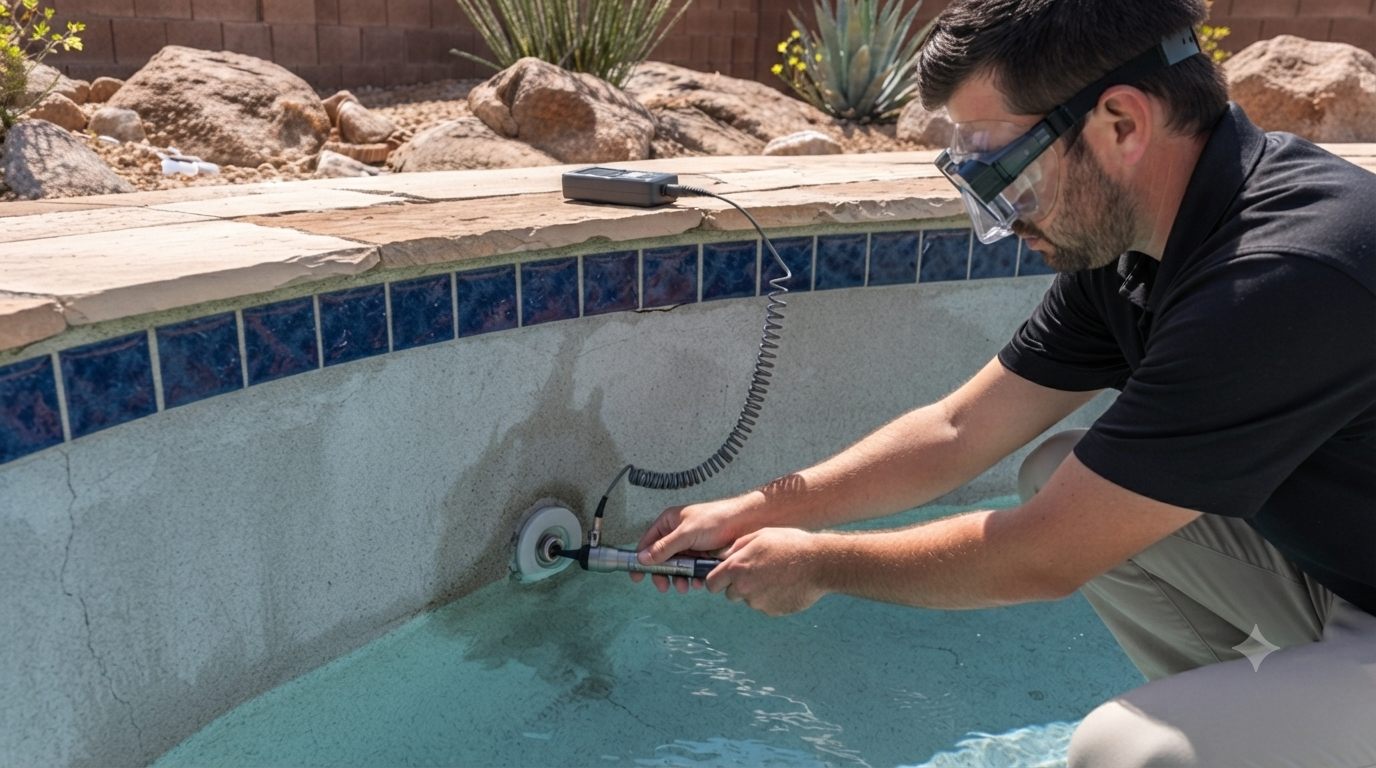
Professional pool leak detection is very accurate — an experienced technician can usually pinpoint a leak to within a few inches. That precision comes from using the right test for the leak and cross-confirming with a second method, not from any single gadget. Accuracy drops mainly when there are several leaks at once, a deep underground line, or when someone skips the testing and guesses.
If you’re about to pay someone to find a leak you can’t see, it’s fair to ask how accurate pool leak detection really is. The honest answer: with the right approach, it’s remarkably precise — a skilled technician can typically locate a leak to within a few inches, close enough that any repair is small and targeted instead of a yard-wide dig.
But “accurate” depends far more on method and experience than on owning the fanciest equipment. Detection works by running specific tests that rule areas in or out, and accuracy is really a measure of how well those tests were chosen and confirmed. Here’s what that looks like in practice.
How Precise Is “Accurate,” Exactly?
There are two different questions hiding inside “accuracy,” and a good detection answers both:
- Is there actually a leak? — confirming water is being lost through a fault, not just evaporation or splash-out.
- Where exactly is it? — marking the specific fitting, crack, or length of pipe that’s failing.
On the first, a proper test is essentially conclusive. On the second, a seasoned technician can commonly get within a few inches on a pressurized line and can point to the exact fitting or crack on the structure. That’s the difference between “your return line leaks somewhere” and “it leaks right here, 14 inches down.”
What Makes Detection Accurate
Precision isn’t luck. These are the things that push a detection toward pinpoint accuracy:
- The right test for the leak. Pressure testing for plumbing, dye testing for structural spots, acoustic listening to trace a pressurized line — matching the method to the symptom is most of the battle.
- Cross-confirmation. The best technicians prove a leak two ways before marking it, so a single false reading doesn’t send anyone digging in the wrong place.
- Isolating the systems first. Separating plumbing, equipment, and structure keeps a leak in one area from muddying the results in another.
- Experience. Knowing what a faint acoustic signal or a slow pressure drop actually means comes from having heard it hundreds of times.
- Good, well-used equipment. Quality gear helps — but only in trained hands. The tool doesn’t find the leak; the technician does.
What Can Reduce Accuracy
Detection isn’t magic, and a few situations genuinely make it harder to be exact:
- Several leaks at once. Pools often have more than one, and a second leak can mask or mimic the first until each is isolated.
- Deep or long underground lines. A buried pressure-side pipe takes more work to trace, and soil can carry the sound or water away from the true spot.
- Cloudy water or a full-to-the-brim pool. Poor visibility makes dye testing harder and can hide a structural leak.
- Skipping steps. The single biggest accuracy killer is guessing — treating the first wet spot as the leak instead of testing to confirm it.
None of these make a leak un-findable; they just mean the job takes longer, which is exactly why detection times vary from under an hour to most of an afternoon.
How to Tell a Detection Was Accurate
You don’t have to take the result on faith. A thorough, accurate detection leaves you with clear evidence:
- The technician showed you the exact marked location, not a vague area.
- They explained which test confirmed it and why.
- You got a written summary you can keep and reference for repair quotes.
- They didn’t lead with “we’ll have to drain it” before running a single test.
That documentation is also your best protection at repair time — knowing the precise source is what lets you judge whether a quote is fair, which our pool leak repair cost guide breaks down. And it’s a core reason detection and repair are separate steps: you confirm exactly what’s wrong before anyone starts fixing.
Is DIY Testing as Accurate?
Home tests have their place — a bucket test can confirm you’re losing water beyond evaporation, for example. But homeowner methods are good at answering “is there a leak?” and poor at answering “where, exactly?” Pinpoint accuracy needs pressure and acoustic equipment used with practice. If you want the precise location, that’s when a professional pool leak detection service earns its keep.
Keep reading: How Much Does Pool Leak Detection Cost?
Frequently Asked Questions
How close can a technician get to the exact leak?
On a pressurized plumbing line, often within a few inches. On the structure, they can usually point to the exact crack, fitting, or skimmer throat that’s leaking. That precision is what keeps any excavation small and targeted.
Can pool leak detection be wrong?
It can miss the mark when steps are skipped or a second leak is masking the first. That’s why good technicians cross-confirm with two methods and isolate each system before marking a spot — it’s the guessing, not the equipment, that causes errors.
Does more expensive equipment mean more accuracy?
Not on its own. Accuracy comes from choosing the correct test and interpreting it correctly. An experienced technician with solid gear will out-locate a novice with the priciest tools every time.
Do they need to drain the pool to be accurate?
Almost never. Pressure testing, dye testing, and acoustic listening are designed to pinpoint leaks with the pool full. Draining is a rare last resort, not a requirement for an accurate result.
The Bottom Line
Done right, pool leak detection is accurate to within inches — because it’s built on confirmed tests, not guesses.
Think your pool has a leak? Take our free 60-second assessment to see the most likely source before a technician ever arrives.