How Do You Know If Your Pool Has a Leak?
A few simple checks tell you whether you’ve got a real leak — or just Arizona summer evaporation.
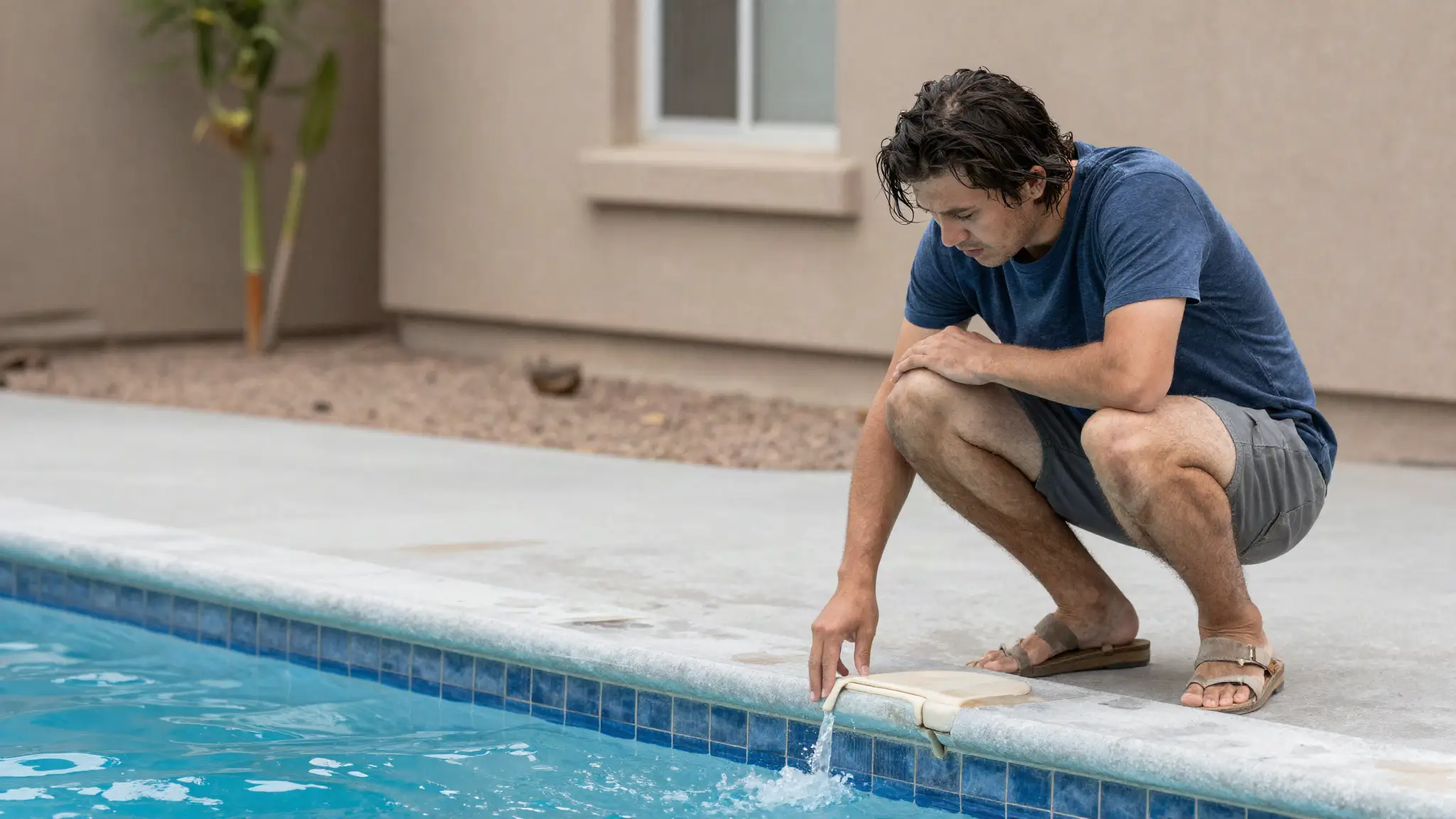
The quickest way to know if your pool has a leak is the bucket test — if your pool drops faster than a bucket of water sitting next to it, you’re losing more than evaporation. Other tell-tale signs: constantly adding water, wet spots that won’t dry, air bubbles from the returns, or losing more than about a quarter-inch a day.
If you keep topping off your pool and wondering whether something’s wrong, here’s how to know if your pool has a leak: compare your water loss to plain evaporation, then look for a few specific signs. Most homeowners can rule a leak in or out in a day or two — before spending a dime.
The Fastest Way to Know: The Bucket Test
The bucket test is the simplest check there is. Fill a bucket with pool water, set it on a step so it’s partly submerged, mark the water level inside and outside, and wait 24 hours. Evaporation affects both equally — so if the pool dropped more than the bucket, the difference is your leak.
We walk through it step by step (plus the dye test) in our guide to simple at-home pool leak tests.
Signs Your Pool Is Probably Leaking
Beyond the bucket test, these are the signs that point to a real leak:
- You’re adding water every few days
- The level drops more than about a quarter-inch per day
- Wet or soggy spots around the pool or equipment that never dry
- Cracks in the deck, or the deck shifting or sinking
- Air bubbles coming from the return jets
- A water bill that jumped for no obvious reason
- Algae or chemistry that won’t stay balanced (from constant fresh water)
One or two of these on a 110-degree week might just be heat. Several of them together usually means it’s time to look closer.
Is It a Leak or Just Evaporation?
This trips up a lot of Arizona homeowners — our sun can evaporate a surprising amount of water. As a rule of thumb, losing up to about a quarter-inch a day can be normal in peak heat; consistently more than that leans toward a leak. If you want the full picture of what’s normal versus not, our guide to the warning signs your pool has a leak breaks it down.
What to Do If You Think You Have a Leak
If the signs point to a leak, the next step isn’t to start replacing parts — it’s to find where the water is going. That’s the difference between detection and repair, and getting it in that order is what keeps you from overpaying. A professional leak detection service can pinpoint the source without guessing.
Keep reading: Is My Pool Leaking or Is It Just Evaporation?
Frequently Asked Questions
How much water loss means my pool is leaking?
Losing more than about a quarter-inch a day — especially consistently — usually points to a leak. The bucket test is the best way to separate real loss from evaporation.
Can a pool leak fix itself?
No. Leaks don’t heal, and waiting usually makes the repair bigger and more expensive as water erodes soil or spreads a crack.
Where do pools leak most often?
Common spots are the equipment pad (pump seals, fittings), the plumbing lines, the skimmer, and the pool structure itself. Detection narrows down which one you’re dealing with.
The Bottom Line
Run the bucket test, watch for the signs, and you’ll know within a day whether you have a real leak — without paying for anything yet.
If the signs point to a leak, take our free 60-second assessment to see the most likely source before you call anyone.