Is My Pool Leaking or Is It Just Evaporation?
In Arizona’s heat, some water loss is normal. Here’s how to tell the difference in a day.
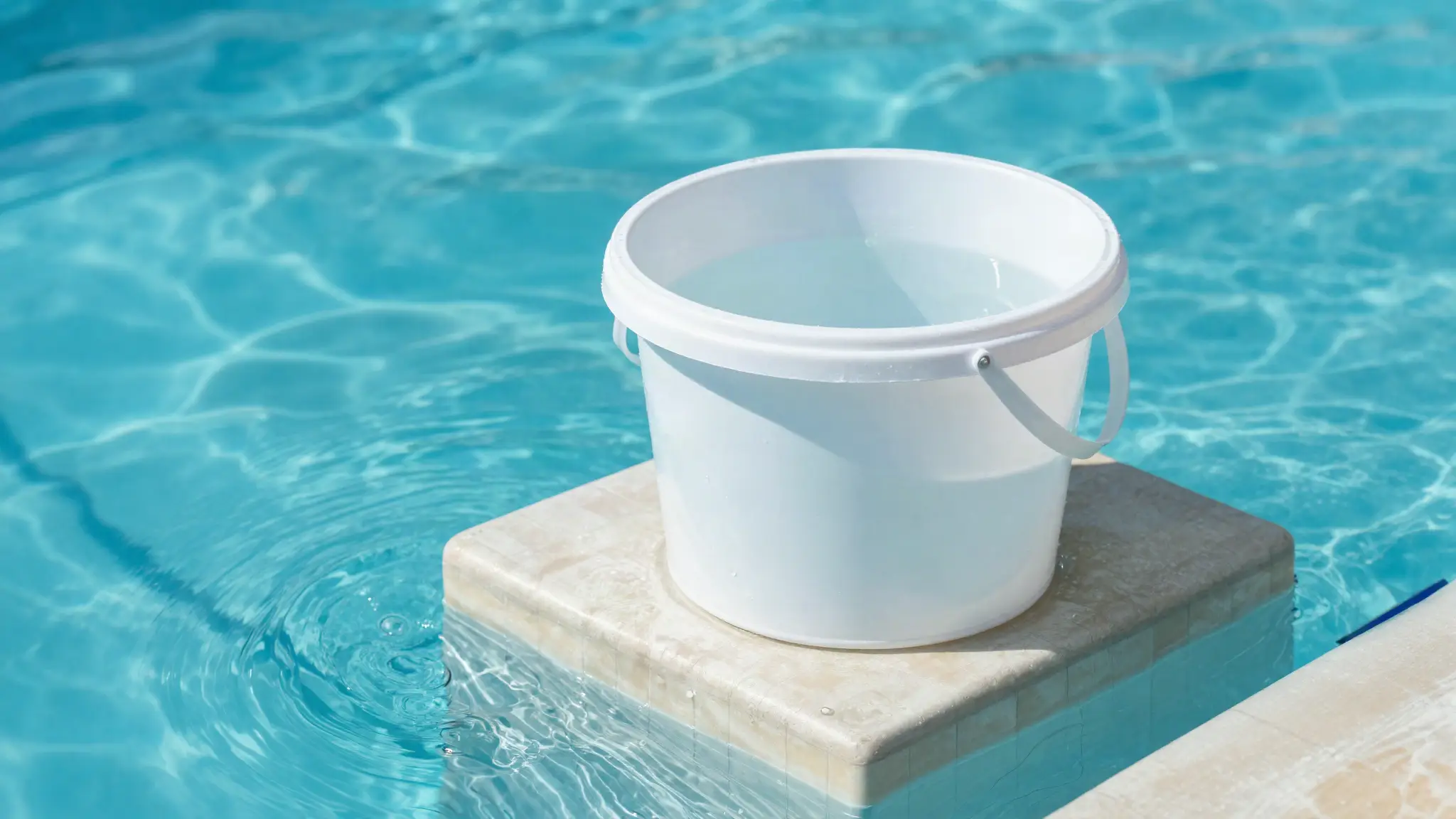
The bucket test settles it. Because evaporation affects a bucket of pool water and the pool equally, any extra drop in the pool is a leak. In Arizona’s peak heat, losing up to about a quarter-inch a day to evaporation is normal — consistently more than that usually means you’re leaking.
It’s the most common pool question in Arizona: is my pool leaking, or is it just evaporation? Our sun really can pull a surprising amount of water out of a pool, so it’s a fair thing to wonder before you panic. The good news is you can answer it yourself in about 24 hours.
The Difference Between a Leak and Evaporation
Evaporation is water leaving the surface as vapor — it happens to every pool, every day, and speeds up in heat, wind, and dry air. A leak is water escaping through the plumbing, equipment, or shell. The tricky part is they look identical from the deck: the level just goes down. The difference is that evaporation is predictable and limited, while a leak keeps going.
How Much Does a Pool Evaporate in Arizona?
There’s no single number, but evaporation climbs with:
- High temperatures and strong, direct sun
- Low humidity (our dry desert air pulls water fast)
- Wind across the pool surface
- A big temperature gap between the water and the air
- Running water features, fountains, or waterfalls
As a rough guide, up to about a quarter-inch a day in peak summer can be normal. If you’re losing an inch or two a day, evaporation alone doesn’t explain it.
The Bucket Test Settles It
The bucket test removes the guesswork. Set a filled bucket of pool water on a step, mark the level inside and outside, and check after 24 hours. Both drop from evaporation — but if the pool dropped more than the bucket, that extra loss is a leak. Full step-by-step instructions are in our guide to at-home pool leak tests.
Signs It’s a Leak, Not Evaporation
Evaporation doesn’t leave clues around the yard. A leak often does:
- Wet or soggy spots that never dry, even away from splashing
- The equipment pad staying damp
- Air bubbles from the return jets
- The level dropping even with the pump off (or only with it on)
- A water bill that jumped
If those sound familiar, our guide to knowing whether your pool has a leak and the full list of leak warning signs can help you confirm it. When you’re ready to find the exact source, a professional leak detection service pinpoints it without guessing.
Keep reading: How Much Water Loss Is Normal in a Pool?
Frequently Asked Questions
How much pool evaporation is normal in Arizona?
In peak summer heat, up to about a quarter-inch a day can be normal. Consistently losing more than that — especially an inch or more — usually points to a leak.
Does a pool evaporate more with the pump running?
Running water features and jets can increase surface evaporation a little. But if your pool loses noticeably more water only when the pump runs, that points to a pressure-side leak, not evaporation.
Will a pool cover stop the water loss?
A cover dramatically cuts evaporation. If the loss continues even under a cover, you’re almost certainly dealing with a leak.
The Bottom Line
Run the bucket test for 24 hours. If the pool outpaces the bucket, it’s a leak — not the sun.
If it turns out to be a leak, take our free 60-second assessment to see the most likely source before you call anyone.