How Does Pool Leak Detection Work?
A look at the exact tests a specialist uses to find where your pool is losing water — without tearing up your yard.
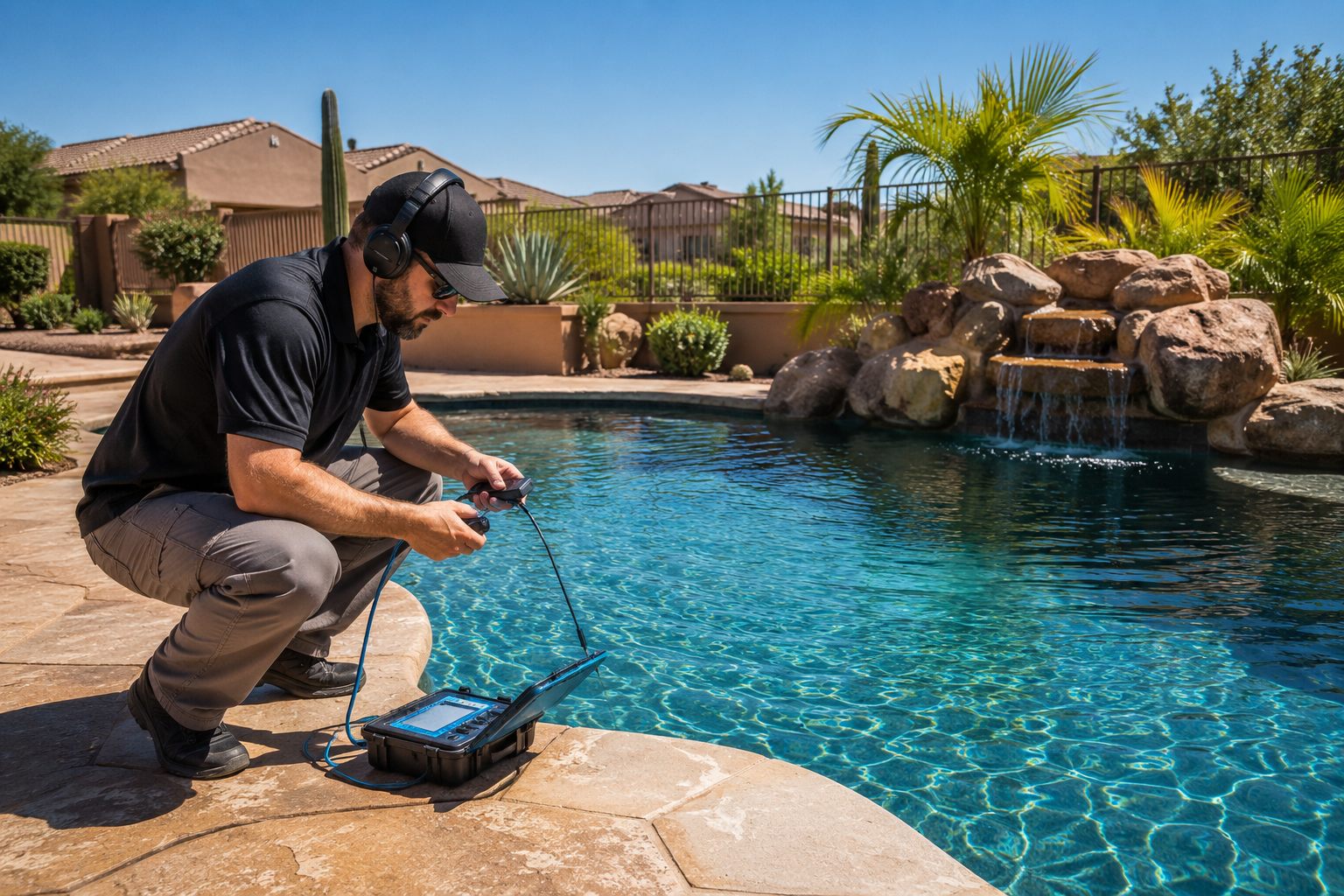
Pool leak detection works by narrowing down the source with targeted tests rather than guessing. A technician reviews your symptoms, inspects the pool and equipment, then uses pressure testing to check the plumbing, dye testing to confirm leaks at cracks and fittings, and acoustic or electronic listening equipment to pinpoint the exact spot — usually with the pool full and without digging.
If your pool keeps dropping and you’re wondering how pool leak detection works, here’s the short version: it’s a process of elimination. A good technician doesn’t dig at the first wet spot — they run specific tests that rule areas in or out until the exact leak is found. Below is what actually happens during a professional detection, step by step.
The reason the process matters is simple: water is deceptive. A wet patch in the yard can be several feet from the real leak, because water travels along pipes and through soil before it surfaces. Finding the source — not just the symptom — is the entire job, and it’s what separates a targeted repair from an expensive guess. (If you’re not sure a leak is even the problem yet, start with how to know if your pool has a leak or run through the common signs of a pool leak.)
Step 1: The Interview and Visual Inspection
Good detection starts with questions, not equipment. A technician wants to understand the pattern of your water loss, because it points them toward the likely source before any test is run. Expect questions like:
- When did you first notice the loss, and how fast is it dropping?
- Does it happen when the pump is running, when it’s off, or both?
- Where does the water level finally stop dropping?
- Have you had any recent repairs, remodeling, or landscaping done?
Those answers matter. Water loss only with the pump running points toward pressure-side plumbing; loss only with the pump off points toward suction lines or the structure; and a level that stops at the skimmer, the light, or a return fitting often means the leak is right at that spot. The technician then does a visual pass — checking the equipment pad, the waterline tile, the skimmer, the returns, and the deck for cracks, wet areas, or settling.
Step 2: Isolating the System
Before testing, the technician separates the pool into its main systems so each one can be checked on its own:
- Plumbing — the suction lines, return lines, and main drain.
- Equipment pad — the pump, filter, heater, and valves.
- Structure — the shell, plaster, tile, fittings, and light niche.
Isolating them prevents a common mistake — assuming the pool shell is cracked when the real leak is a $150 part sitting next to it on the pad. This is the same “find before you fix” logic behind understanding detection versus repair.
Step 3: The Detection Methods
With the system mapped out, the technician chooses the right test for the symptoms. These are the core methods:
Pressure Testing
Individual plumbing lines are sealed off and pressurized with air or water. A line that holds pressure is intact; a line that loses pressure has a leak somewhere along it. This is the go-to test for return lines, suction lines, and underground pool plumbing, and it’s how a technician confirms a buried pipe is the culprit before anyone considers digging.
Dye Testing
A small amount of dye is released near a suspected spot — a crack, a skimmer throat, a light niche, or a fitting — usually by a diver or with the pump off so the water is still. If the dye gets pulled into the surface, water is escaping there. It’s simple, precise, and great for confirming structural leaks.
Acoustic and Electronic Listening
Water escaping under pressure makes a faint sound. Specialized listening equipment amplifies it, letting a technician trace a pressurized line and mark the exact point where the leak is loudest — often within inches. This is what keeps excavation small and targeted instead of a yard-wide dig.
Camera and Meter Inspections
For lines that are hard to reach, a small waterproof camera can be fed into the plumbing to see cracks or separations directly. Some technicians also use flow meters to measure exactly how much water a line is losing. The point isn’t to use every gadget — it’s to pick the one that answers the question fastest.
Step 4: Pinpointing and the Report
Once the tests agree on a location, the technician marks it and explains what they found. A thorough detection should leave you with a clear picture of where the leak is, what’s causing it, how serious it is, and what a reasonable repair looks like — ideally in a written report you can reference if you gather repair estimates. That documentation is your protection against paying for the wrong fix.
Does It Require Draining the Pool?
Usually not. The whole point of pressure testing, dye testing, and listening equipment is to find leaks with the pool full. Draining is a last resort for specific structural cases — not a starting point — so be cautious of anyone who leads with “we’ll need to drain it” before running any tests.
What Happens After the Leak Is Found
Detection ends with an answer; repair is the next, separate step. Depending on what’s found, the fix might be a worn seal, a re-glued fitting, a patched pipe, or a sealed crack — each at very different cost. Knowing the source first is exactly what lets you judge whether a repair quote is fair, which our pool leak repair cost guide breaks down. When you want it handled end to end, a professional pool leak detection service takes it from symptoms to source.
Keep reading: How Long Does Pool Leak Detection Take?
Frequently Asked Questions
How do professionals find a pool leak?
They combine a symptom interview and visual inspection with targeted tests — pressure testing the plumbing, dye testing suspected spots, and using acoustic or electronic equipment to pinpoint the exact location, usually with the pool full.
Can a pool leak be found without digging?
Most of the time, yes. Listening and pressure equipment locate the leak precisely first, so if excavation is needed, it’s small and targeted rather than a wide dig.
How accurate is pool leak detection?
With the right tests, a skilled technician can often locate a leak within inches. Accuracy depends more on experience and choosing the correct method than on owning the most expensive gear.
Do I need to be home during the detection?
It helps for the interview at the start and the explanation at the end, but the testing itself doesn’t require you to hover. A good technician will walk you through the findings either way.
The Bottom Line
Pool leak detection works by testing, not guessing — a process that finds the exact source so the repair is aimed at the real problem.
Think your pool has a leak? Take our free 60-second assessment to see the most likely source before a technician even arrives.