Why Is My Pool Losing Water Overnight?
A little overnight loss is just evaporation — but a big drop by morning usually means something else. Here’s how to tell a leak from normal overnight loss.
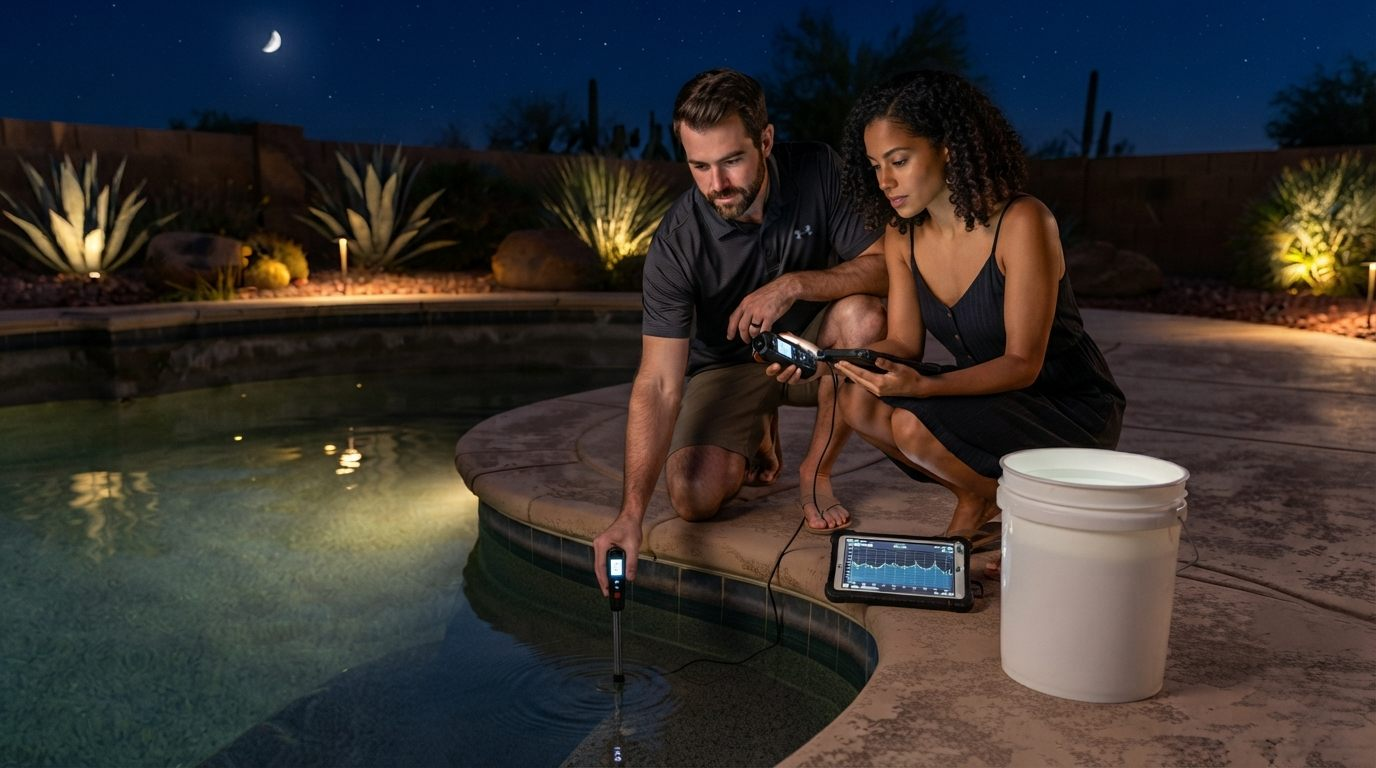
A small overnight drop is normal evaporation — in Arizona’s dry air, even a still pool loses a bit by morning. But if you’re losing more than about a quarter-inch overnight, or adding water most mornings, you likely have a leak. Because the pump is usually off and no one’s swimming overnight, steady loss often points to the pool’s structure (shell, plaster, tile, skimmer) or a suction-side line.
If you’re asking why your pool is losing water overnight, the key is how much. A little is expected from evaporation. A noticeable drop by morning — especially night after night — usually means water is escaping through a leak, and the overnight timing actually gives you a useful clue about where.
Overnight is a clean test window: no swimmers splashing water out, no one topping it off, and the pump is typically off. So what disappears overnight is mostly evaporation plus any real leak. Sorting those two apart is the whole game.
Is Some Overnight Water Loss Normal?
Yes. Evaporation doesn’t stop at sunset — warm water meeting cool, dry desert air keeps evaporating all night. A calm pool might lose a small fraction of an inch by morning with no leak at all. What’s normal depends on the weather, but a good rule of thumb: a light, consistent overnight drop is usually fine, while a clear, growing loss is not. Our guide to how much water loss is normal puts real numbers to it.
What Overnight Loss Usually Points To
Because the pump is generally off overnight, the pattern narrows down the likely source:
- A structural leak — a crack in the shell, plaster, or tile line leaks whether the pump runs or not, so it shows up overnight.
- The skimmer or light niche — cracks where the skimmer meets the wall, or around the pool light, are common overnight culprits.
- A suction-side line — plumbing on the suction side can weep when the system is off.
- Where the water stops — if the level drops overnight and then holds at the skimmer, a return, or the light, the leak is likely right at that height.
That last clue is powerful: the water level often stops falling once it drops below the leak. Noting where it settles points a technician straight to the area, and it lines up with the broader signs your pool has a leak.
How to Confirm It’s a Leak, Not Evaporation
The overnight bucket test settles it. Do it on a calm, dry night:
- Fill a bucket with pool water and set it on a step so the inside level matches the pool.
- Mark both the bucket’s water line and the pool’s water line.
- Leave everything off overnight and compare in the morning.
- If the pool dropped noticeably more than the bucket, that extra loss is your leak. If they match, it’s just evaporation.
It’s the same logic behind telling a leak from evaporation — the bucket loses water to evaporation at the same rate as the pool, so any difference is escaping through a fault. For more home checks, see how to find a pool leak yourself.
Overnight Loss vs. Loss During the Day
When the loss happens is a diagnostic clue worth noting. Losing water mainly overnight (pump off) tends to point toward the structure or suction side, while faster loss during the day when the pump runs points toward the pressure-side plumbing. If you’re not sure, watch the level over a full day with the pump on and a full night with it off — the difference tells a technician a lot before they even arrive.
When to Call a Pro
If the bucket test confirms real overnight loss and you can’t spot an obvious cause, it’s time to bring in a specialist. Pinpointing a structural or suction-side leak takes pressure and acoustic equipment, and guessing usually costs more than the test. A professional pool leak detection service can confirm the source in a single visit — and you can review the full picture in our pool leak symptoms guide.
Keep reading: Why Is My Pool Water Level Dropping Every Day?
Frequently Asked Questions
How much overnight water loss is too much?
As a rough guide, more than about a quarter-inch overnight — or needing to top off most mornings — is worth investigating. A bucket test on a calm night is the reliable way to separate a leak from ordinary evaporation.
Does losing water overnight mean the leak is in the structure?
Often, but not always. Because the pump is usually off overnight, structural and suction-side leaks show up clearly. A leak that only appears when the pump runs points more toward pressure-side plumbing instead.
Could it just be evaporation in the Arizona heat?
Absolutely — dry desert air evaporates water day and night. That’s exactly why the bucket test matters: it measures evaporation and your pool at the same time, so any extra loss is a real leak.
Should I keep the pump on overnight to reduce loss?
No — running the pump won’t fix a leak, and if anything it can make a pressure-side leak worse. Focus on confirming the leak and finding its source rather than masking the symptom.
The Bottom Line
A little overnight loss is normal evaporation; a clear, repeating drop by morning is a leak — and the overnight timing points toward the structure or suction side.
Waking up to a lower pool? Take our free 60-second assessment to see the most likely source of your water loss before you call anyone.