Pool Equipment Leaks: Pumps, Filters, Heaters & Valves
Water around your pool equipment? Don’t assume the worst — most equipment leaks are cheaper to fix than you think.
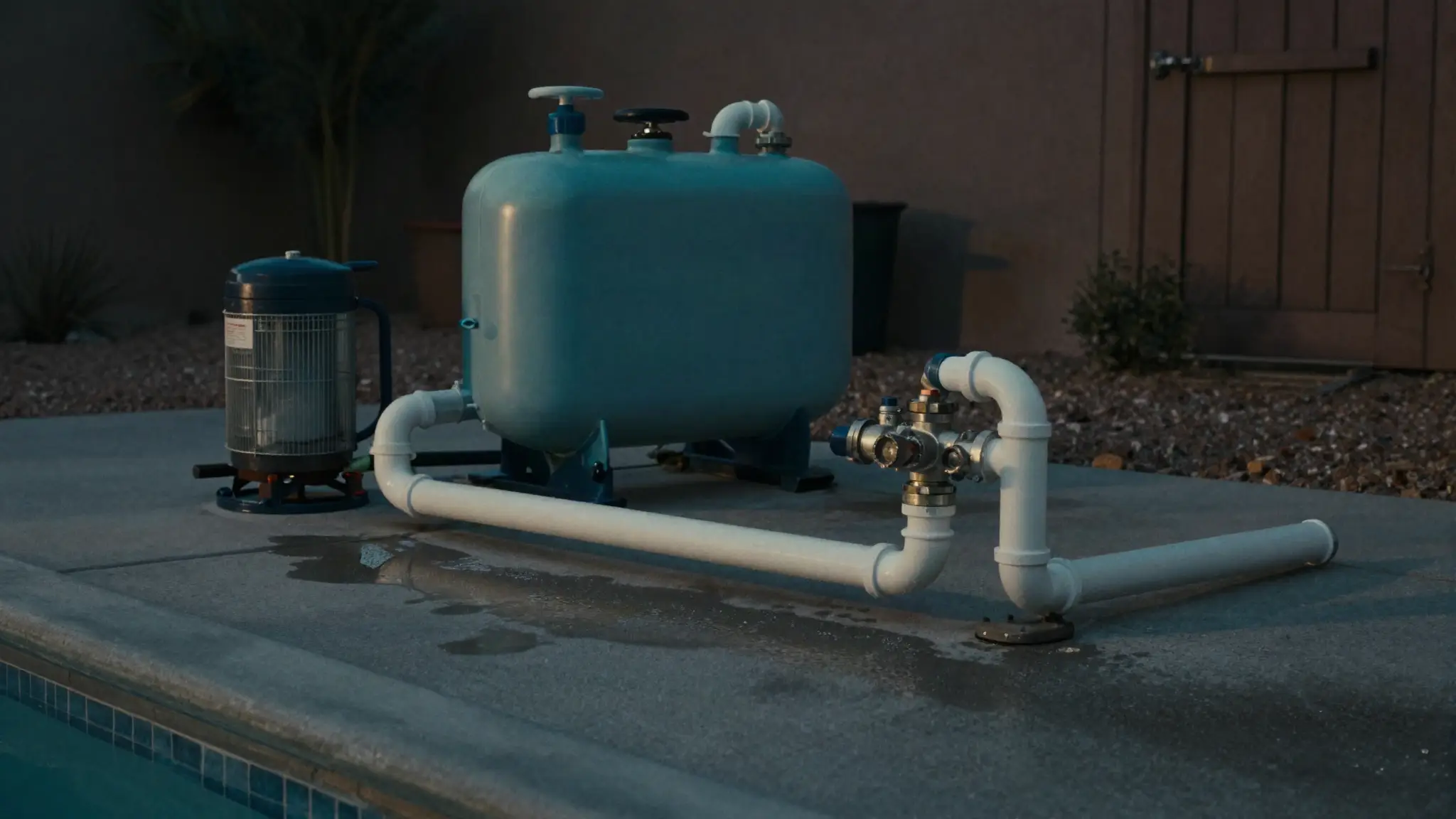
You walk over to your equipment pad and notice something you didn’t see yesterday. A puddle. A slow drip. Maybe the concrete under your pump is wet. Your first thought is probably: “Great… this is going to be expensive.”
Take a breath. Pool equipment leaks are one of the more common pool problems, and they’re often much less serious than homeowners expect. Sometimes it’s a worn-out O-ring. Sometimes it’s a loose fitting that needs tightening. Sometimes it’s nothing more than a seal that’s reached the end of its life.
Of course, bigger repairs do happen. But replacing an entire pump, filter, or heater without knowing what’s actually leaking can cost far more than fixing the real problem. This guide shows where equipment leaks usually happen, what causes them, which ones you can check yourself, and when it’s time to call a professional. (Not sure the leak is even at the equipment? Start with the signs of a pool leak or the full list of what causes pool leaks, or whether it’s a structural problem.)
What Counts as a Pool Equipment Leak?
A pool equipment leak is any leak that comes from the parts responsible for moving, cleaning, or heating your water — your pool pump, filter, heater, valves, PVC plumbing, and the fittings and connections between them. The tricky part is that all of these components are connected. Water dripping from the bottom of your pump doesn’t automatically mean the pump is leaking — it could be coming from a fitting above it and simply running down the equipment. That’s why it’s important to find the source before replacing any parts.
- Why Is My Pool Equipment Leaking?
- How to Find a Leak at Your Pool Equipment Pad
Is Water Around Your Equipment Normal?
Sometimes, yes. Not every wet equipment pad means something is broken. You might notice a little moisture after heavy rain, cleaning your filter, backwashing the system, routine maintenance, or morning condensation — that usually dries up on its own. What deserves a closer look is water that keeps coming back:
- A puddle that never goes away
- Water dripping while the system is running
- A wet equipment pad every day
- Your pool losing water faster than normal
- Air getting into the system
If you’re seeing one or more of these, it’s worth finding out where the water is actually coming from.
- Why Is My Pool Equipment Pad Always Wet?
Pool Pump Leaks: The Most Common Problem
If there’s one piece of equipment homeowners worry about most, it’s the pool pump — it’s the heart of your system. But seeing water around the pump doesn’t automatically mean the whole pump needs replacing. Many pump leaks come from small parts that wear out over time.
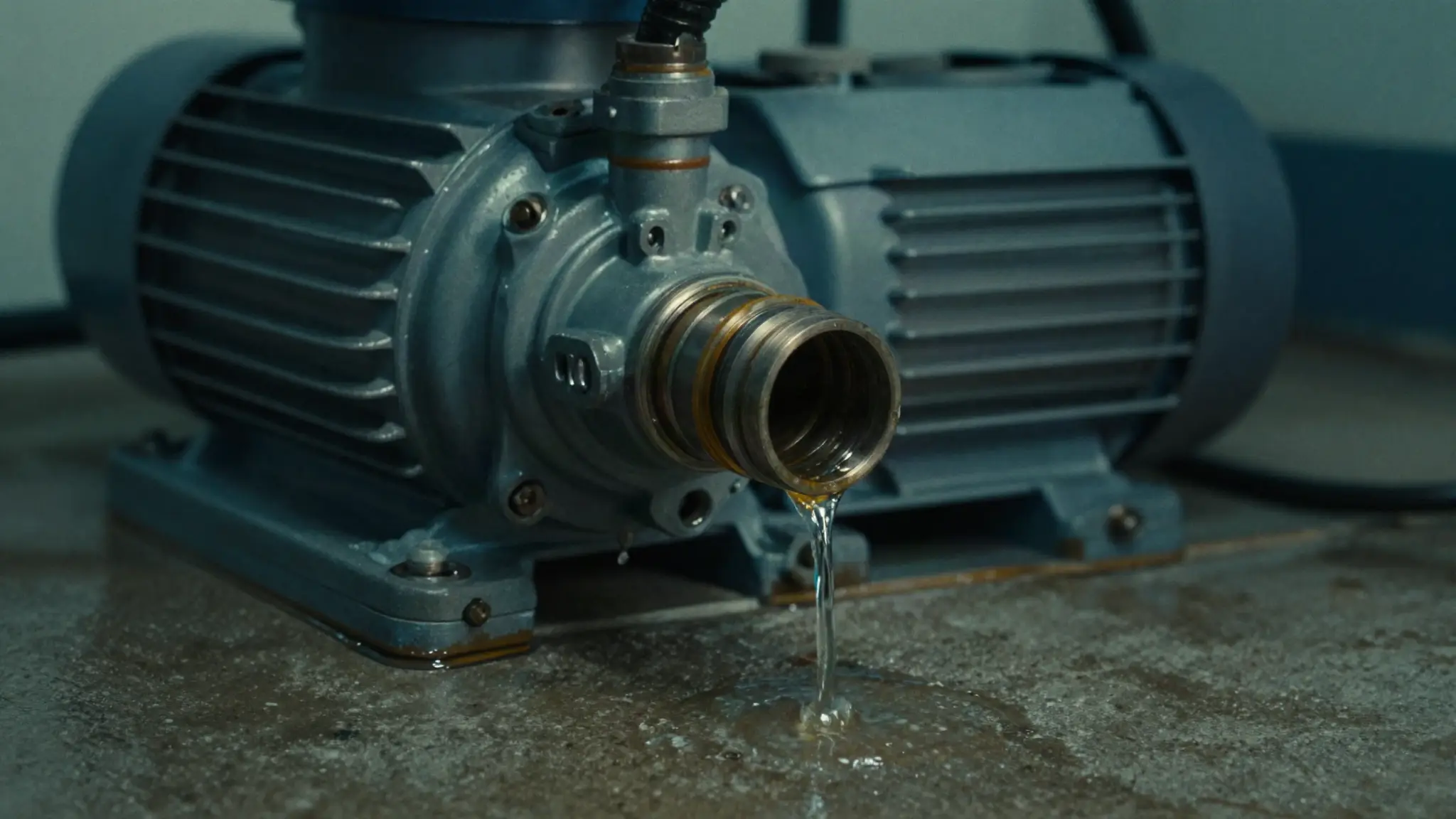
Pump housing cracks
The housing is the plastic body that holds everything together. As pumps age, it can crack from years of heat, vibration, or a rare cold snap. Watch for water dripping from the body, a visible crack, or a leak that continues even after the pump shuts off. Small cracks can sometimes be repaired; larger ones often mean replacing the housing or pump.
Pump shaft seal leaks
One of the most common pump repairs. The shaft seal keeps water from escaping where the motor connects to the pump. When it wears out, you’ll notice water dripping between the motor and the pump housing — often only while the pump is running. The good news: replacing a shaft seal is usually much cheaper than replacing the whole pump.
Pump lid O-ring leaks
Sometimes the problem is just the rubber O-ring under the clear pump lid. As it ages it can flatten, crack, or dry out — allowing small leaks, air into the system, reduced performance, and trouble keeping the pump primed. Replacing it is one of the simplest, least expensive equipment repairs.
Pump union & drain plug leaks
Not every pump leak is the pump itself. Sometimes water comes from the threaded fittings connecting the plumbing, or the small drain plugs used when servicing the equipment — usually from loose fittings, worn seals, damaged threads, or aging O-rings. These are typically straightforward to repair once the source is confirmed.
- Pool Pump Housing Cracks
- Pool Pump Shaft Seal Leaks
- Pool Pump Lid O-Ring Leaks
- Pool Pump Union & Drain Plug Leaks
Pool Filter Leaks
Your filter holds water under pressure all day long, so even a small crack or worn seal can create a noticeable leak. The good news is that not every filter leak means you need a new filter — many come from replaceable parts.
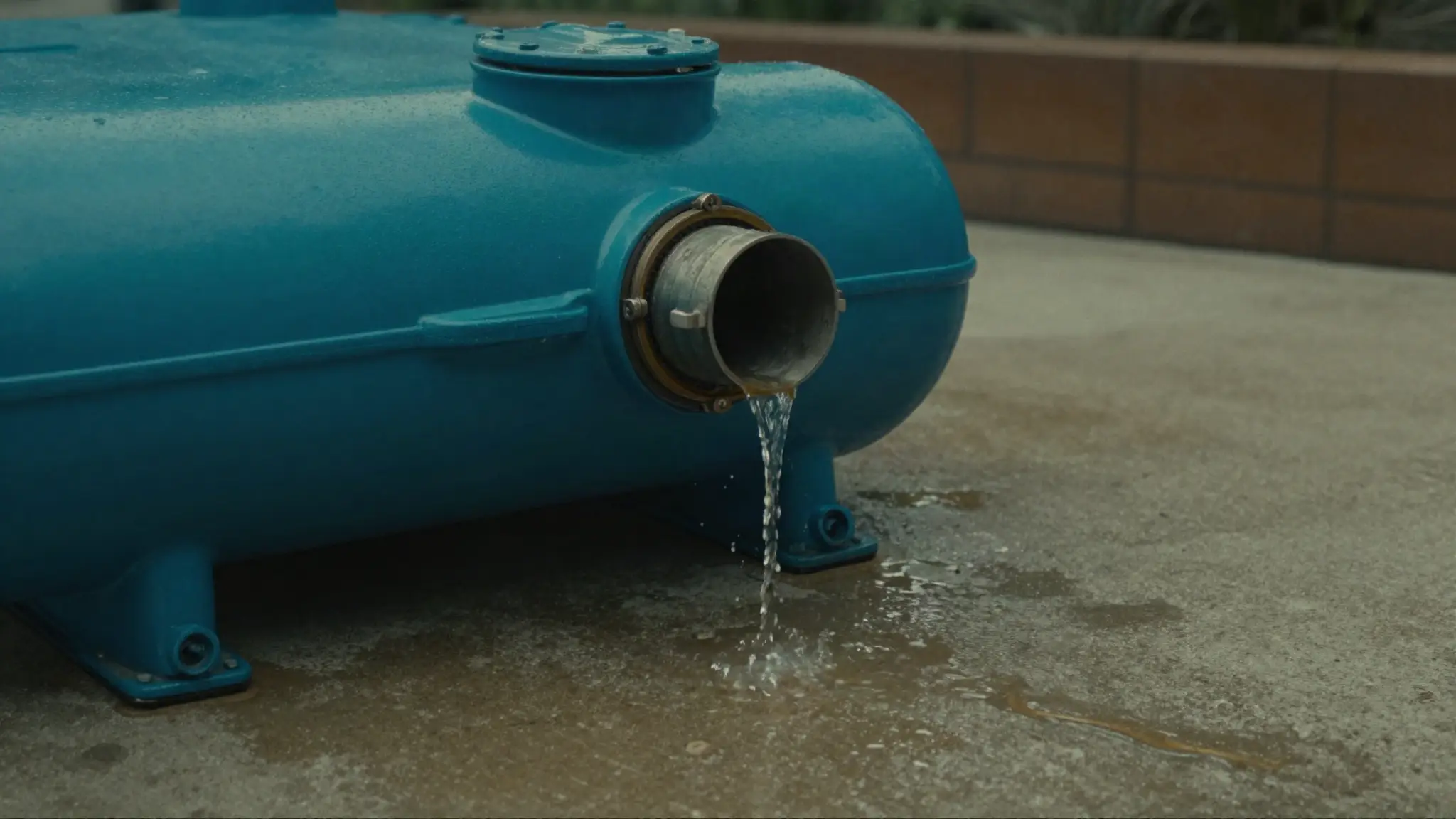
Filter tank cracks
The tank holds water under high pressure, so a crack usually makes itself known — water spraying from the tank, a steady drip while the pump runs, visible cracks, or a sudden drop in filter pressure. Plastic tanks weaken over time from sun, pressure changes, and wear. If the tank itself is cracked, replacement is often safest.
Filter O-rings & gaskets
One of the most common and least expensive filter leaks. O-rings and gaskets seal the parts of the filter together, and over time they dry out, flatten, or crack. You might see water dripping around the filter lid, moisture near plumbing connections, or small leaks that slowly worsen. Often, replacing a worn gasket is all that’s needed.
Air relief valves & filter clamps
Sometimes the leak is one of the filter’s smaller components — an aging air relief valve or a loose, worn clamp. These repairs are simpler than replacing the whole filter, but they must be installed correctly since the filter operates under pressure.
- Pool Filter Tank Cracks
- Pool Filter O-Ring & Gasket Leaks
- Pool Filter Air Relief Valve Leaks
- Pool Filter Clamp Leaks
Pool Heater Leaks
A leaking pool heater can be confusing because the water isn’t always coming from where you think. Sometimes it’s a plumbing connection, sometimes a failed internal component, and sometimes what looks like a heater leak is water dripping down from another piece of equipment.
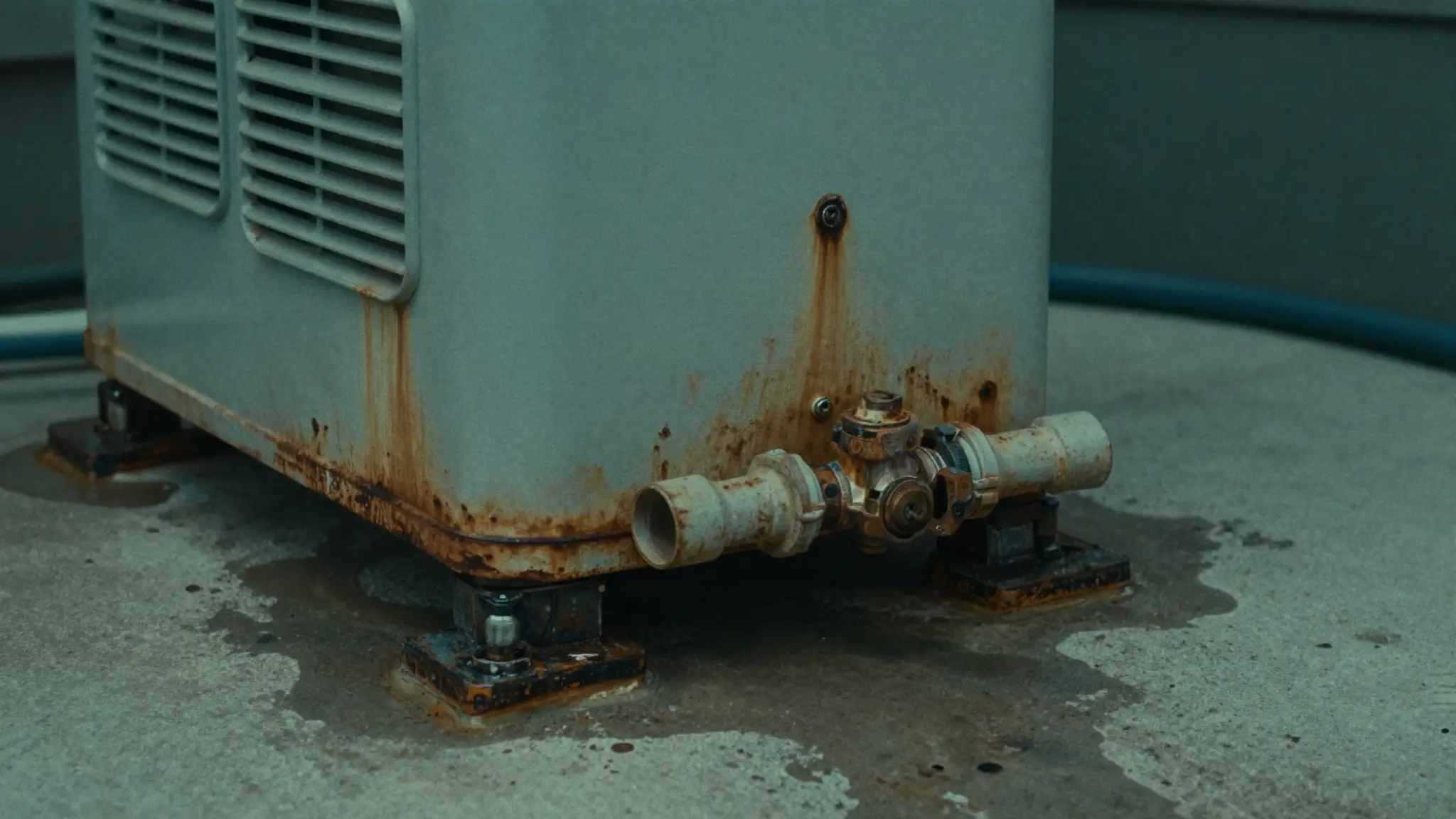
Heat exchanger leaks
The heat exchanger is one of the heater’s most important parts. As it ages, corrosion or wear can cause leaks — water leaking from inside the heater, rust or corrosion, reduced heating performance, or water pooling beneath the unit. A failed heat exchanger is one of the more expensive heater repairs, so it’s important to confirm that’s actually the problem before replacing anything.
Heater plumbing connection leaks
Fortunately, not every heater leak is internal. Sometimes it’s simply the pipes connected to the heater — loose fittings, aging seals, or cracked PVC — which can look much worse than they are. Another reason to find the exact source before assuming the heater has failed.
- Pool Heater Heat Exchanger Leaks
- Pool Heater Plumbing Connection Leaks
Pool Valve Leaks
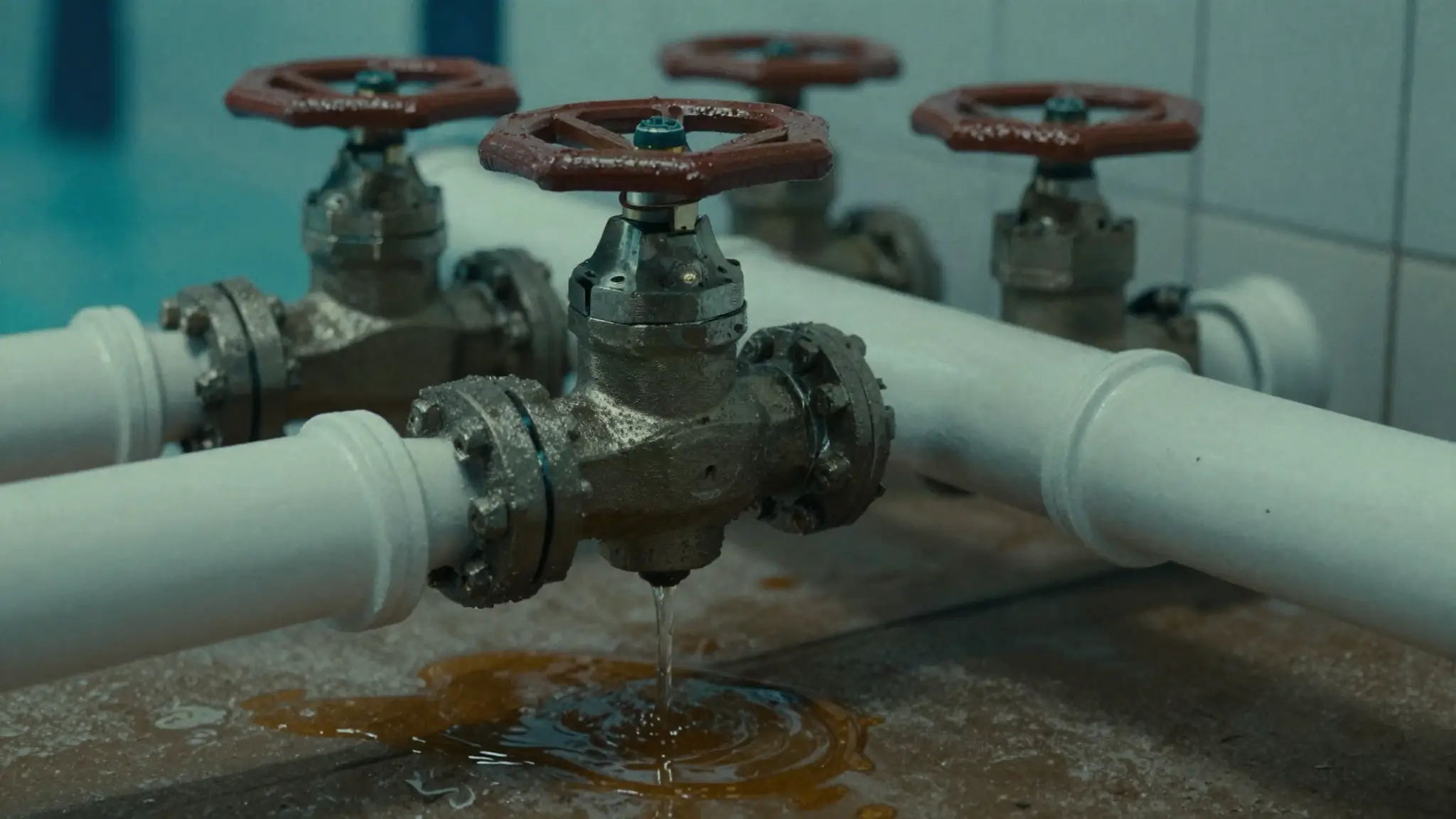
Valves control where water flows through your system — every time you switch between pool and spa, backwash the filter, or adjust the plumbing, they’re doing the work. Like any moving part, they wear out: worn seals, cracked valve bodies, stiff or broken handles, and internal diverters wearing down. Most valve leaks start small but rarely fix themselves.
Multiport valves
Found on many sand and DE filters, these contain several internal seals that wear with age. When they fail you may notice dripping, water leaking while filtering, or water flowing where it shouldn’t.
Diverter valves
These direct water between plumbing lines. Over time the internal seals wear out, letting water escape around the valve. Sometimes a simple seal solves it; other times the whole valve body needs replacing.
Check valves
Check valves keep water flowing in one direction. As they age, the flapper or internal seals can fail, causing leaks or poor performance — usually inexpensive to repair compared to larger equipment.
- Multiport Valve Leaks
- Diverter Valve Leaks
- Check Valve Leaks
PVC Pipes & Equipment Pad Plumbing Leaks
Sometimes the equipment isn’t leaking at all — the real problem is the plumbing connecting everything. PVC pipes spend years expanding and contracting in the Arizona heat, and eventually that takes a toll: cracked PVC, failed glue joints, loose unions, broken fittings, and aging plumbing. The good news is these leaks are usually visible, making them easier to diagnose than underground plumbing problems.
- PVC Pipe & Fitting Leaks
- Pool Equipment Pad Plumbing Leaks
Why Pool Equipment Leaks Happen
Pool equipment doesn’t usually fail overnight — most leaks happen because small parts wear out over time. Understanding why something is leaking helps you make a smarter repair decision.
Age
Nothing lasts forever. Rubber seals dry out, plastic becomes brittle, and moving parts wear down after years of daily use. That doesn’t mean your equipment is shot — just that some parts may need attention.
Arizona sun & heat
Months of intense sun and triple-digit temperatures shorten the life of O-rings, gaskets, plastic housings, PVC plumbing, and valve seals. Heat makes materials expand and contract, which eventually creates small leaks.
High pressure
Your equipment is designed for a certain pressure range. If pressure runs too high — a dirty filter, clogged plumbing, or another issue — it puts extra strain on pumps, filters, and seals, and over time that leads to leaks.
Freeze damage
It doesn’t happen often in Arizona, but it does happen. If water freezes inside equipment it expands, which can crack pump housings, PVC pipes, filter tanks, and valves — damage that may not show until the next time you run the system.
- Freeze Damage to Pool Equipment
Is It a Water Leak or an Air Leak?
Here’s something that surprises a lot of homeowners: not every “leak” involves water. Sometimes your pool has an air leak, and the symptoms can look similar.
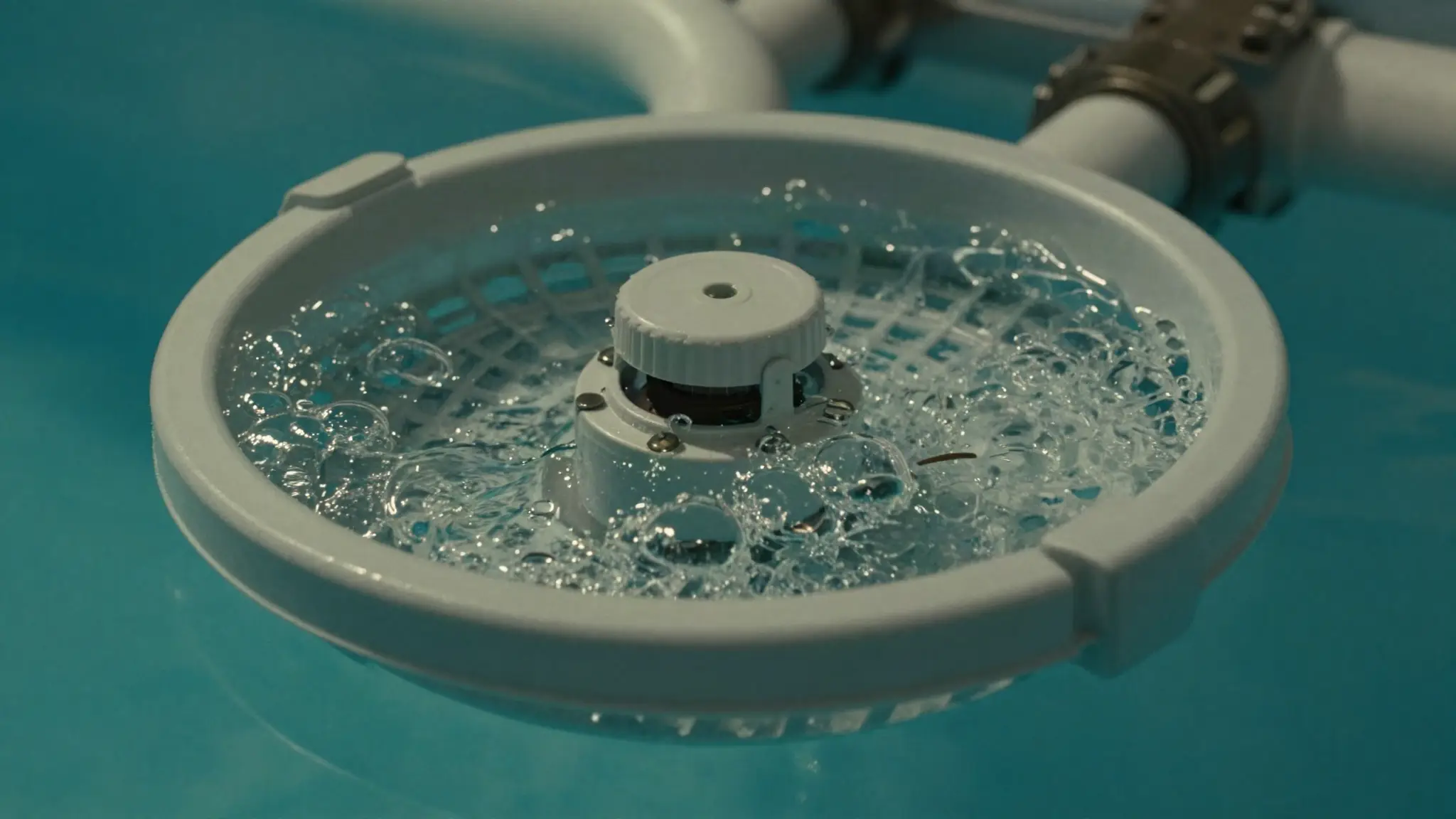
A water leak usually leaves visible clues — water dripping from equipment, wet concrete around the pad, a puddle that keeps coming back, or your pool level slowly dropping. An air leak is different: instead of water escaping, air gets pulled into the plumbing. Common signs are air bubbles in the pump basket, bubbles from the return jets, the pump struggling to stay primed, and reduced flow. Air leaks often come from loose fittings, cracked O-rings, or small suction-side plumbing problems — they don’t always waste water, but they hurt performance and can lead to bigger issues.
- Air Leaks vs Water Leaks in Pool Equipment
Why Equipment Leaks Can Become Expensive
Most equipment leaks aren’t expensive because of the repair — they’re expensive because of the wrong repair. Imagine replacing a $1,500 pump only to find the real problem was a $20 shaft seal. Or replacing a filter when the only thing leaking was a worn gasket. It happens more often than you’d think. Before approving a major repair, ask:
- What exactly is leaking?
- How was the leak confirmed?
- Can the damaged part be repaired instead of replaced?
- Is replacing the entire piece of equipment really necessary?
A good technician should answer those clearly. If they can’t explain what failed — or why — it may be worth a second opinion.
DIY Pool Equipment Leak Checks
You don’t need to be a pool expert to do a few basic checks. Spending five or ten minutes at your equipment pad can sometimes save an unnecessary service call. You can safely: look for obvious dripping while the system runs, check around pipe connections for moisture, inspect O-rings for cracks or flattening, look for visible cracks in plastic housings, and take photos or videos if the leak comes and goes.
What you shouldn’t do is start taking equipment apart — avoid opening a pressurized filter, disassembling a heater, cutting plumbing, or working on electrical components. If you’re not sure where the leak is coming from, it’s usually better to stop there and have the system inspected. (For the full at-home routine, see our DIY pool leak testing guide.)
- DIY Pool Equipment Leak Checks
Repair or Replace Pool Equipment?
One of the biggest questions homeowners ask. The answer depends on what failed, how old the equipment is, and what the repair costs.
Repair usually makes sense when the equipment is relatively new, only one part has failed, the repair is straightforward, and the cost is much lower than replacement. Replacement may make sense when the equipment is nearing the end of its lifespan, multiple components are failing, the repair costs almost as much as a new unit, or a newer model would be significantly more efficient. There’s no one-size-fits-all answer — the important thing is knowing exactly what’s wrong before deciding.
- When Should You Repair vs Replace Pool Equipment?
How Much Does Equipment Leak Repair Cost?
There’s no single price, because every repair is different — a leaking O-ring costs far less than a cracked filter tank or a failed heat exchanger. In general, small repairs (O-rings, gaskets, loose fittings) are least expensive; medium repairs may involve valves, pump seals, or plumbing connections; larger repairs can include major pump components, heater repairs, or replacing damaged equipment. The biggest factor isn’t the price of the part — it’s making sure you’re fixing the right part. A proper diagnosis often saves far more than it costs.
- Pool Equipment Leak Repair Costs
When Should You Call a Professional?
Some equipment leaks are easy to spot; others are surprisingly hard because water travels before it drips onto the ground. It’s usually time to call a professional if you can’t tell where the water is coming from, your pool keeps losing water, the leak appears to be underground, equipment keeps leaking after you’ve repaired it, or the repair involves opening major equipment or cutting plumbing. Getting the diagnosis right first is usually the cheapest repair you’ll make — here’s how professional pool leak detection works.
Curious about price? See what pump, filter, and heater repairs cost before you approve anything.
- ENERGY STAR — Pool Pumps — Federal guidance on pool pumps, seals, and efficient operation (EPA/DOE).
- EPA WaterSense — Leak Detection & Flow Monitoring — How equipment and plumbing leaks are found and monitored (U.S. EPA).
- EPA WaterSense — Pool Water Efficiency — Where pools and their equipment lose water (U.S. EPA).
Frequently Asked Questions
Why is my pool equipment leaking?
Most equipment leaks are caused by worn seals, cracked fittings, aging components, or loose plumbing connections.
Is a leaking pool pump serious?
Not always. Many pump leaks come from replaceable parts like shaft seals or O-rings rather than the pump itself.
Can a leaking pool pump be repaired?
In many cases, yes. The repair depends on where the leak is coming from and the overall condition of the pump.
Why is my pool equipment pad always wet?
It could be condensation, recent maintenance, or a leak. If the area stays wet every day, it’s worth investigating further.
Should I repair or replace my pool pump?
If the pump is in good condition and only a small part has failed, a repair often makes sense. Older pumps with multiple problems may be better candidates for replacement.
How much does pool equipment leak repair cost?
Costs vary widely depending on the component and the repair. Simple seal replacements are much less expensive than replacing major equipment.
Can I fix a pool equipment leak myself?
Basic tasks like replacing an O-ring or tightening a loose fitting may be manageable for some homeowners. More complex repairs are usually best left to a professional.
Why does my pool pump only leak when it’s running?
That’s often a sign of a worn shaft seal, a loose fitting, or another component that’s only under pressure while the pump is operating.
Don’t Replace Expensive Equipment Until You Know What’s Leaking
Finding water around your pool equipment doesn’t automatically mean a major repair bill. Many leaks come from inexpensive parts that simply wear out over time.
The smartest move is to confirm the source of the leak first. Once you know exactly what’s leaking, you can decide whether to repair it, replace it, or simply keep an eye on it. Understand your symptoms, review the common causes, and let the leak be professionally located before you approve anything expensive.