Pool Leak Detection FAQ: Your Questions Answered
The most common questions homeowners ask about pool leak detection — from what it costs to how accurate it is — answered in plain English, with links to dig deeper.
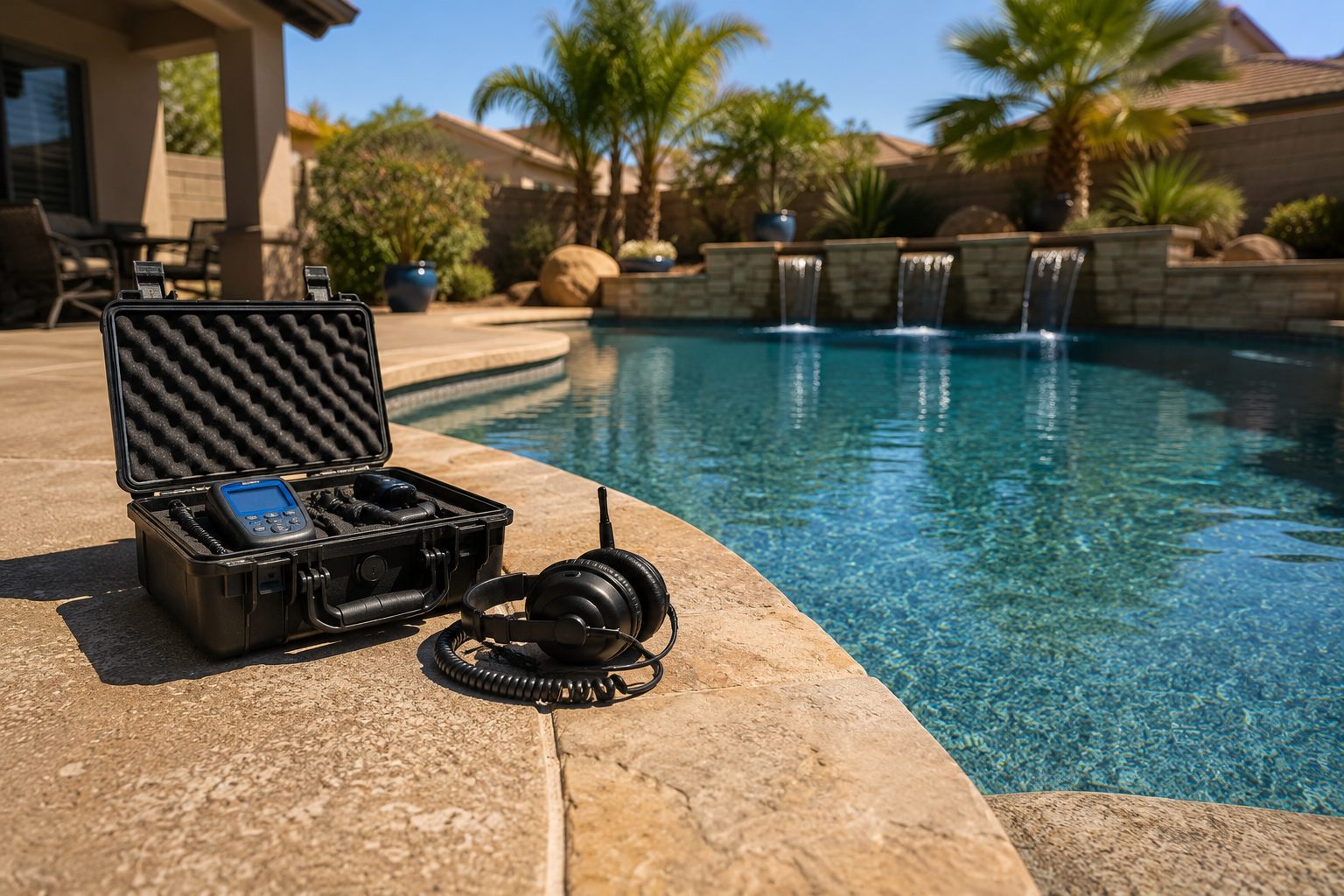
Pool leak detection is a same-day process that finds exactly where your pool is losing water using pressure, dye, and acoustic testing — usually with the pool full. It typically takes 1–3 hours, costs $100–$500, and is accurate to within inches. Below are quick answers to the questions homeowners ask most, each linking to a deeper guide.
This is a quick-reference pool leak detection FAQ — the questions we hear most from Arizona homeowners, with short, straight answers. Skim to what you need, and follow the links for the full story on any topic.
The Basics
What is pool leak detection?
It’s the process of confirming your pool has a leak and pinpointing exactly where, without tearing up your yard on a guess. Here’s a full explainer on what pool leak detection is.
How does it actually work?
A technician interviews you, isolates the pool’s systems, and runs targeted tests — pressure testing plumbing, dye testing cracks, and using acoustic equipment to trace the exact spot. See the step-by-step on how pool leak detection works.
Is it a leak or just evaporation?
A bucket test tells you fast. If your pool drops noticeably more than a bucket of water beside it, it’s a leak — more on leak vs. evaporation and the signs your pool has a leak.
Time and Cost
How long does detection take?
Usually 1 to 3 hours, finished in a single visit, with your answer before the technician leaves. Details on how long detection takes.
How much does it cost?
Typically $100 to $500, with most jobs $200–$400, and often credited toward a repair. See the full detection cost breakdown.
Accuracy and Value
How accurate is it?
With the right tests, a skilled technician can locate a leak to within a few inches. More on detection accuracy.
Is it worth the money?
In almost every case, yes — a small fee that stops you paying for the wrong repair. Here’s the honest math on whether detection is worth it.
DIY and Hiring
Can I find the leak myself first?
Often, at least enough to confirm one — a bucket test, a look at the usual spots, and a dye test go a long way. See how to find a pool leak yourself, and when to call a pro.
What should I ask before hiring a company?
Ask how they find leaks, what it costs, and whether you get a written report. Full list of questions to ask before hiring, plus the red flags that signal a company to avoid.
After the Leak Is Found
What happens next?
You get a written report, weigh repair options, compare quotes, and schedule the fix as a separate step. Here’s what happens after a leak is found.
Does homeowners insurance cover it?
Usually not the gradual leak repair, but sometimes sudden damage or access costs — always check your policy. More on insurance and pool leaks.
What if I just wait?
Leaks get worse, not better — they waste water and can undermine your deck. See why a pool leak gets worse the longer it’s ignored.
Still Have Questions?
Every pool is a little different, and the fastest way to get specific answers is to start with your own symptoms. Our free assessment reads your situation and points to the most likely source — or, when you’re ready, a professional pool leak detection service can confirm and pinpoint the leak in a single visit.
The Bottom Line
Pool leak detection is a fast, accurate, single-visit way to find exactly where your pool is losing water — and knowing the basics helps you hire well and spend smart.
Have a specific worry about your pool? Take our free 60-second assessment for a personalized read on the most likely source.