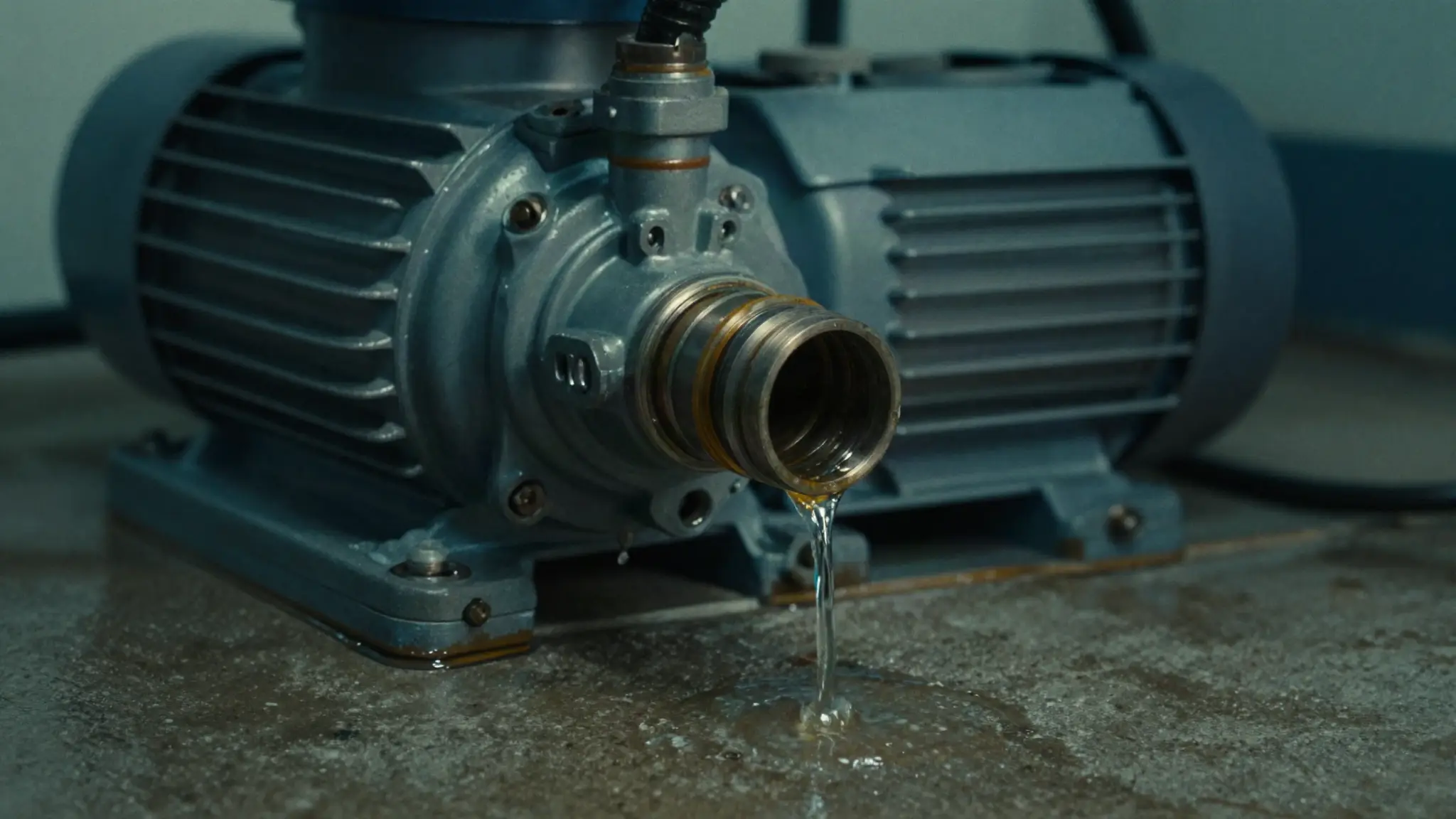
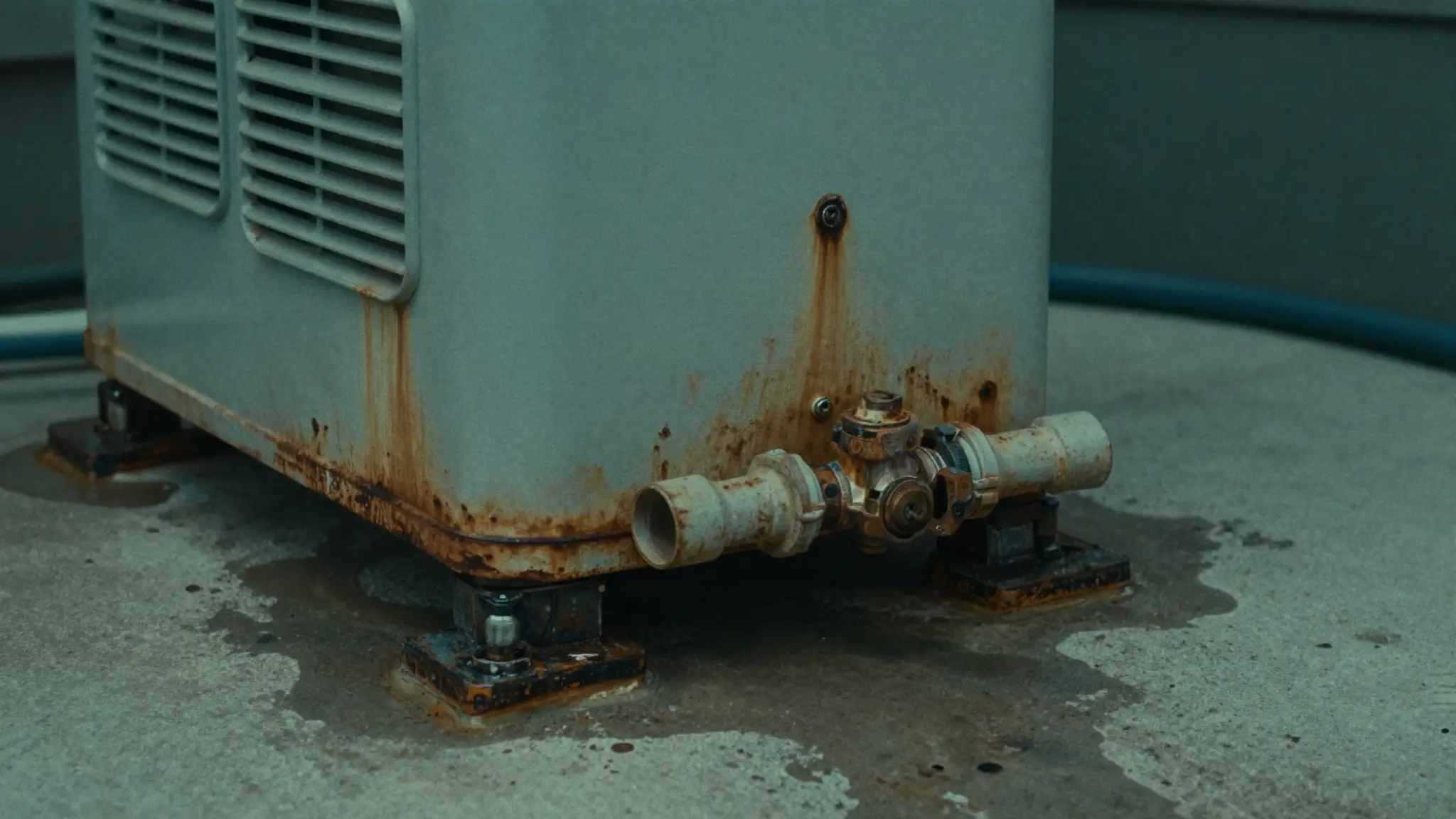
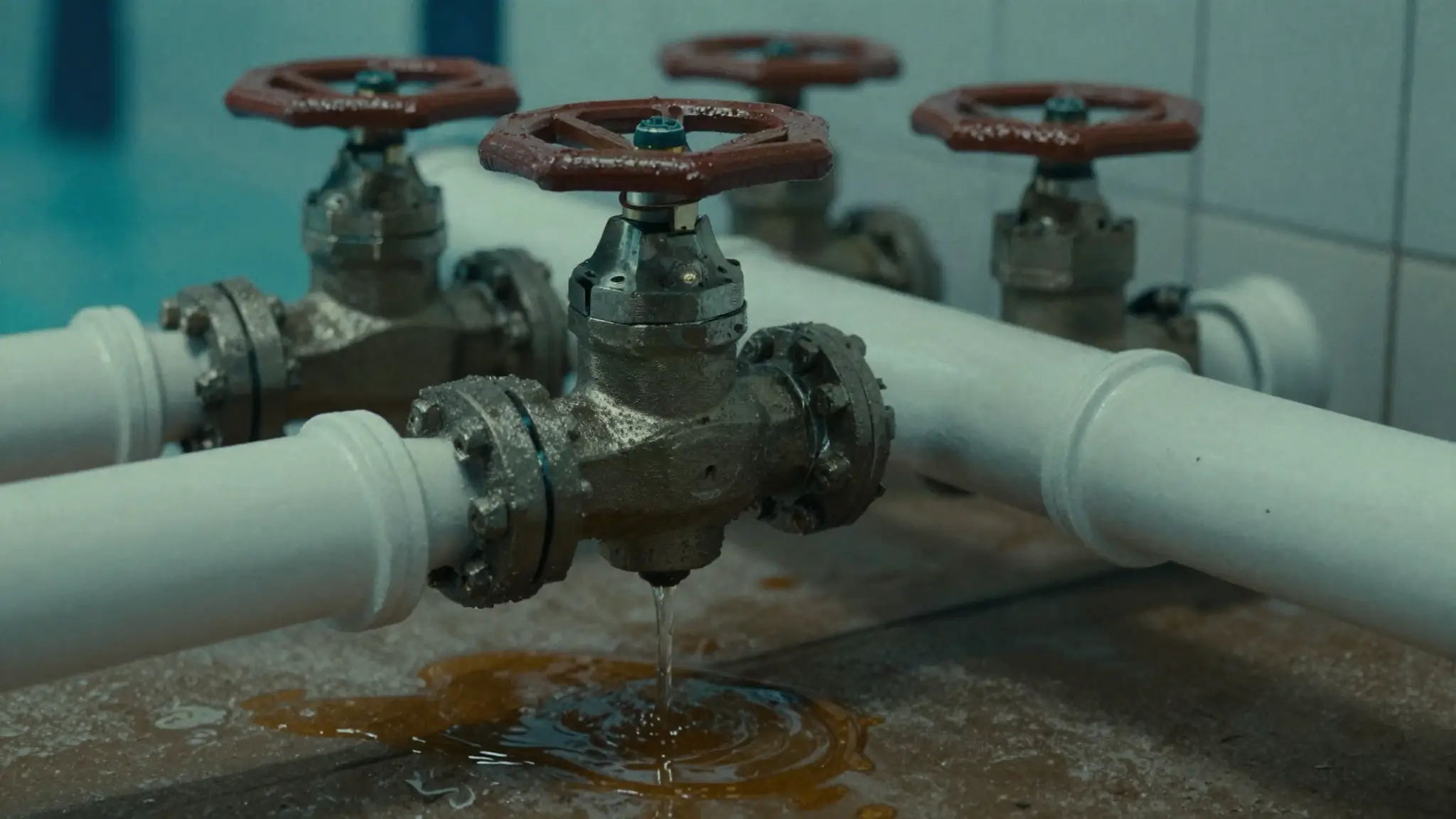
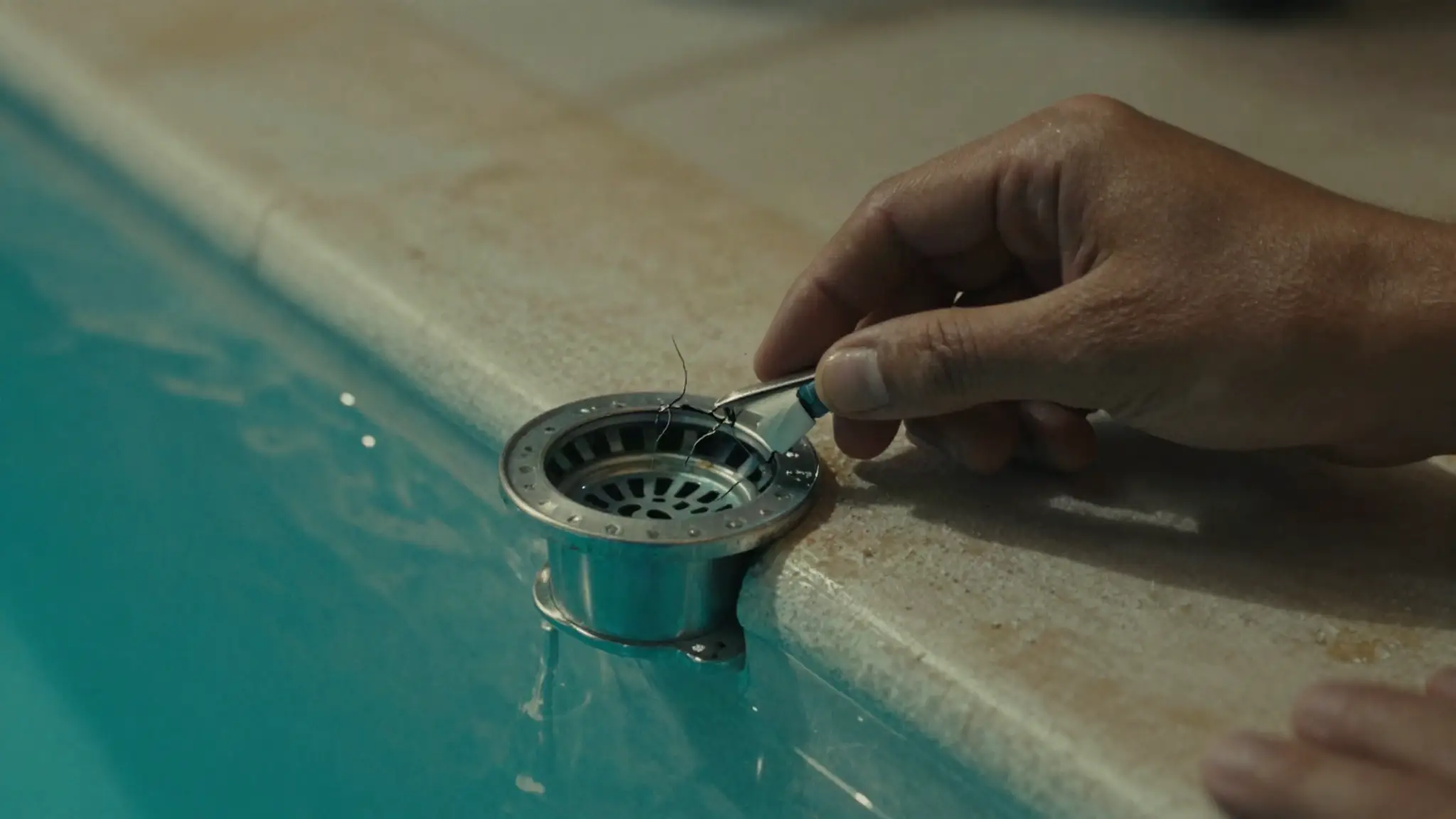
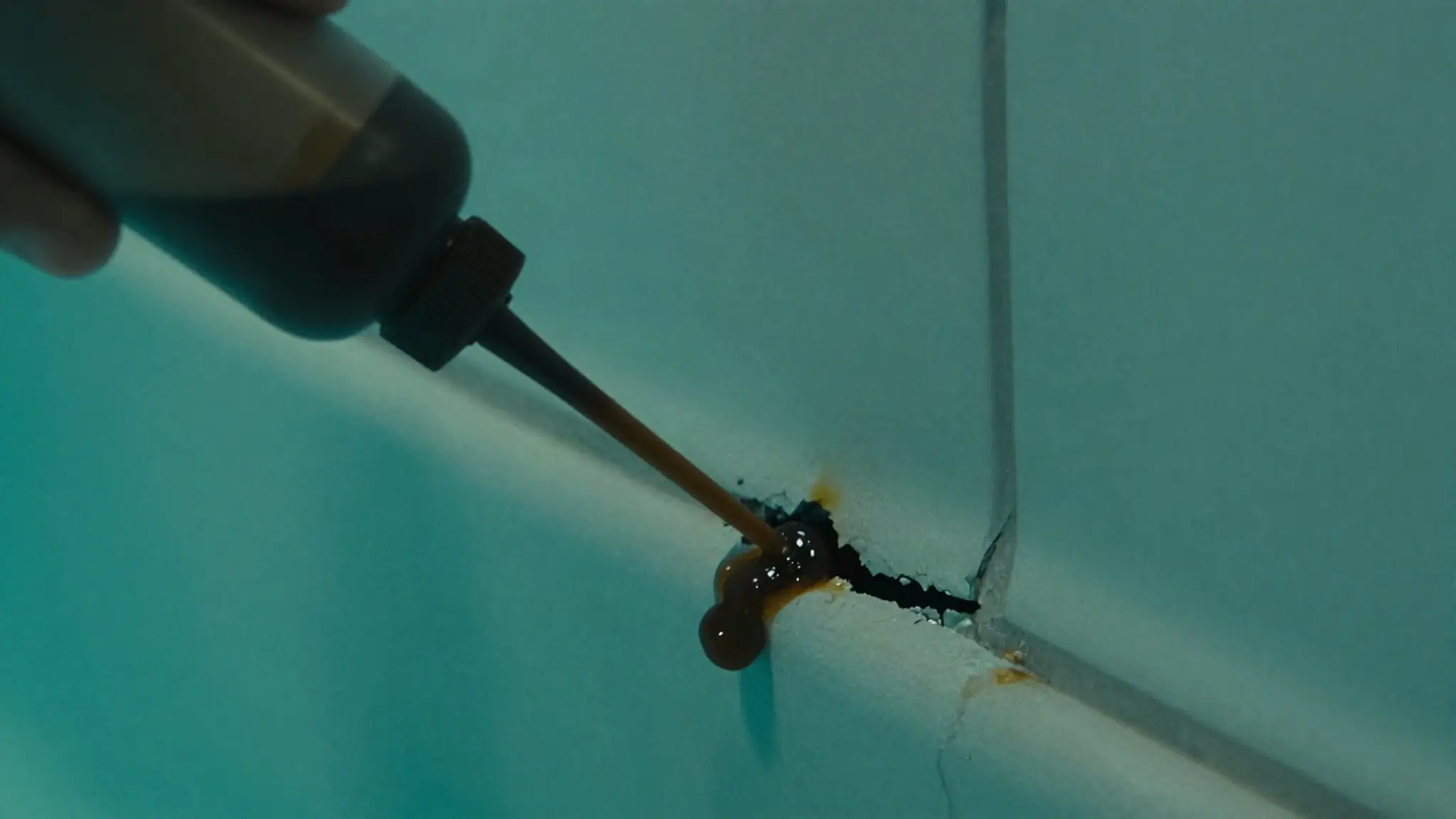
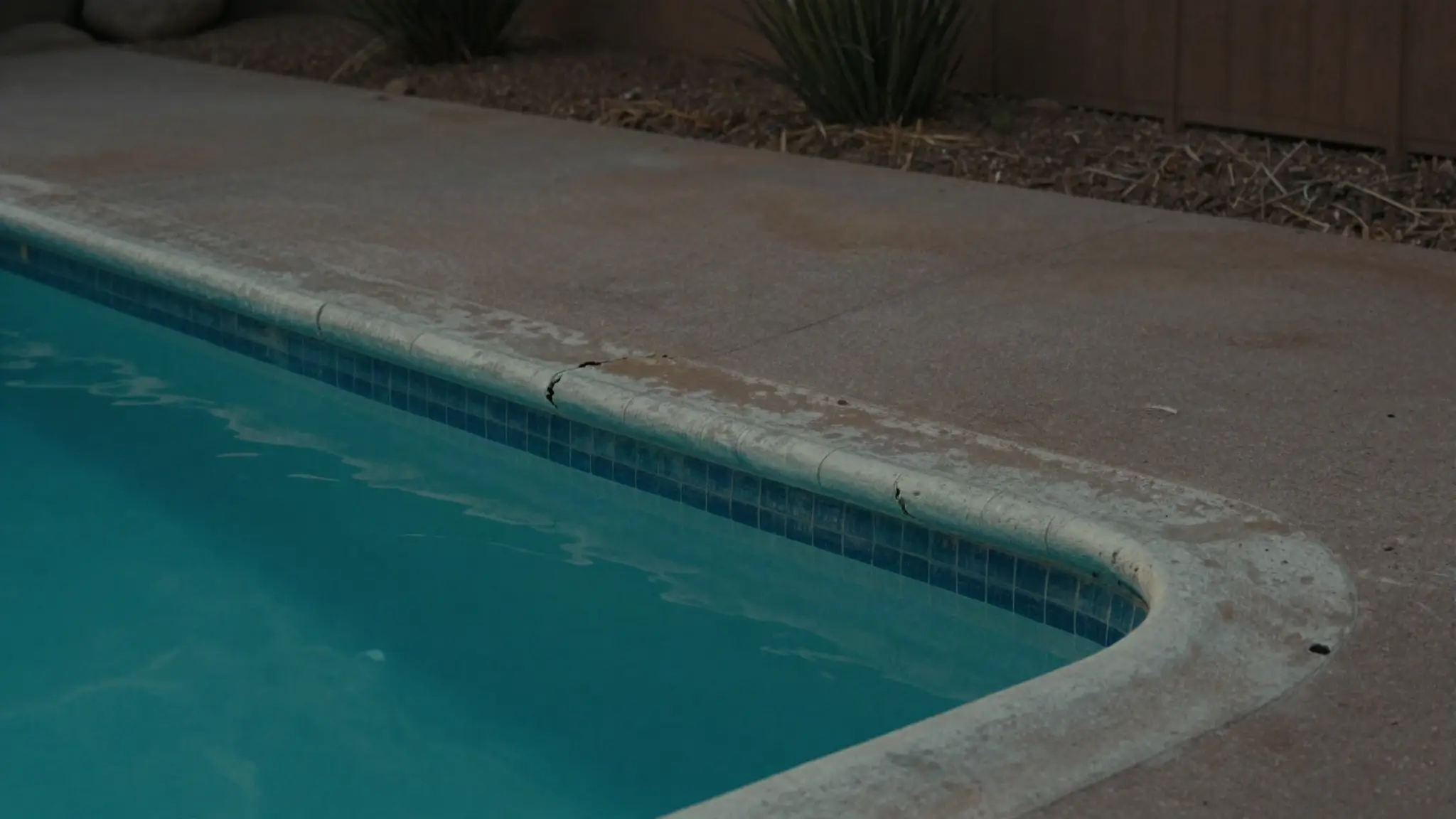
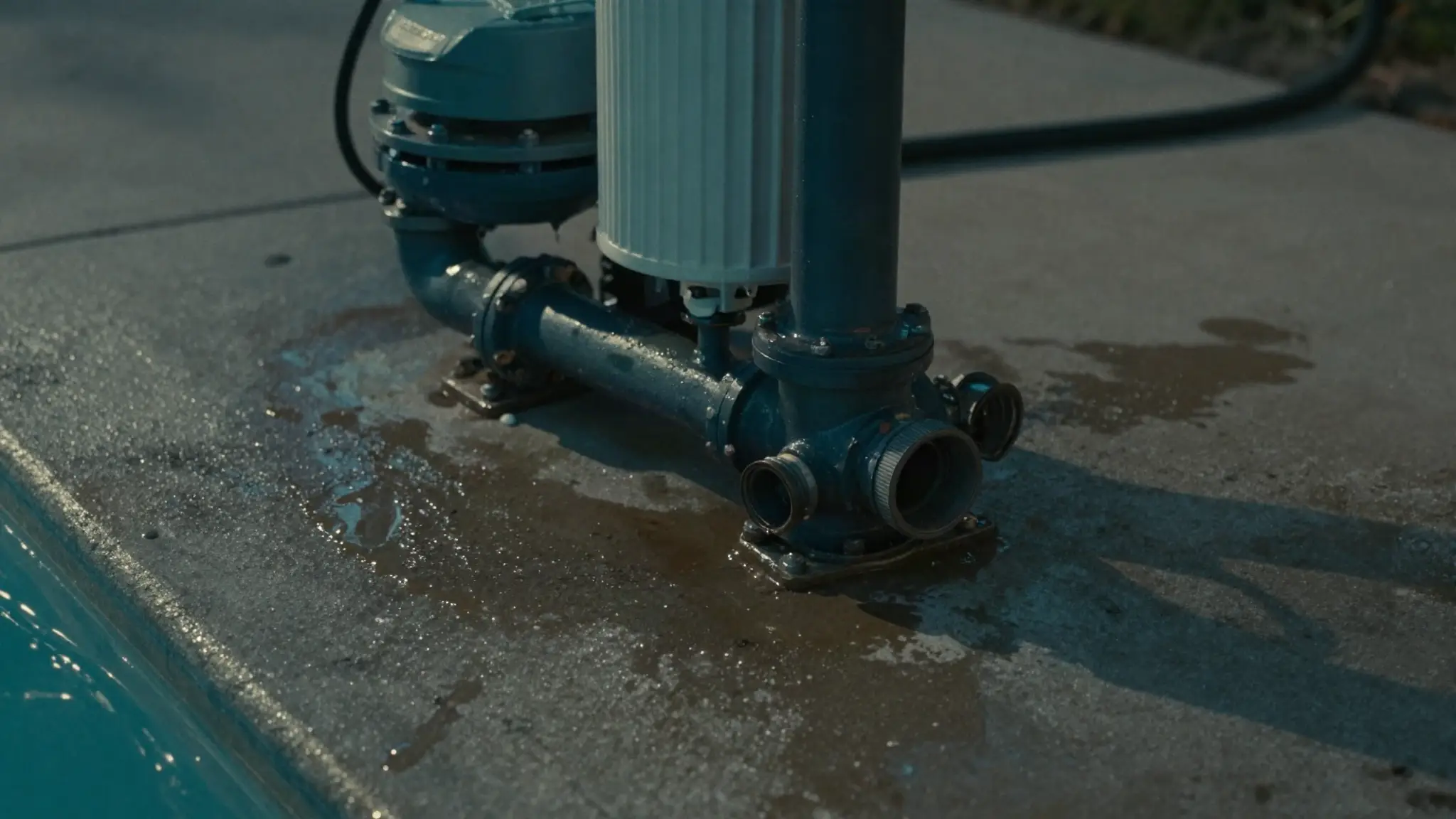
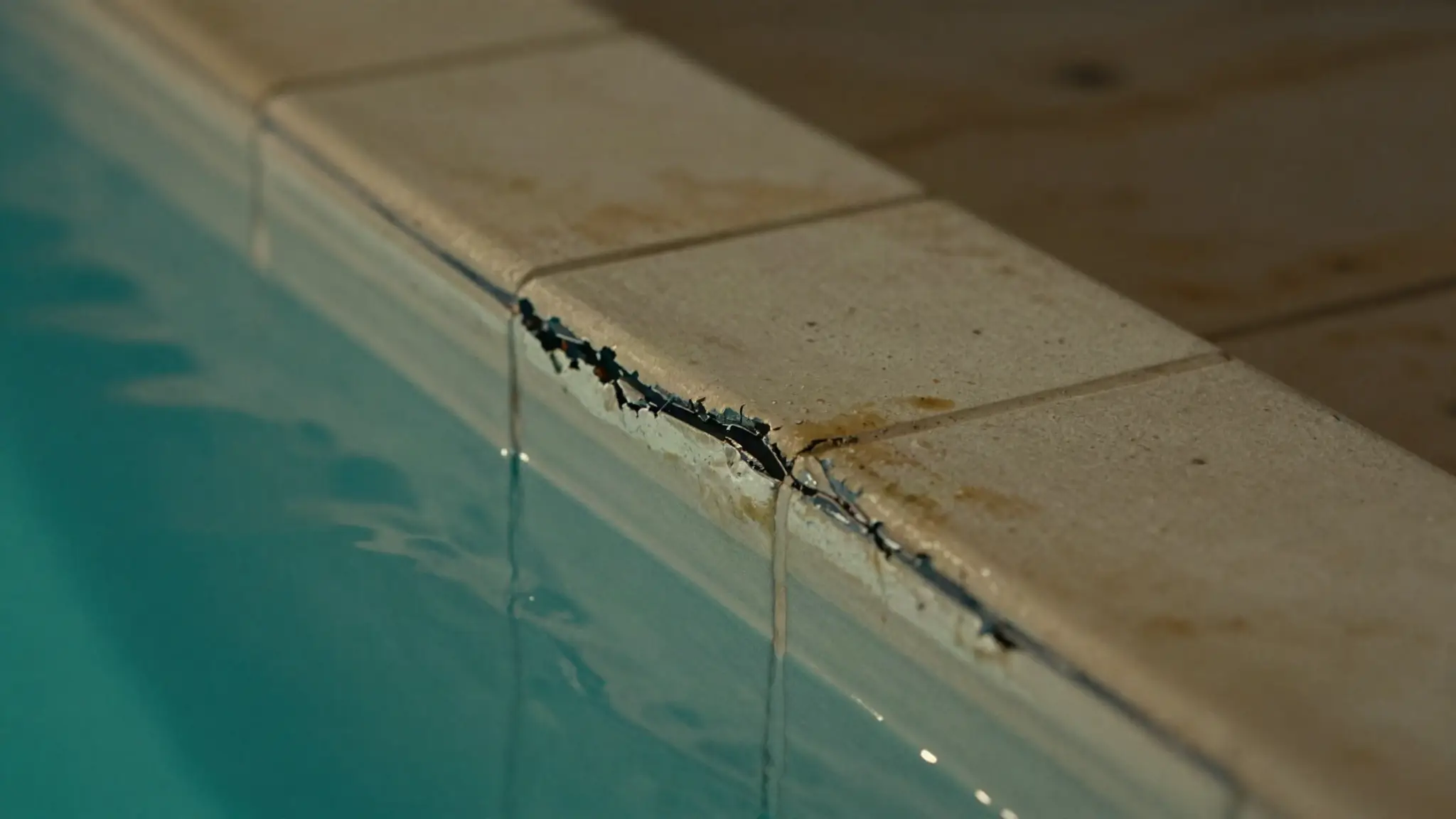
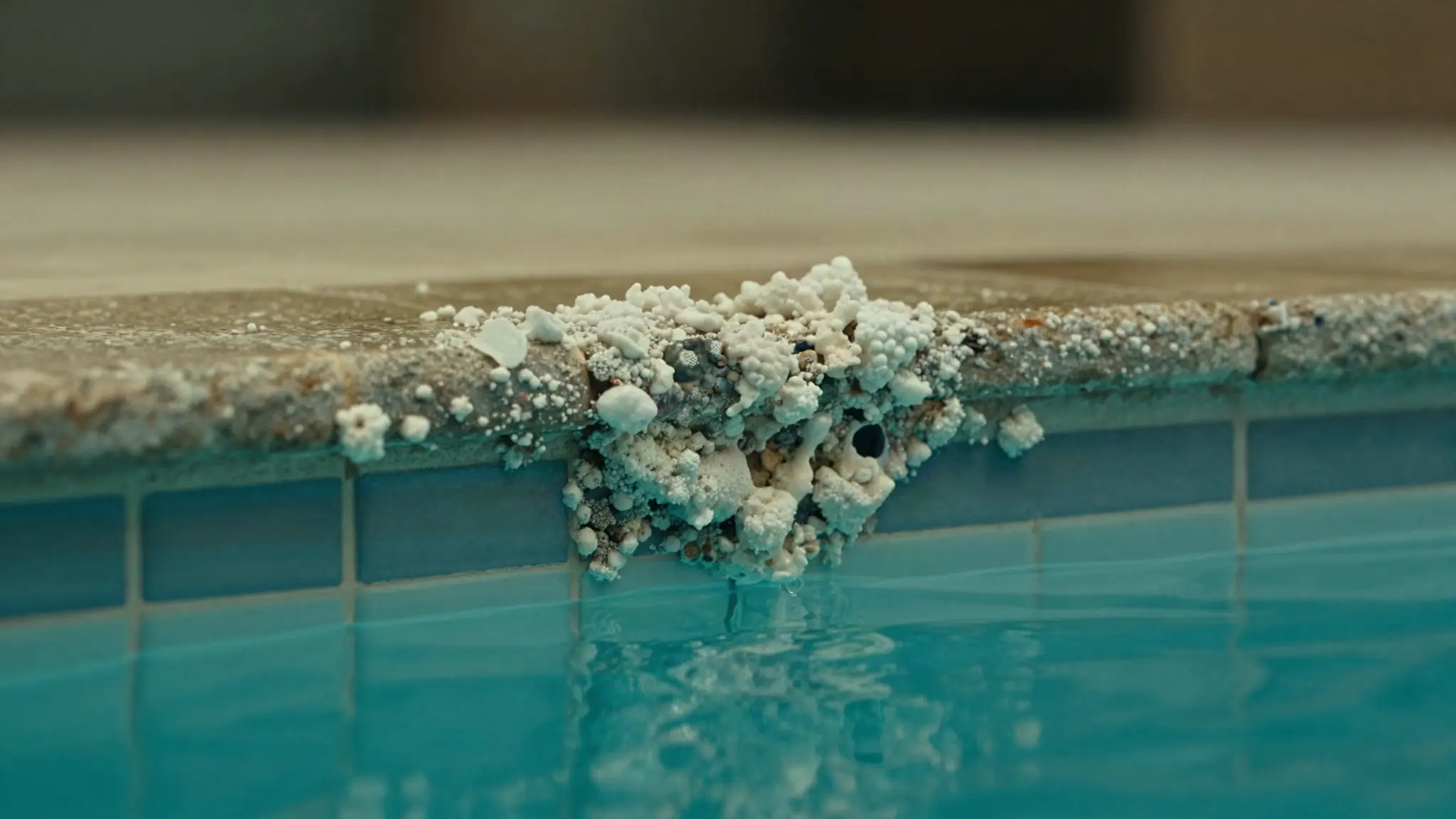
Author: lnaesenterprises

  • How to Choose a Pool Leak Detection Company

    Pool Leak Detection · Hiring Guide

    How to Choose a Pool Leak Detection Company

    The hardest part of a pool leak isn’t finding someone. It’s finding someone you can trust.
    Pool Leak DetectiveUpdated 202612 min read
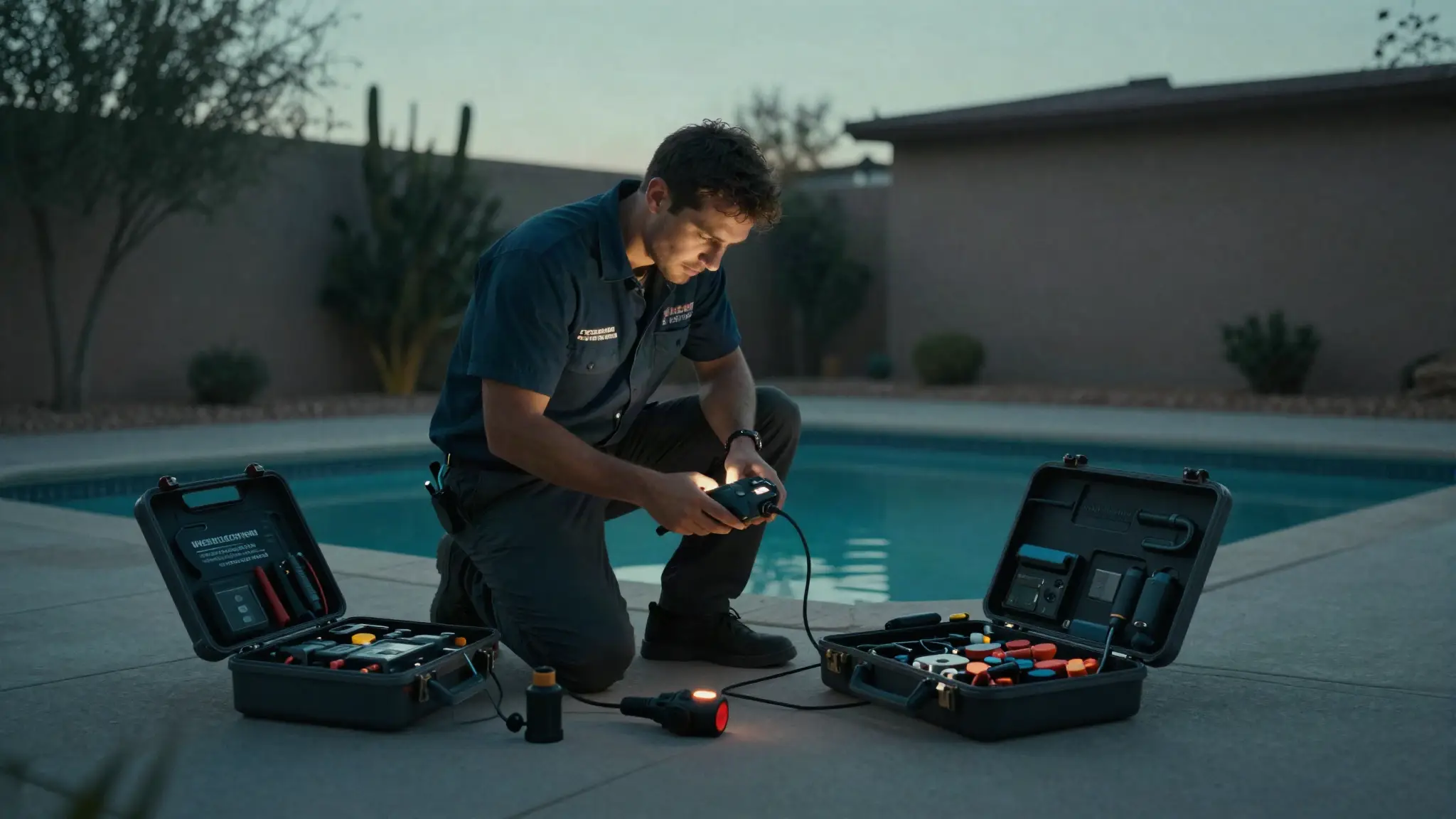
    choosing a pool leak detection company — a professional technician inspecting an Arizona pool

    You already know something isn’t right. Maybe your pool keeps losing water. Maybe you’re filling it more often than usual. Maybe you noticed a wet area near the deck or your water bill suddenly increased. So you do what most homeowners do — you start searching for answers.

    And within minutes, you’re looking at companies offering cheap inspections, free estimates, big repair recommendations, and different opinions about what’s wrong. Now you have a different problem: how do you know who’s actually telling you the truth?

    Choosing the right pool leak detection company matters because the first diagnosis affects everything that happens afterward. A wrong diagnosis can lead to paying for repairs you never needed, digging up your yard unnecessarily, replacing equipment that wasn’t broken, or spending thousands fixing the wrong problem. The goal isn’t finding the company that promises the biggest repair — it’s finding someone who can accurately answer one question: where is the water actually coming from? (If you’re still gathering clues, our pool leak symptoms guide and complete pool leak detection guide are a good place to start.)

    What Does a Pool Leak Detection Company Actually Do?

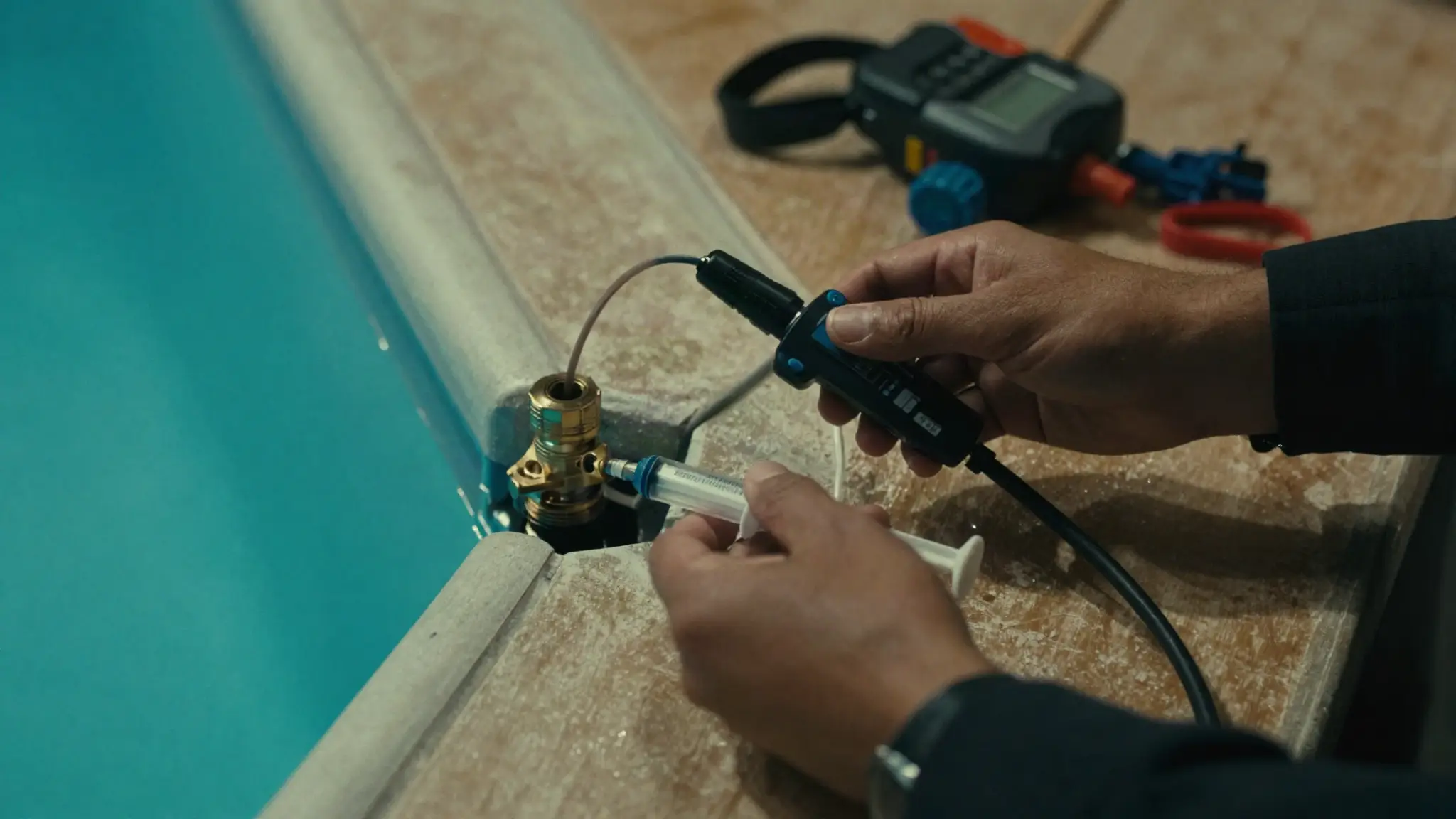
    A pool leak detection company specializes in finding where water is escaping from your pool system. Their job isn’t to look at a wet spot and guess — a professional inspection is about collecting clues, testing possible problem areas, and narrowing down the actual source. Depending on the situation, a technician may review your symptoms and water-loss patterns, inspect your pool equipment, check visible plumbing connections, test underground plumbing lines, use specialized detection equipment, and explain what they found.

    The goal is simple: find the leak before deciding how to repair it. This matters because different leaks require completely different solutions. A leaking pump seal isn’t fixed the same way as a broken underground pipe. A cracked fitting isn’t repaired the same way as a structural pool crack. Without an accurate diagnosis, homeowners are left guessing — and guessing is where expensive mistakes happen.

    Not sure who to trust?

    Start With the Free 60-Second Assessment

    Understand what’s likely happening before you talk to anyone — so you can ask better questions and spot a good diagnosis.

    Take the Assessment

    Detection Company vs Repair Company

    Many homeowners assume leak detection companies and pool repair companies are the same thing. Sometimes they are; sometimes they’re not. A repair company is usually focused on fixing problems. A leak detection specialist is focused on answering, “where is the water escaping?” That difference matters.

    Imagine your pool is losing water and someone immediately tells you, “you need a new pump.” But what if the pump is fine? What if the actual problem is a damaged pipe underground, a cracked fitting, a leaking skimmer, or a failed seal? Replacing the wrong component doesn’t solve anything. A good leak detection company focuses on diagnosis first, and should be able to explain what they tested, what they found, why they believe that’s the source, and what repair options make sense. The best outcome isn’t finding the company that does everything — it’s knowing exactly what needs to be fixed before spending money.

    When Should You Call a Company?

    Not every drop in water level means a major problem — pools naturally lose some water to evaporation, weather, and normal use. But there are situations where professional help makes sense. Consider calling a pool leak detection company if you notice:

    • Your pool loses water faster than normal evaporation
    • You’re constantly adding water
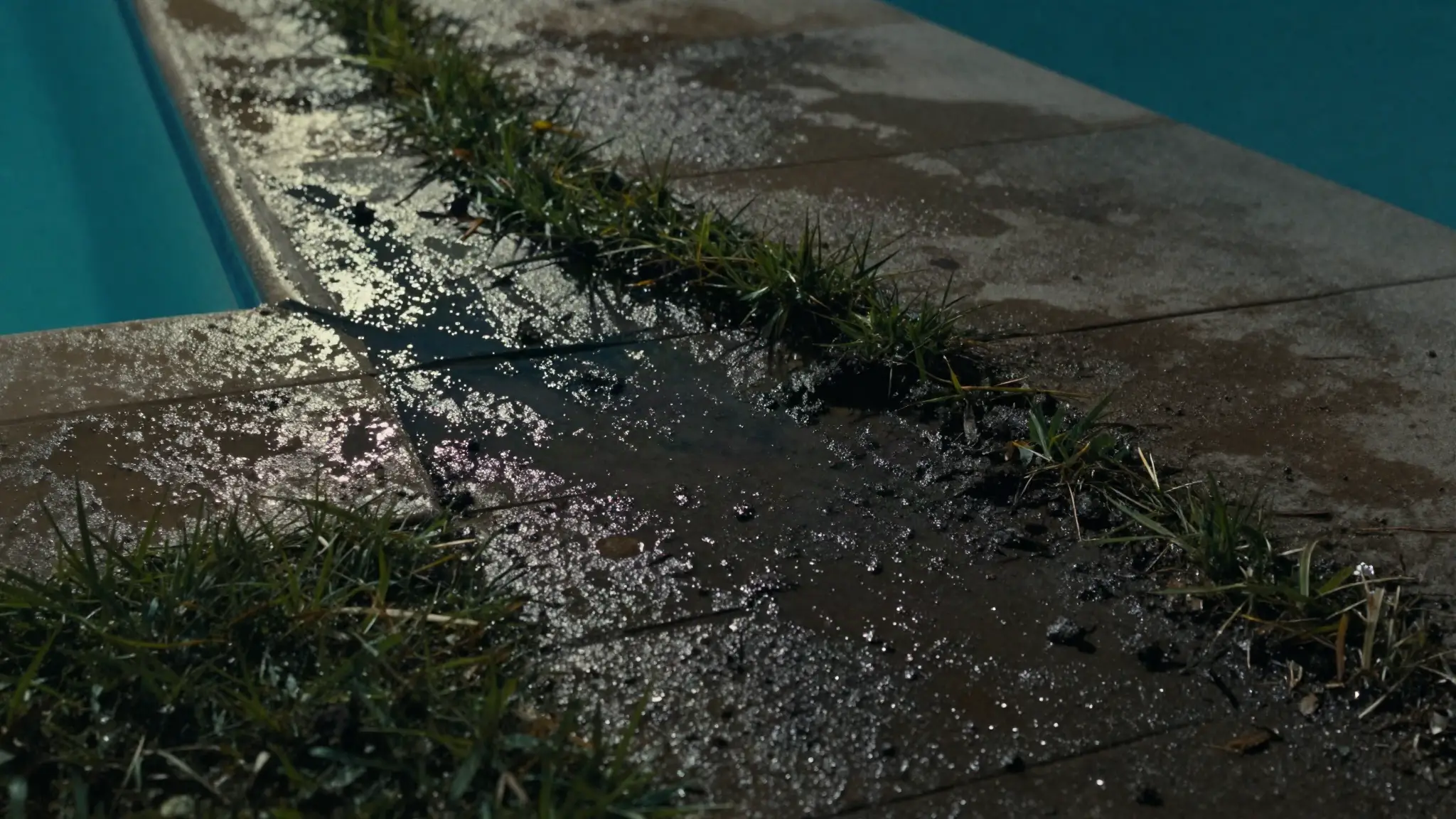
    • Wet spots appear around the pool
    • Your equipment area stays wet
    • Your water bill increases unexpectedly
    • Your pool loses water overnight
    • You notice cracks or structural changes
    • You can’t figure out where the water is going

    The biggest mistake homeowners make is waiting until the problem becomes obvious. A small leak doesn’t always create immediate damage, but continuing water loss can lead to more expensive repairs, damage around the pool area, wasted water, and harder troubleshooting. The goal isn’t to panic every time your pool loses water — it’s to find out what’s happening before you start spending money.

    What Makes a Good Detection Company?

    A good leak detection company does more than show up and start testing — they first understand the situation. The best technicians ask questions like: when did you first notice the problem? How quickly is the water level dropping? Does it happen when the pump is running, or off? Where does the water level stop dropping? Have any repairs been done recently? These details help narrow down where the problem may be.
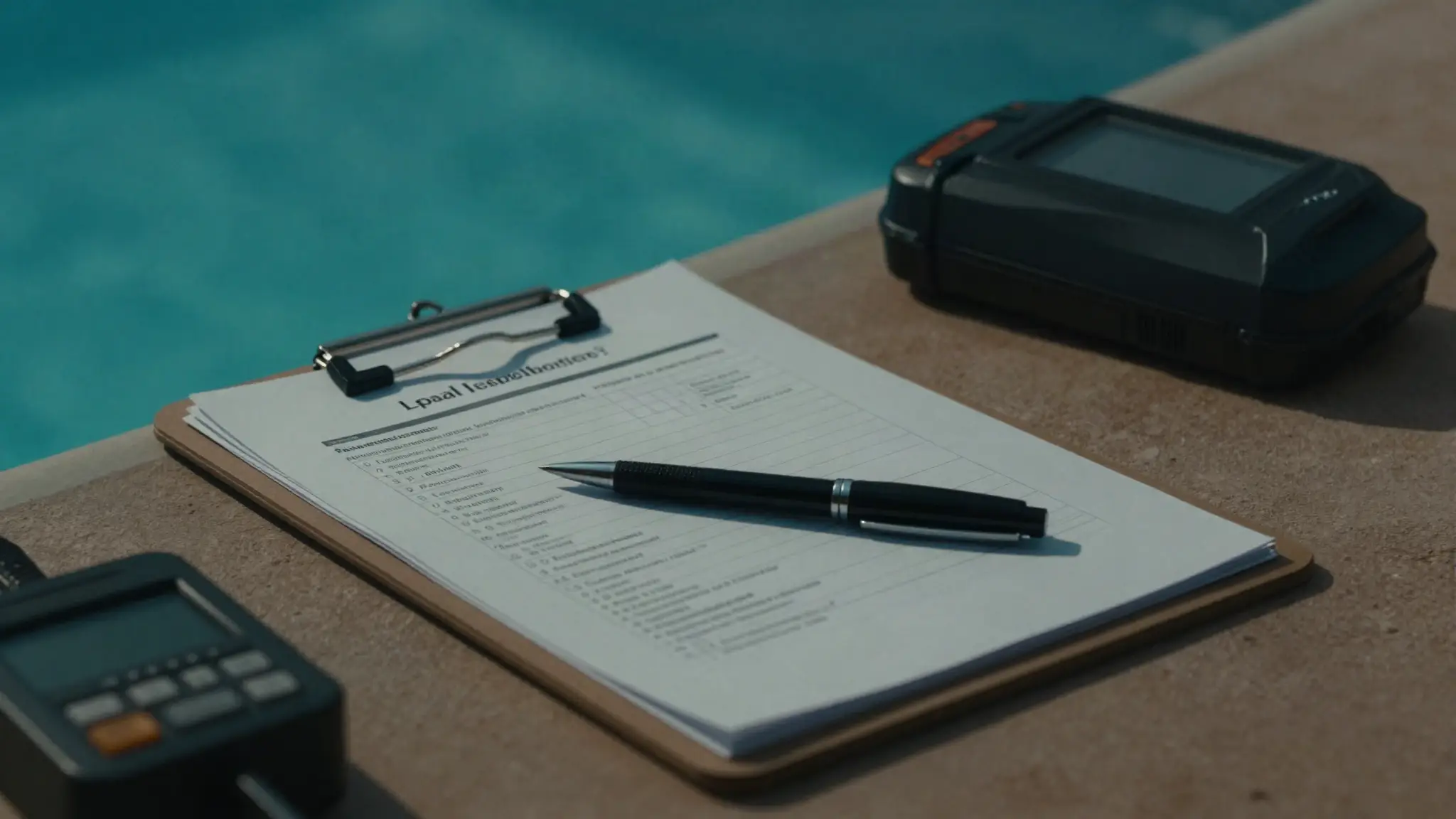
    a written pool leak detection report explaining what was tested and found
    A good company explains what they’re testing, why, and what the results mean — often in a written report.

    A good company should also explain their process — what they’re testing, why they’re testing it, and what the results mean. You shouldn’t feel like you’re watching a mystery unfold while someone else controls all the information. And most importantly, they find before they fix. A trustworthy company doesn’t immediately jump to “you need to dig,” “you need a new pump,” or “you need a complete repair.” They confirm what’s actually happening first.

    Questions to Ask Before Hiring

    You don’t need to be an expert — you just need to ask the right questions. These are the ones that separate a true leak specialist from someone looking for a repair job.

    “How do you find pool leaks?”

    A good company should explain their process. Depending on the situation, they may use pressure testing, dye testing, electronic listening equipment, visual inspections, and equipment evaluations. The answer you want isn’t necessarily a list of expensive tools — it’s that they can explain why they’d use a specific method.

    “Do you provide a written report?”

    A professional inspection should leave you with a clear understanding of what was tested, what was found, where the leak is located, and what repair may be needed. A written report prevents confusion later and gives you something to reference if you decide to get repair estimates.

    “Do you perform detection, or only repairs?”

    A company that does both isn’t automatically a bad choice — but you should understand the difference between “finding the problem” and “selling the solution.” The diagnosis should come first.

    “What happens if you can’t find the leak?”

    This question tells you a lot. An honest professional should acknowledge that some leaks are harder than others, and explain what they tested, what they ruled out, and what the next steps are. Be cautious of anyone who guarantees a major repair before confirming the source.

    What Equipment Should a Company Use?

    Homeowners often assume the company with the most expensive equipment must be the best. That’s not always true — the equipment matters, but knowing when and how to use it matters more.
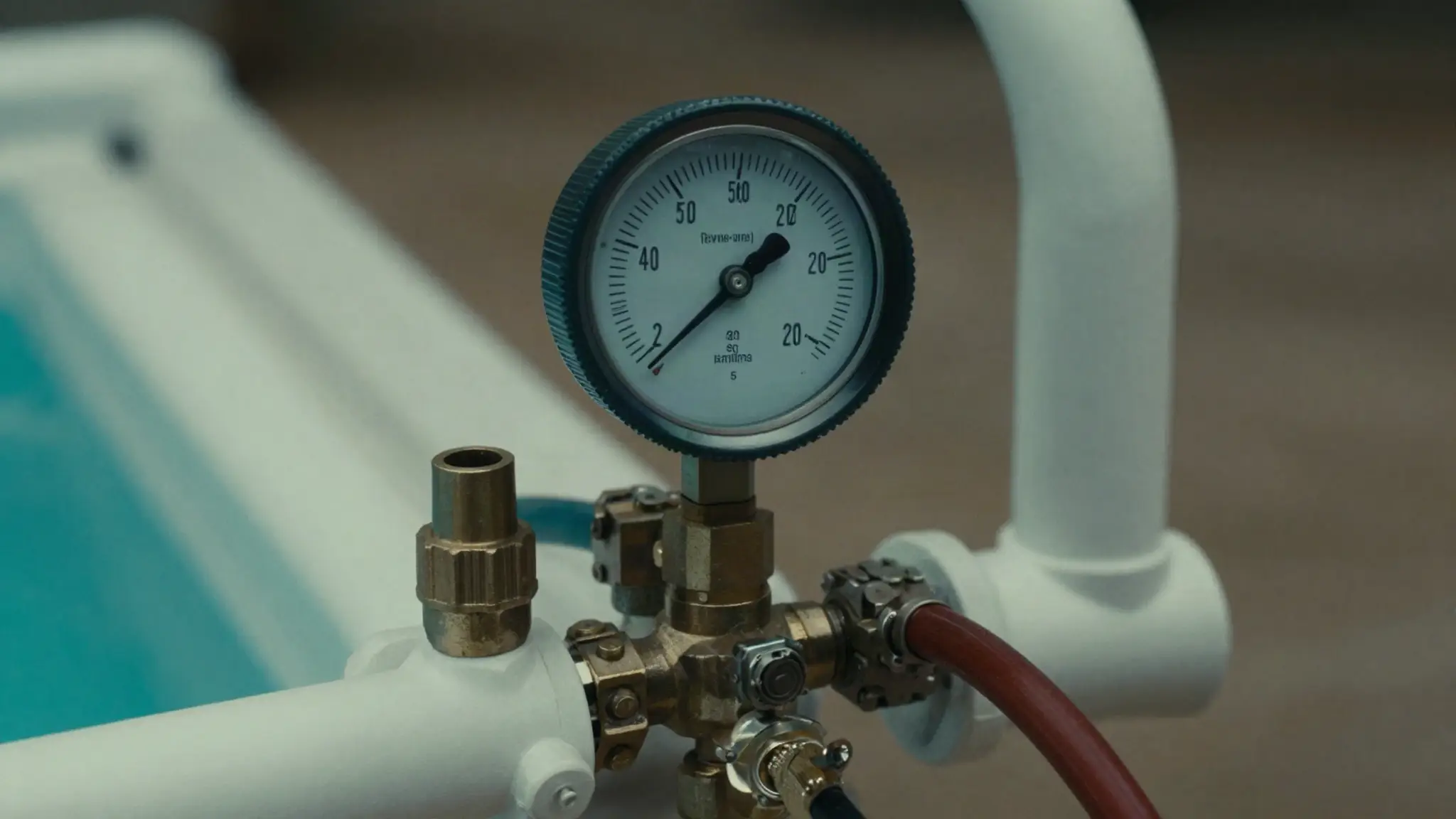
    pressure testing pool plumbing lines during a professional leak inspection
    Pressure testing checks whether plumbing lines are holding — one tool of several, chosen to fit the symptoms.

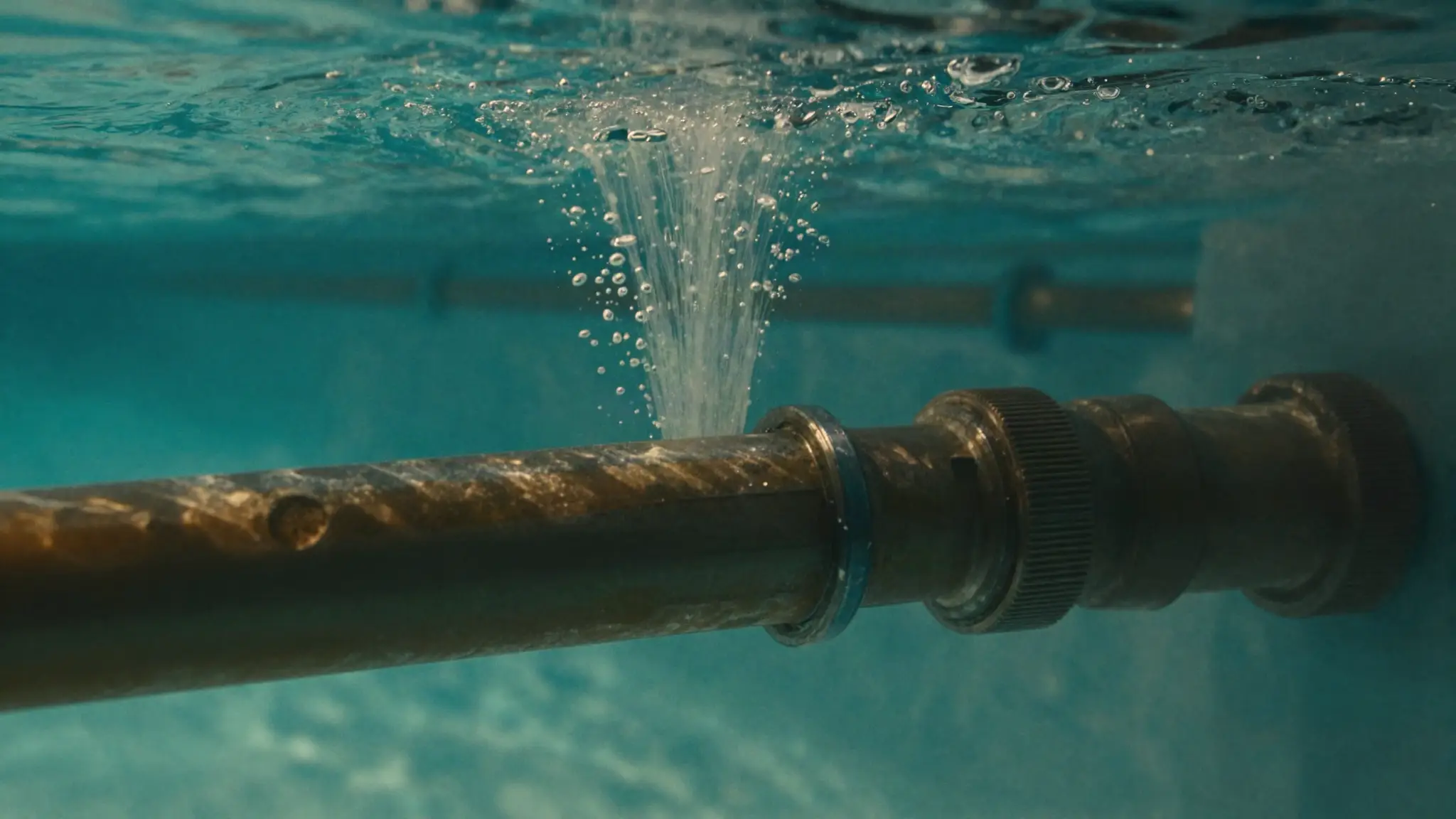
    Pressure testing equipment checks whether plumbing lines are holding pressure, which helps identify issues with return lines, suction lines, and underground plumbing. Acoustic listening equipment picks up the sounds some leaks make as water escapes through pipes or fittings. Electronic detection equipment helps pinpoint certain leaks without unnecessary digging.
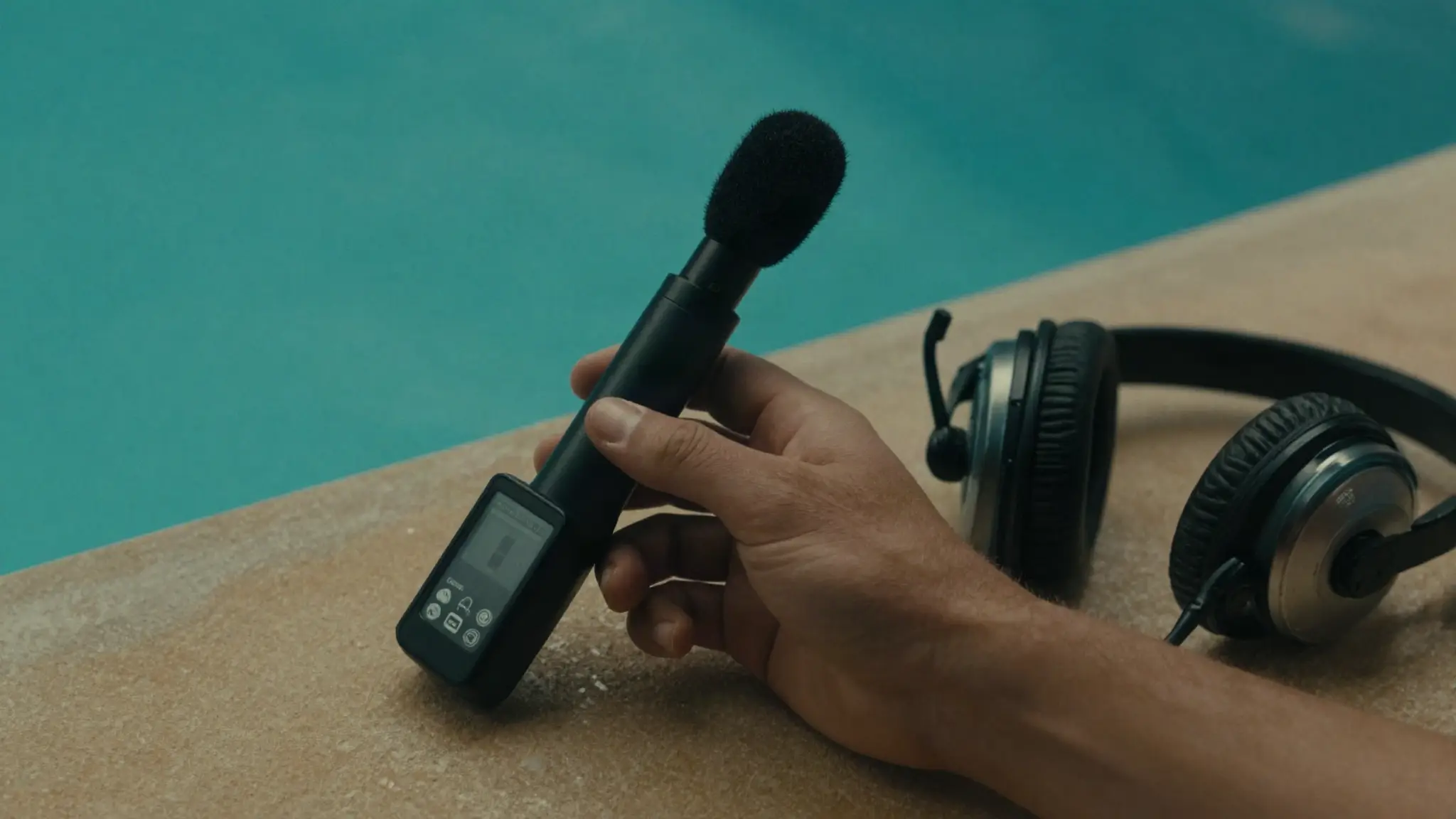
    acoustic and electronic pool leak detection equipment locating a leak
    Acoustic and electronic tools help locate leaks precisely — before anyone reaches for a shovel.

    Dye testing helps determine whether water is moving through a suspected area — useful around cracks, skimmers, lights, and fittings. The best companies don’t simply use every tool available; they choose the right test based on the symptoms.

    How Much Should Detection Cost?

    Cost is one of the biggest questions homeowners have — and the honest answer is that it depends. Pool size, pool type, the number of areas that need testing, whether the leak is visible or hidden, and how much equipment is required all affect the price. A simple inspection may be less involved than a pool with multiple suspected leaks, underground plumbing issues, or structural concerns.

    Be careful with two extremes. The cheapest inspection isn’t always the best deal — a low-cost inspection can lead to pressure to approve repairs, unnecessary recommendations, or additional fees later. On the other hand, an expensive inspection doesn’t automatically guarantee better results. The goal is a company that can clearly explain what’s included, what they’re testing, and what happens after the leak is found. A good diagnosis can actually save money by preventing repairs that were never needed.

    Why Pool Leak Quotes Can Be So Different

    One of the most confusing parts for homeowners is getting completely different prices — one company says $300, another says $1,500. Usually the answer comes down to what’s actually included. Quotes vary because of different testing methods (basic checks vs pressure testing, electronic detection, and multiple diagnostic steps), different scope of work (detection only vs detection plus repair recommendations, additional testing, and follow-up visits), and different experience levels (an experienced technician may identify the problem faster because they know what clues to look for).

    The cheapest option isn’t always the cheapest outcome — a low-priced inspection that leads to the wrong repair can cost much more in the long run. The better question isn’t “who is the cheapest?” It’s “who can accurately identify the problem?”

    Red Flags: Signs You Picked the Wrong Company

    Most homeowners aren’t worried about finding someone — they’re worried about finding someone they can trust. Here are the warning signs to watch for.
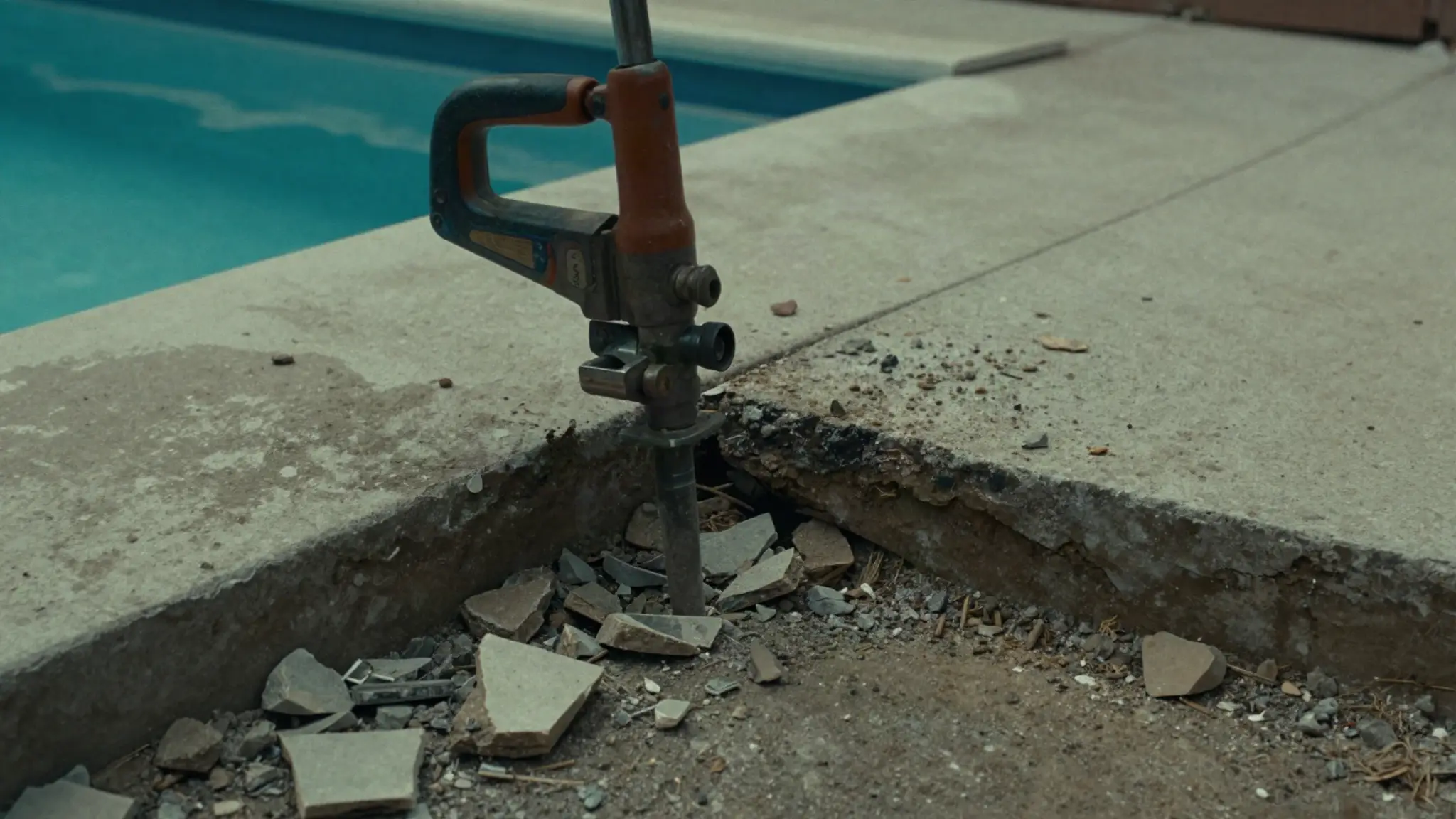
    a pool company digging up a deck before confirming the leak — a red flag
    Excavation is sometimes necessary — but it shouldn’t be the first guess.

    They recommend digging before finding the leak

    Excavation is sometimes necessary, but it shouldn’t be the first guess. A company should have a reason before cutting into your deck, yard, or pool area. The goal is to locate the problem first.

    They can’t explain their diagnosis

    You should understand what failed, why they believe it failed, and how they confirmed it. If someone can’t explain the reasoning behind a repair recommendation, that’s a problem.

    They pressure you to approve repairs immediately

    A trustworthy professional gives you information — they shouldn’t make you feel like you have to make a major financial decision on the spot. Be cautious of “you need to do this today,” “if you wait, your pool will be destroyed,” or “just trust me.” A good company helps you understand your options; it doesn’t rely on fear.

    Before you approve anything

    Know What You’re Dealing With First

    The free assessment helps you walk into any conversation informed — so no one can pressure you into a repair you don’t need.

    Start the Assessment

    Should You Get Multiple Estimates?

    Getting multiple opinions can help, but it depends on what you’re dealing with. For a basic leak detection inspection, one qualified company may be enough. The bigger concern is when the repair recommendation becomes expensive. A second opinion may make sense for underground plumbing repairs, structural pool repairs, major equipment replacement, or large renovation recommendations — because a leak diagnosis and a repair recommendation are two different things.

    Before approving a major repair, understand: what exactly failed? How was the problem confirmed? Are there other repair options? Does the repair solve the actual source of water loss? A second opinion isn’t about questioning every professional — it’s about making sure you understand a major decision before spending thousands. A good company should have no problem explaining their findings or giving you time to decide.

    Licenses, Insurance & Experience

    When someone is working on your pool, you want someone who understands the system and stands behind their work. Before hiring, consider checking:

    • Licensing. Requirements vary by location and the type of work being performed — make sure the company is properly qualified for the services they provide.
    • Insurance. Coverage helps protect both the homeowner and the company if something unexpected happens.
    • Experience with similar pools. A technician who understands concrete, fiberglass, and vinyl pools — plus older systems and modern equipment — is usually better prepared to diagnose the issue.
    • Reviews & reputation. Look beyond the star rating; pay attention to what people mention about communication, reliability, quality of work, and whether customers felt pressured.

    Can the Same Company Find and Repair the Leak?

    Yes, sometimes — many companies offer both detection and repair. The advantages are easier communication, one company handling the process, and less coordination for you. The thing to consider: the company diagnosing the problem may also benefit financially from recommending the repair. That doesn’t mean they’re doing anything wrong — it simply means you should make sure the diagnosis is clear before approving work. A trustworthy company should be able to explain where the leak is, how they confirmed it, what repair is needed, and why that repair is the best option. The important part isn’t whether one company does everything — it’s making sure the repair is based on accurate information.

    What Happens After the Leak Is Found?

    Finding the leak is usually the biggest relief — but it’s only the first step. After detection, you should understand where the leak is located, what caused it, how serious the problem is, and what repair options are available. Not every leak requires a major repair; some involve a worn seal, a loose fitting, a damaged valve, or a small plumbing repair, while others require more planning like underground pipe repairs, structural repairs, or pool surface work. The important thing is that you’re making decisions based on facts instead of guesses — and you should never feel pressured to approve expensive work without understanding what you’re paying for. (When it’s time, our pool leak repair overview explains the common fixes.)

    How to Prepare for an Inspection

    A little preparation helps the inspection go more smoothly. Before the technician arrives, gather any information you have: when you first noticed the problem (when you started adding water more often, when the level changed, when you noticed wet areas); how much water is being lost (how often you refill, how quickly it drops, whether the pump affects it); photos of wet areas, cracks, equipment leaks, and damaged spots; clear access to the pump, filter, heater, valves, and plumbing connections; and a written list of questions. Don’t be afraid to ask — a good technician should be willing to explain what they’re finding and why. Our DIY pool leak testing guide can help you gather those clues first.

    Why Accurate Detection Saves Money

    Many homeowners think the expensive part of a pool leak is paying for detection. Usually, the expensive mistake is something else: paying for repairs before knowing what’s actually wrong. Imagine replacing a pump that wasn’t leaking, plumbing that was still intact, or equipment that was working properly — the repair bill adds up quickly. Accurate leak detection helps you avoid unnecessary repairs, reduce guessing, understand your options, and make better decisions. The goal isn’t to convince you your pool has a major problem — it’s to understand what’s actually happening so you can choose the right solution. The right diagnosis is often the cheapest repair you never had to make.

    Frequently Asked Questions

    How do I choose a good pool leak detection company?

    Look for a company that explains their process, uses appropriate testing methods, clearly communicates findings, and focuses on identifying the leak before recommending repairs.

    How much should pool leak detection cost?

    Costs vary depending on the pool, location of the leak, and testing required. The cheapest option isn’t always the best value if it leads to incorrect repairs.

    What should happen during a pool leak inspection?

    A professional inspection may include reviewing symptoms, checking equipment, testing plumbing, using detection tools, and explaining the findings.

    How do I know if a pool company is trustworthy?

    A trustworthy company should answer questions clearly, explain their diagnosis, avoid unnecessary pressure, and provide details about recommended repairs.

    Should I get multiple pool leak repair quotes?

    For small repairs, one qualified estimate may be enough. For expensive repairs involving plumbing, structural issues, or replacement, getting another opinion can help.

    Can a pool leak company misdiagnose a leak?

    Yes, mistakes can happen. That’s why it’s important to choose a company that explains how they confirmed the leak location.

    What happens if they cannot find the leak?

    A good company should explain what they tested, what they ruled out, and what additional steps may be needed.

    Should I hire a local pool leak specialist?

    A local specialist may have more experience with common pool systems, construction styles, and issues in your area.

    Find the Problem Before Paying for the Fix

    A pool leak is stressful enough without wondering whether you’re being told the truth. The goal isn’t to find the company that gives you the biggest repair estimate — it’s finding someone who can accurately explain what’s happening and help you make a smart decision.
    a trusted local pool leak detection specialist explaining findings at a pool
    The best repair starts with the right diagnosis — and a company that explains it clearly.

    Before you approve repairs, make sure you know where the leak is, why it’s happening, what needs to be fixed, and what your options are. Keep learning with our complete pool leak detection guide, the pool leak symptoms guide, what causes pool leaks, pool equipment leaks, or pool structure leaks.
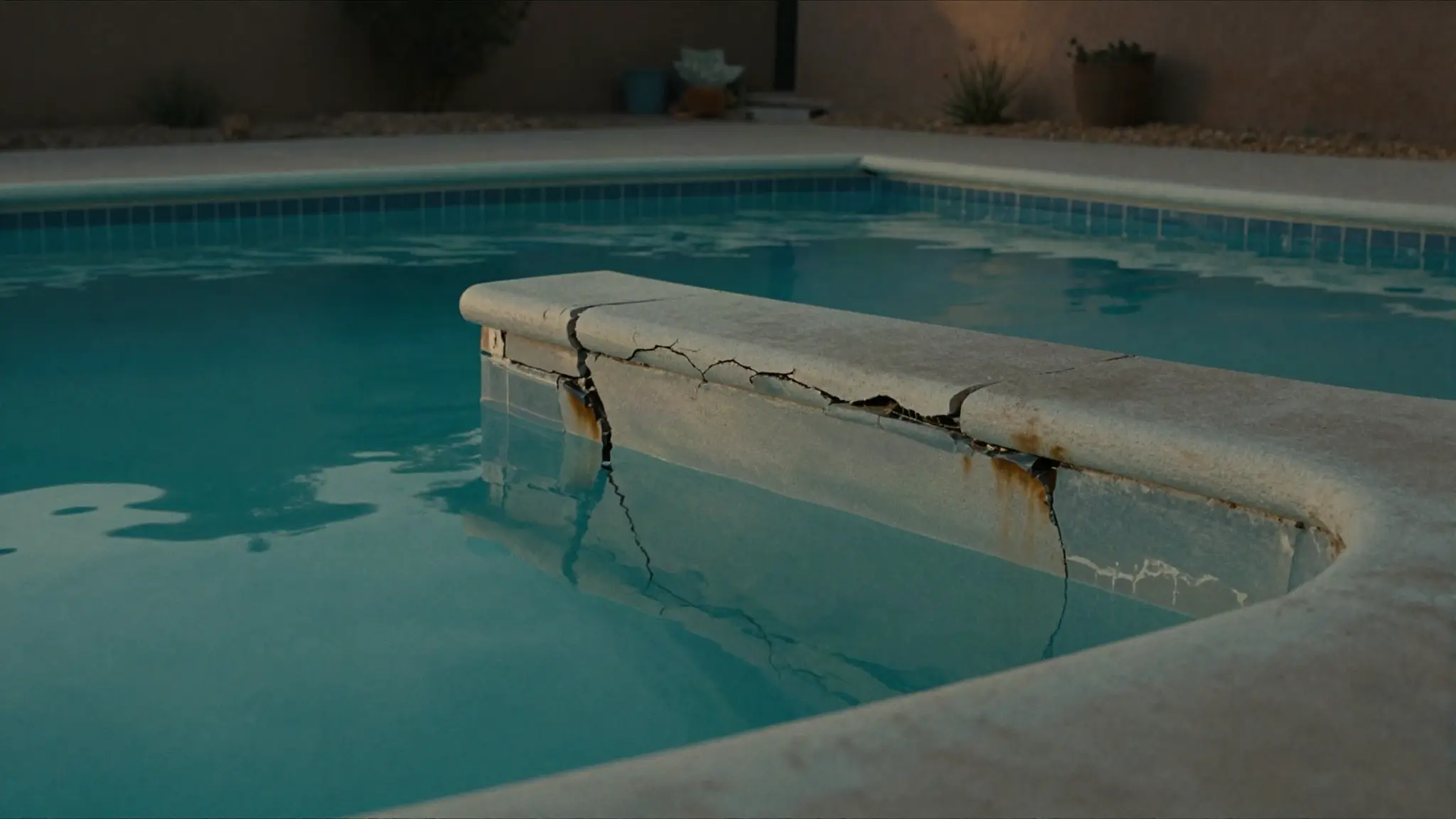
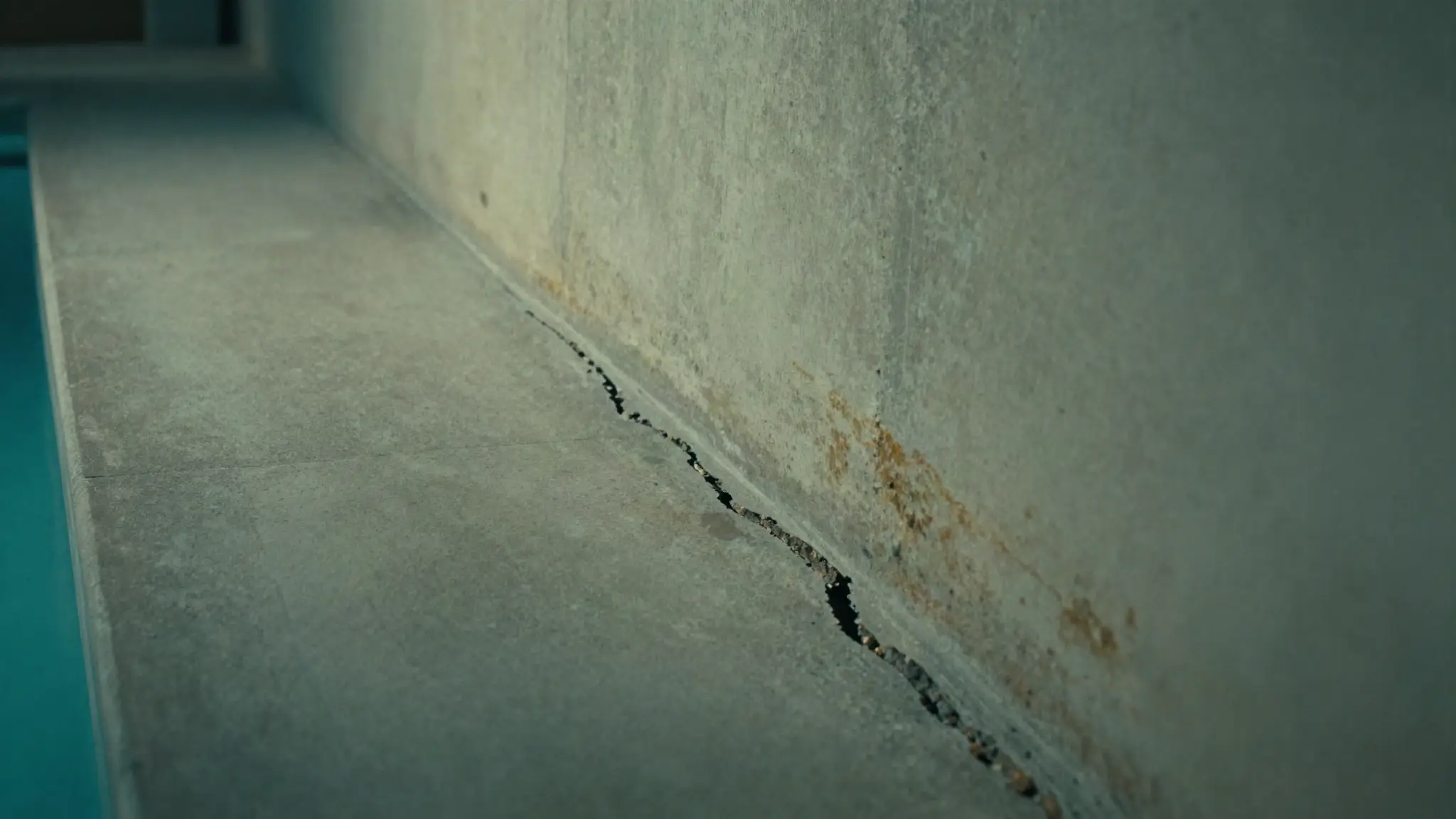
    Ready to talk with a specialist?

    Take the Pool Leak Assessment

    Tell us what you’re seeing and we’ll help connect you with a trusted local pool leak detection professional — no pressure, just answers.

    Take the Assessment
  • Pool Structure Leaks: Cracks, Plaster, Tile & Shell Damage

    Pool Structure Leaks · Complete Guide

    Pool Structure Leaks: Cracks, Plaster, Tile & Shell Damage

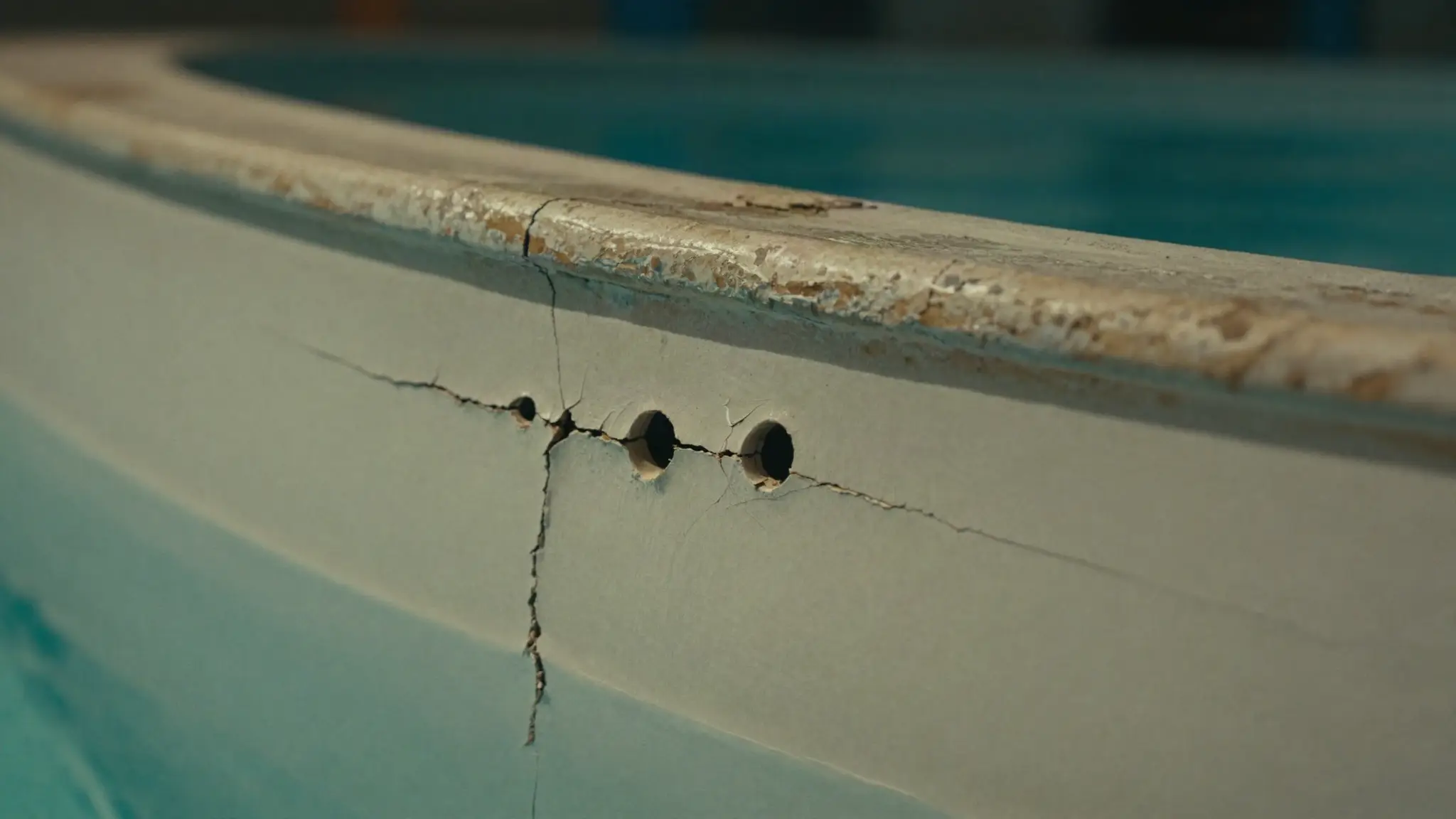
    Found a crack in your pool? Don’t assume the worst yet — not every crack means your pool is failing.

    Pool Leak DetectiveUpdated 202613 min read
    pool structure leaks — cracks in the pool shell, plaster and tile

    You walk outside to enjoy your pool and notice something that wasn’t there before. A crack across the plaster. A loose tile. A white chalky stain. Maybe the ground next to the pool feels damp. It’s enough to make anyone wonder if they’re about to get hit with a five-figure repair bill.

    The truth is, not every crack means your pool is structurally damaged. Not every missing tile means water is leaking. And not every wet spot points to a failing pool shell. The challenge is that many structural problems look alike, even when they’re caused by completely different issues.

    In this guide we’ll walk through the most common types of pool structure leaks, what causes them, the warning signs to watch for, and when it’s time to call a professional. By the end you’ll have a much better idea of what you’re looking at — and what to do next. (If you’re still not sure the leak is structural at all, start with the signs of a pool leak or the full list of what causes pool leaks.)

    What Is a Pool Structure Leak?

    A pool structure leak happens when water escapes through part of the pool itself rather than through the plumbing or equipment. Instead of a leaking pipe or pump, the water is finding a path through the pool’s physical structure — cracks in the concrete shell, fiberglass damage, tears in a vinyl liner, damaged plaster, loose tile or failing grout, cracked skimmers, pool light niches, or expansion joints. Some of these are easy to spot; others hide in plain sight for months before anyone realizes they’re allowing water to escape.

    Is Every Pool Crack a Problem?

    Thankfully, no. Pools expand, contract, and settle over time — it’s completely normal for older pools to develop small surface imperfections that never become serious. The key is knowing the difference between a cosmetic crack and one that’s affecting the structure.

    Cosmetic cracks

    These usually affect only the surface finish, such as plaster or coating. They’re often thin and shallow, limited to the surface, stable over time, and not causing water loss. They may not look great, but many don’t require immediate repair.

    Structural cracks

    Structural cracks go deeper into the pool shell and deserve closer attention. Warning signs include: the crack keeps getting larger, your pool is losing water, the surrounding deck is shifting, wet soil develops nearby, or the crack appears on both the wall and floor. That doesn’t automatically mean your pool is failing — but it does mean it’s worth having inspected before making assumptions.

    Found a crack you’re worried about?

    Take the Free 60-Second Assessment

    Answer a few quick questions and find out whether you’re likely looking at a cosmetic issue or a real leak.

    Take the Assessment

    What Causes Pool Structure Problems?

    Pools are built to last for decades, but they’re constantly dealing with movement, weather, water pressure, and changing soil. The most common reasons structural issues develop:

    • Ground movement. The ground beneath your pool naturally shifts over time, and even small changes stress the shell and surrounding materials.
    • Soil settlement. If the soil under part of the pool settles unevenly, it creates pressure that can lead to cracking or movement.
    • Tree roots. Large roots change the moisture in the soil and can contribute to movement around a pool.
    • Age and normal wear. Aging plaster, loose tiles, worn grout, and expansion joints that no longer seal — a normal part of owning a pool 15–20+ years old.
    • Freeze damage. Less common in Arizona, but freezing temperatures can damage structures if water expands inside cracks or materials.

    Concrete Pool Cracks: The Most Common Concern

    Concrete pools are incredibly durable, but also rigid — when the ground moves or the structure is stressed, cracks can develop. Common locations include the pool floor, side walls, corners, steps, and the bond beam around the top.

    structural crack running across a concrete pool shell floor and wall
    A crack alone doesn’t tell the whole story — what matters is whether it’s changing or leaking.

    A crack by itself doesn’t tell the whole story. What’s more important is whether it’s changing over time or allowing water to escape. Watch for a crack that’s getting longer or wider, water loss that continues day after day, wet soil near the pool, or sections of deck beginning to settle. Many concrete cracks can be repaired successfully with structural crack repair once the actual cause has been identified.

    Fiberglass & Vinyl Pool Leaks

    Fiberglass pool cracks

    Fiberglass pools don’t usually crack for the same reasons as concrete. Because the shell is more flexible, problems often show up around stress points, plumbing connections, or areas where the pool has shifted — surface cracks in the finish, stress cracks around fittings, bulging or movement in sections, or damage from improper installation or ground movement. Not every visible crack means the shell has failed; the real question is whether the crack is allowing water to escape.

    Vinyl liner pool leaks

    Vinyl liner pools are different because the liner itself keeps the water in — and the structure underneath may be perfectly fine. Leaks often come from small tears or punctures, aging brittle vinyl, separation around returns/skimmers/lights, or damage from equipment or sharp objects. The frustrating part is that a small puncture can be hidden underwater or behind wrinkles. Signs include a dropping water level, wrinkles appearing, the liner pulling away from the wall, or visible tears. A worn liner doesn’t always mean the whole pool needs replacing.

    Pool Plaster Problems: Cracks, Peeling & Spalling

    One of the most confusing parts of pool leaks is knowing whether you’re looking at a surface problem or a deeper structural issue. Pool plaster naturally wears down over time — small cracks, rough patches, discoloration, peeling, and spots where the finish separates. But not every plaster problem means your shell is damaged.

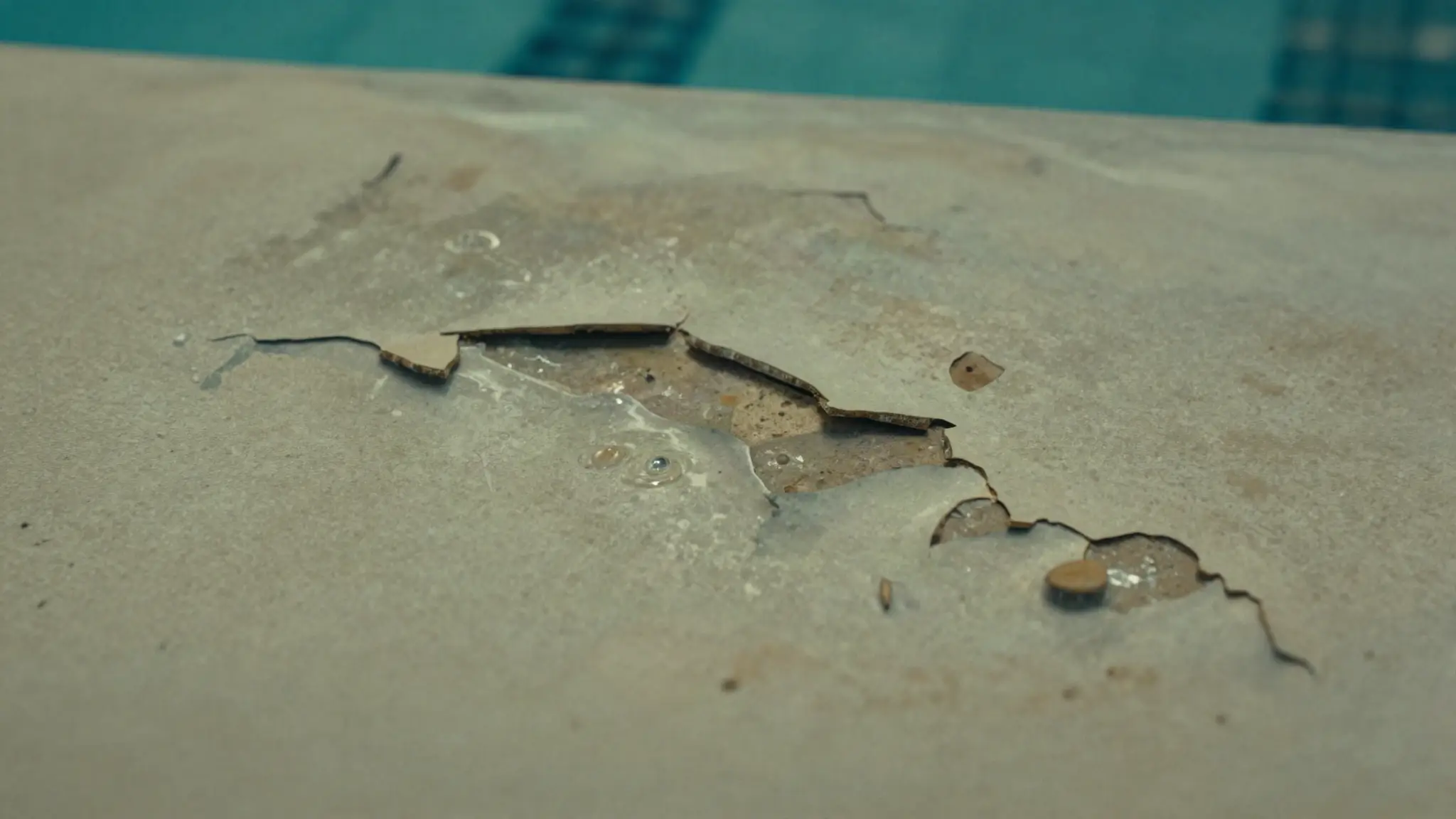
    pool plaster delamination and peeling surface damage
    Surface cracks in old plaster are often cosmetic — delamination and spalling deserve a closer look.

    Plaster cracks

    Small cracks happen from age, movement, installation problems, or normal expansion and contraction. The important question is whether the crack is only in the finish or extends deeper.

    Plaster delamination

    This is when plaster begins separating from the surface underneath — hollow-sounding areas, bubbling, flaking sections, or large patches of damaged finish.

    Surface spalling

    Spalling occurs when the pool surface begins breaking down and pieces of the finish deteriorate. Before assuming you need a complete resurfacing, it’s important to understand exactly what’s failing — a pool that needs a small repair shouldn’t be treated like a full renovation.

    Pool Tile, Grout & Coping Leaks

    The areas around your pool that seem small can create bigger problems. Tiles, grout, and coping protect the edges of your pool and keep water where it belongs. When they fail, water can sometimes find a way behind the surface.

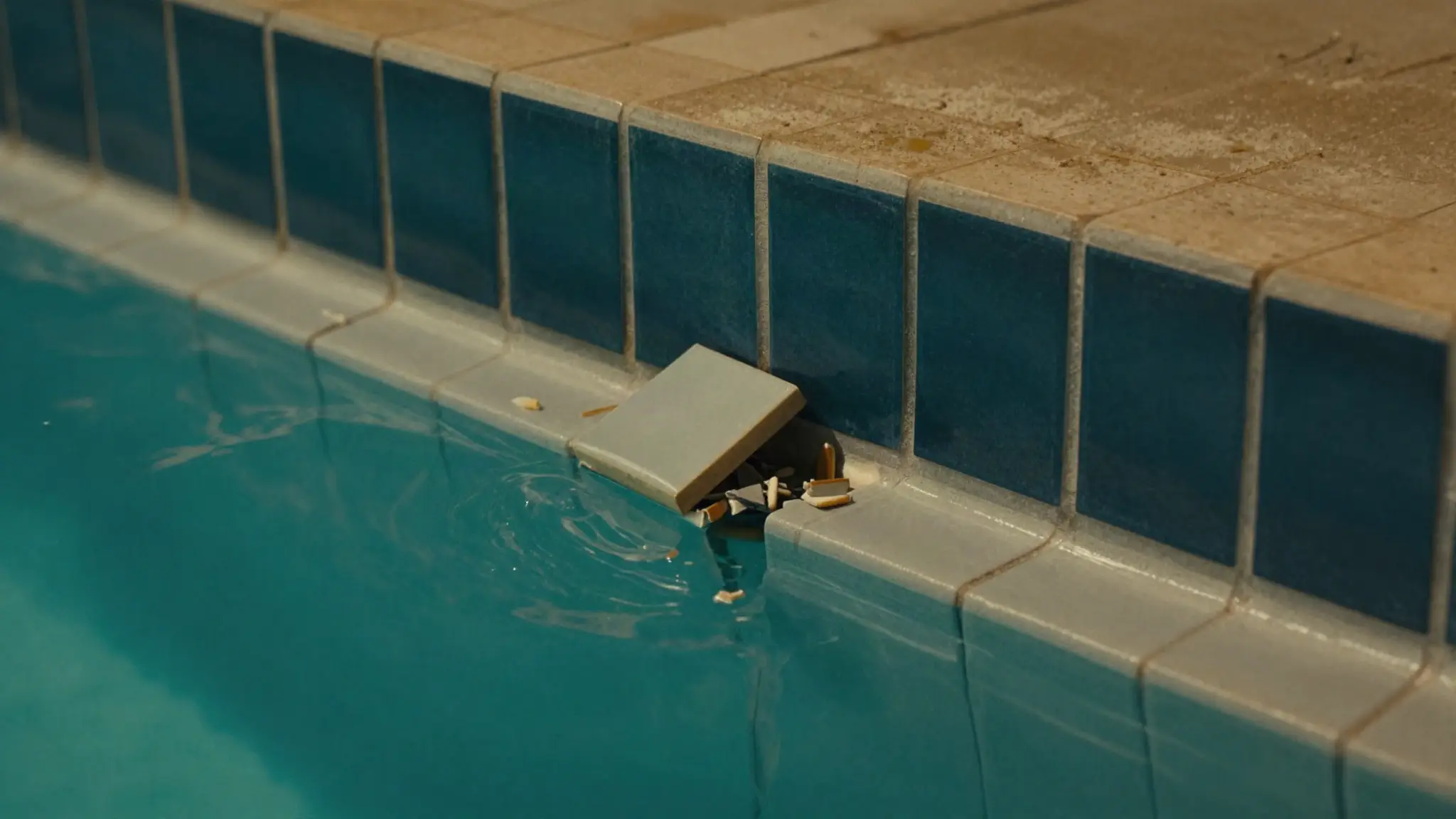
    loose and missing pool tile at the waterline
    A missing tile doesn’t automatically mean a leak — but it’s worth checking if it appears with water loss.

    Loose or missing tiles

    Tiles loosen from age, movement, water getting behind them, or failed adhesive. A missing tile doesn’t automatically mean your pool is leaking, but it’s worth investigating if it appears alongside water loss.

    Grout leaks

    Grout deteriorates over time, especially where water moves constantly. Damaged grout can allow moisture behind the surface around tile lines, steps, water features, and pool edges.

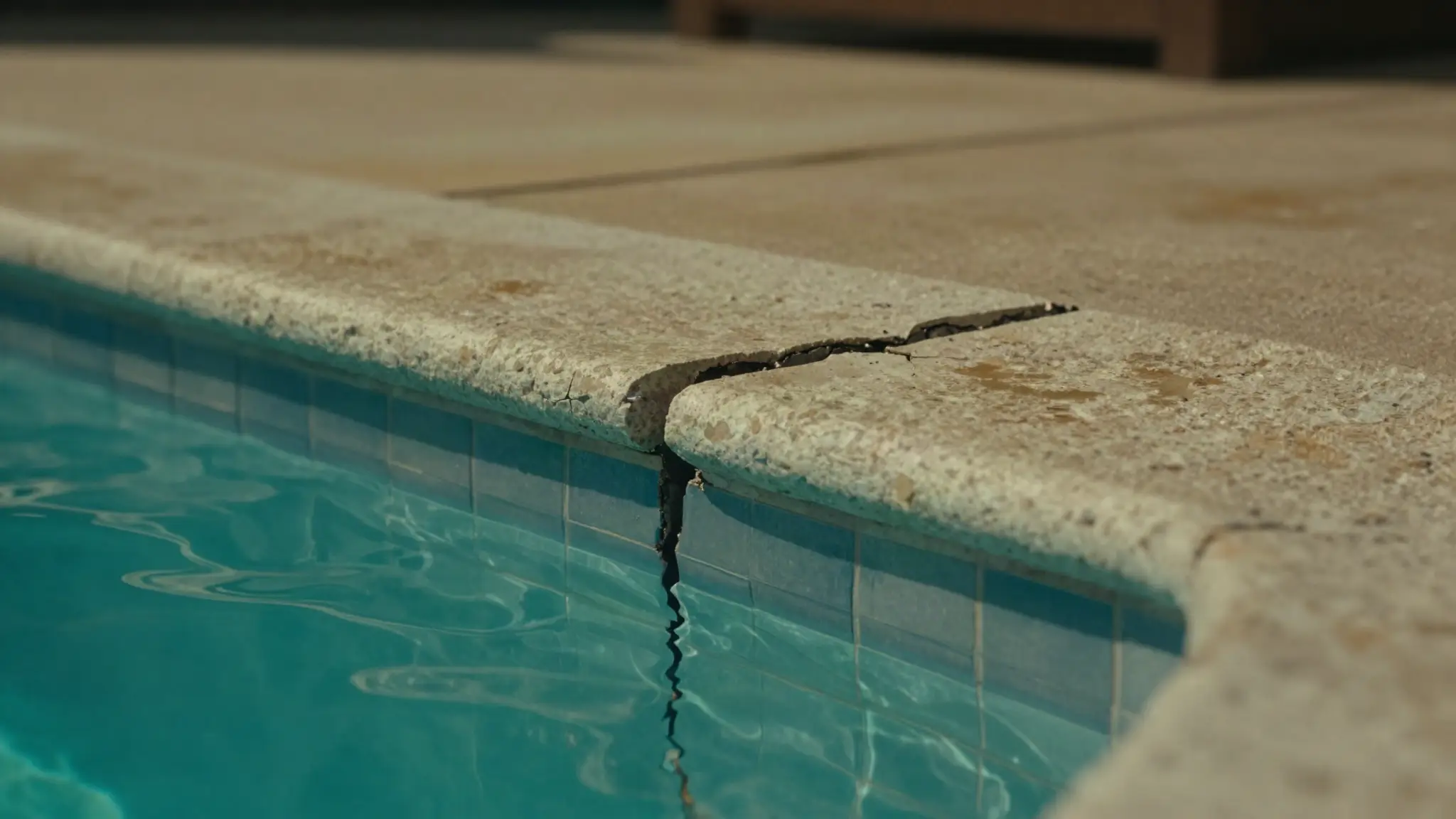
    cracked pool coping separating along the pool edge
    When coping separates or cracks, water can move into areas it shouldn’t.

    Coping leaks

    Coping is the material around the top edge of your pool. When it separates, cracks, or fails, water can move into areas it shouldn’t — look for loose coping stones, cracks around the pool edge, or water collecting behind the coping.

    Other Structure Areas That Can Leak

    Not every structural leak comes from the main pool shell — several smaller components connected to the structure can become problem areas.

    Pool light niches

    Pool lights sit inside a housing called a niche, and over time the seals can fail and let water escape. Common signs: water loss stopping near the light level, moisture around the fixture, and problems that seem impossible to locate.

    Skimmer body cracks

    The skimmer is built into the side of your pool and constantly handles water movement, so the body or its connections can crack over time. Signs include the water level stopping near the skimmer opening, wet areas around the skimmer, and visible damage.

    Steps, benches & spa spillways

    Built-in features can also develop leaks — steps, benches, attached spas, and spillways. Because these connect to the pool structure, leaks can be difficult to identify without proper testing (an attached spa is the focus of spa leak detection).

    Signs Your Pool Structure May Be Leaking

    Seeing a crack or damaged area doesn’t automatically mean you have a structural leak. The bigger question is: is water actually escaping from that area? Some signs that may point toward a structural leak:

    • Your water level keeps dropping and evaporation doesn’t explain the loss.
    • A crack appears to be changing — getting longer, wider, changing shape, or appearing in multiple areas.
    • Wet areas around the pool — though water can travel through soil and appear away from the actual source.
    • Water stops dropping at a certain level — at the skimmer, a return jet, or the pool light. That stopping point helps narrow down where the problem may be.

    Can a Pool Crack Get Worse If You Ignore It?

    Sometimes. Not every crack becomes a major problem — some cosmetic cracks stay unchanged for years without causing water loss. However, a crack that is allowing water to escape shouldn’t be ignored, because water movement can lead to soil erosion around the pool, additional movement, larger damaged areas, and more expensive repairs later. The challenge is knowing which type of crack you have: from the surface, a homeowner usually can’t tell how deep it goes, whether water is moving through it, or whether it’s cosmetic or structural. The goal isn’t to panic every time you see a crack — it’s to understand what the crack is actually doing.

    How Professionals Test Structural Leaks

    Finding a crack is only part of the process — the bigger question is whether that crack is actually causing the leak. A professional inspection may include a close visual inspection (crack location, size, shape, surrounding areas, and signs of movement), dye testing to see whether water is moving through a suspected area, pressure testing nearby plumbing to rule out other causes, and a water-loss evaluation (does it lose water with the pump on or off? does it stop at a certain level?). The goal isn’t simply finding something that looks damaged — it’s confirming the actual source of water loss before repairs begin. That’s exactly what our complete pool leak detection guide covers.

    Worried it’s structural?

    Get a Clear Next Step First

    Before anyone talks resurfacing or major repairs, the free assessment helps you understand what you’re actually dealing with.

    Start the Assessment

    Can You Inspect a Pool Structure Yourself?

    There are several things you can safely do before calling a professional: take pictures of cracks, measure changes over time, monitor water loss, look for wet areas around the pool, and check if tiles or coping are moving. This information can actually help a technician diagnose the problem faster. However, avoid cutting into plaster, draining the pool to inspect the shell, removing structural materials, or attempting major crack repairs — a small mistake can turn a repair problem into a much larger project. DIY inspection is useful for gathering information; it’s not a replacement for properly diagnosing a structural leak. (For the full at-home routine, see our DIY pool leak testing guide.)

    Does a Structural Leak Mean You Need a New Pool?

    This is probably the biggest fear homeowners have — they find a crack and immediately think “is my pool ruined?” Usually, that’s not the first conclusion. Many pool structure problems can be repaired depending on the type of pool, the location of the damage, the cause, and how severe it is. A small crack and a major structural failure are two completely different situations. The mistake many homeowners make is jumping straight to the most expensive possibility before knowing what they’re dealing with. Before approving major work, ask: what exactly is damaged? Is it causing water loss? What repair options are available? Why is this repair recommended? A good specialist should explain the problem clearly without making you feel pressured.

    Pool Structure Leak Repair Costs

    The cost depends on what failed and how difficult the repair is — pool type, location of damage, repair method, accessibility, and labor. In general: lower-cost repairs include small tile repairs, minor surface fixes, seal repairs, and small fitting issues; medium repairs may include crack injections, plaster repairs, and localized surface restoration; higher-cost repairs can involve major shell repairs, extensive structural work, resurfacing, or larger reconstruction. The important thing is making sure you’re paying for the correct repair — a homeowner who fixes the wrong problem can spend thousands and still have the original leak.

    Repair or Resurface? How to Know

    Many homeowners confuse pool repairs with resurfacing — they’re not the same. A repair focuses on a specific problem: a crack, a leak source, damaged tile, or failed coping. Resurfacing replaces or restores a large portion of the pool’s interior finish. Resurfacing may make sense when the plaster is reaching the end of its lifespan, surface damage is widespread, or multiple areas are failing. A repair may make more sense when the issue is isolated, the surface is otherwise in good condition, or the problem has a specific cause. The right choice depends on the actual condition of your pool — not just its age.

    When Should You Call a Professional?

    A professional evaluation makes sense when your pool continues losing water, a crack appears to be growing, you suspect shell damage, the deck around the pool is moving, you can’t determine the cause, or repairs involve major structural components. The biggest mistake homeowners make is trying to fix the visible problem without confirming the actual source — a crack may be the cause, or it may simply be where the damage became visible. Getting the diagnosis right first usually prevents wasted money and unnecessary repairs.

    Frequently Asked Questions

    Are all pool cracks serious?

    No. Many cracks are cosmetic. Others can allow water loss or indicate movement. The difference depends on the location, depth, and whether water is escaping.

    How do I know if my pool crack is leaking?

    Signs include continued water loss, wet areas around the pool, or the water level consistently stopping near the crack location.

    Can a cracked pool be repaired?

    In many cases, yes. The repair depends on the pool type, damage location, and severity.

    Can a pool crack cause water loss?

    Yes. Some cracks allow water to escape, while others only affect the surface appearance.

    How much does structural pool repair cost?

    Costs vary depending on the repair needed. Small repairs may be relatively affordable, while major structural work can become significantly more expensive.

    Do structural pool repairs require draining the pool?

    Not always. Many repairs can be completed without fully draining the pool.

    Should I repair or resurface my pool?

    It depends on whether the problem is isolated damage or widespread surface deterioration.

    Can I fix a pool crack myself?

    Small cosmetic repairs may be possible, but leaking or structural cracks should be evaluated before attempting repairs.

    Don’t Ignore the Problem. Understand It First.

    Finding a crack, missing tile, or damaged area around your pool can be stressful — but the worst decision is making an expensive repair before understanding what’s actually happening.

    Not every crack means your pool is failing. Not every damaged surface means you need a complete renovation. The first step is figuring out whether you have a cosmetic issue, a repairable leak, a structural problem, or a completely different cause. Understanding the problem first helps you ask better questions, avoid unnecessary repairs, and make a smarter decision. Keep learning with our complete pool leak detection guide, the pool leak symptoms guide, or what causes pool leaks.
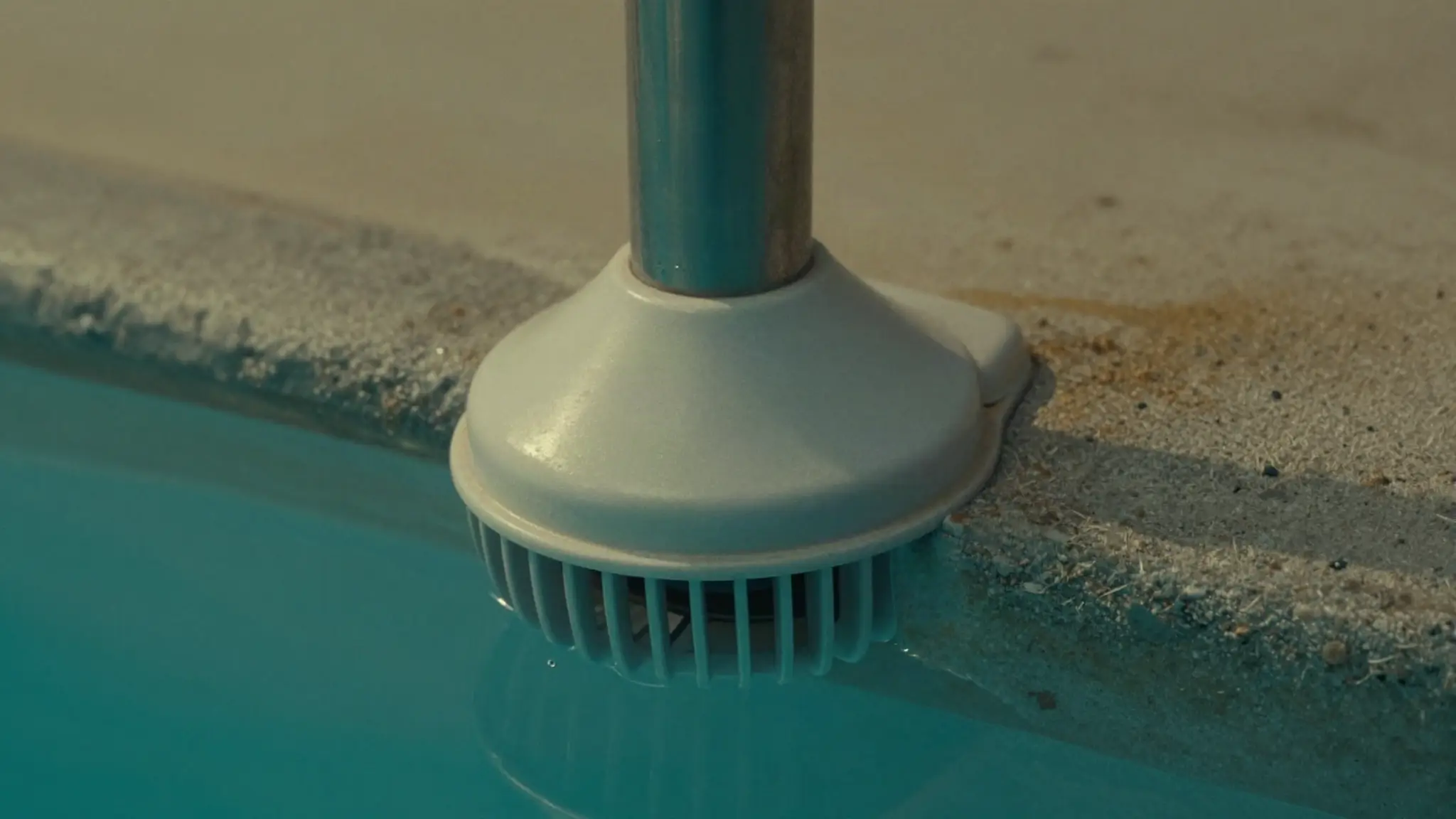
    Your next step

    Take the Pool Leak Assessment

    Tell us what you’re seeing on your pool’s surface and we’ll help connect you with a trusted local specialist — or keep learning in our pool leak guides.

    Take the Assessment
  • Pool Equipment Leaks: Pumps, Filters, Heaters & Valves

    Pool Equipment Leaks · Complete Guide

    Pool Equipment Leaks: Pumps, Filters, Heaters & Valves

    Water around your pool equipment? Don’t assume the worst — most equipment leaks are cheaper to fix than you think.

    Pool Leak DetectiveUpdated 202612 min read
    pool equipment leaks — pump, filter, heater and valves on the equipment pad

    You walk over to your equipment pad and notice something you didn’t see yesterday. A puddle. A slow drip. Maybe the concrete under your pump is wet. Your first thought is probably: “Great… this is going to be expensive.”

    Take a breath. Pool equipment leaks are one of the more common pool problems, and they’re often much less serious than homeowners expect. Sometimes it’s a worn-out O-ring. Sometimes it’s a loose fitting that needs tightening. Sometimes it’s nothing more than a seal that’s reached the end of its life.

    Of course, bigger repairs do happen. But replacing an entire pump, filter, or heater without knowing what’s actually leaking can cost far more than fixing the real problem. This guide shows where equipment leaks usually happen, what causes them, which ones you can check yourself, and when it’s time to call a professional. (Not sure the leak is even at the equipment? Start with the signs of a pool leak or the full list of what causes pool leaks, or whether it’s a structural problem.)

    What Counts as a Pool Equipment Leak?

    A pool equipment leak is any leak that comes from the parts responsible for moving, cleaning, or heating your water — your pool pump, filter, heater, valves, PVC plumbing, and the fittings and connections between them. The tricky part is that all of these components are connected. Water dripping from the bottom of your pump doesn’t automatically mean the pump is leaking — it could be coming from a fitting above it and simply running down the equipment. That’s why it’s important to find the source before replacing any parts.

    Is Water Around Your Equipment Normal?

    Sometimes, yes. Not every wet equipment pad means something is broken. You might notice a little moisture after heavy rain, cleaning your filter, backwashing the system, routine maintenance, or morning condensation — that usually dries up on its own. What deserves a closer look is water that keeps coming back:

    • A puddle that never goes away
    • Water dripping while the system is running
    • A wet equipment pad every day
    • Your pool losing water faster than normal
    • Air getting into the system

    If you’re seeing one or more of these, it’s worth finding out where the water is actually coming from.

    Water at your equipment pad?

    Take the Free 60-Second Assessment

    Answer a few quick questions and see what’s most likely leaking before you replace a single part.

    Take the Assessment

    Pool Pump Leaks: The Most Common Problem

    If there’s one piece of equipment homeowners worry about most, it’s the pool pump — it’s the heart of your system. But seeing water around the pump doesn’t automatically mean the whole pump needs replacing. Many pump leaks come from small parts that wear out over time.

    pool pump shaft seal leak dripping between the motor and pump housing
    A leak between the motor and pump housing usually points to a worn shaft seal — a cheap fix.

    Pump housing cracks

    The housing is the plastic body that holds everything together. As pumps age, it can crack from years of heat, vibration, or a rare cold snap. Watch for water dripping from the body, a visible crack, or a leak that continues even after the pump shuts off. Small cracks can sometimes be repaired; larger ones often mean replacing the housing or pump.

    Pump shaft seal leaks

    One of the most common pump repairs. The shaft seal keeps water from escaping where the motor connects to the pump. When it wears out, you’ll notice water dripping between the motor and the pump housing — often only while the pump is running. The good news: replacing a shaft seal is usually much cheaper than replacing the whole pump.

    Pump lid O-ring leaks

    Sometimes the problem is just the rubber O-ring under the clear pump lid. As it ages it can flatten, crack, or dry out — allowing small leaks, air into the system, reduced performance, and trouble keeping the pump primed. Replacing it is one of the simplest, least expensive equipment repairs.

    Pump union & drain plug leaks

    Not every pump leak is the pump itself. Sometimes water comes from the threaded fittings connecting the plumbing, or the small drain plugs used when servicing the equipment — usually from loose fittings, worn seals, damaged threads, or aging O-rings. These are typically straightforward to repair once the source is confirmed.

    Pool Filter Leaks

    Your filter holds water under pressure all day long, so even a small crack or worn seal can create a noticeable leak. The good news is that not every filter leak means you need a new filter — many come from replaceable parts.

    pool filter leak — water around the filter tank lid and O-ring
    Water around the filter lid is often just a dried-out O-ring or gasket.

    Filter tank cracks

    The tank holds water under high pressure, so a crack usually makes itself known — water spraying from the tank, a steady drip while the pump runs, visible cracks, or a sudden drop in filter pressure. Plastic tanks weaken over time from sun, pressure changes, and wear. If the tank itself is cracked, replacement is often safest.

    Filter O-rings & gaskets

    One of the most common and least expensive filter leaks. O-rings and gaskets seal the parts of the filter together, and over time they dry out, flatten, or crack. You might see water dripping around the filter lid, moisture near plumbing connections, or small leaks that slowly worsen. Often, replacing a worn gasket is all that’s needed.
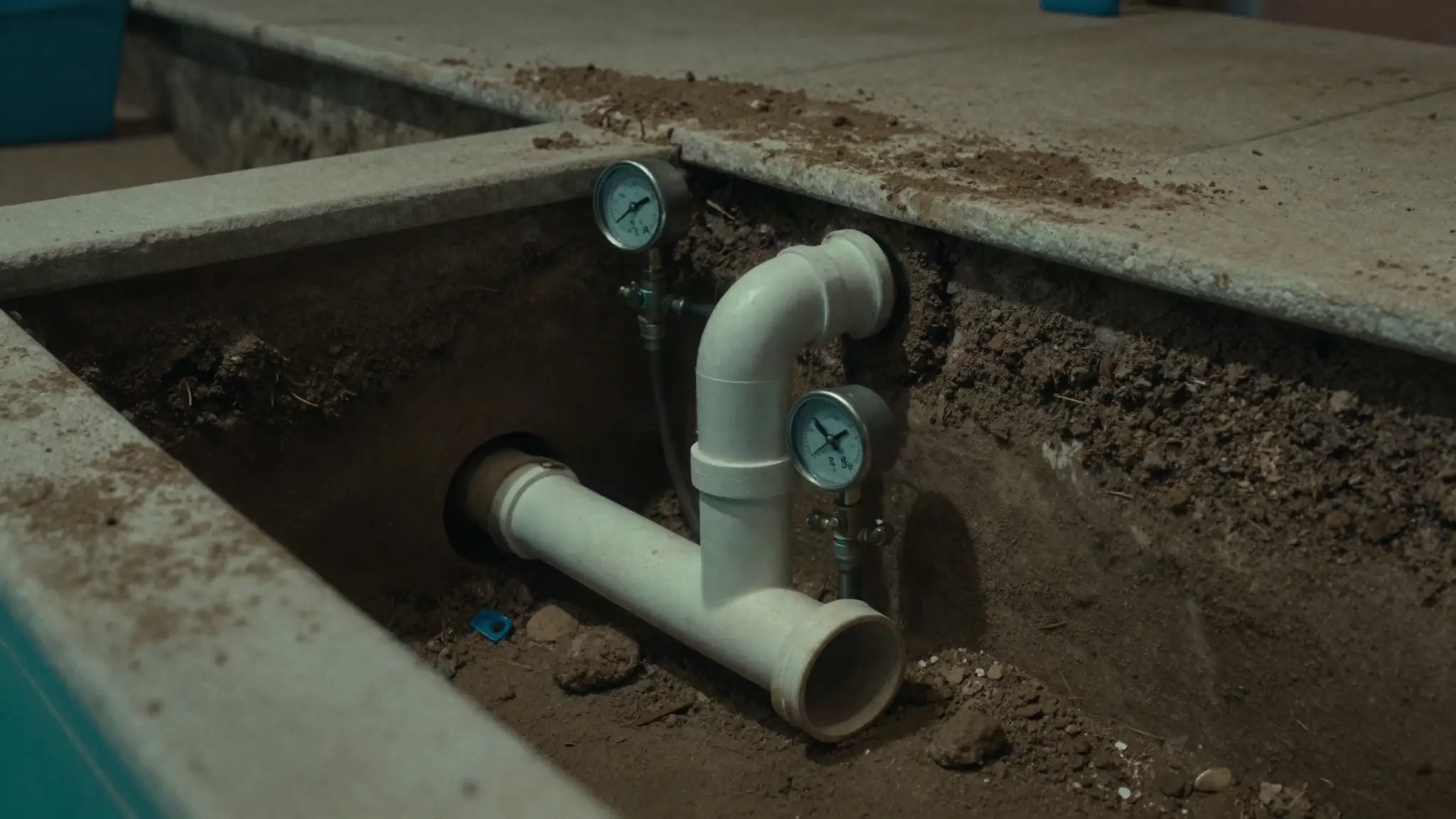
    Air relief valves & filter clamps

    Sometimes the leak is one of the filter’s smaller components — an aging air relief valve or a loose, worn clamp. These repairs are simpler than replacing the whole filter, but they must be installed correctly since the filter operates under pressure.

    Pool Heater Leaks

    A leaking pool heater can be confusing because the water isn’t always coming from where you think. Sometimes it’s a plumbing connection, sometimes a failed internal component, and sometimes what looks like a heater leak is water dripping down from another piece of equipment.

    pool heater leak — corrosion and water pooling beneath the heater
    Rust, corrosion, or water pooling under the heater can point to the heat exchanger — but confirm first.

    Heat exchanger leaks

    The heat exchanger is one of the heater’s most important parts. As it ages, corrosion or wear can cause leaks — water leaking from inside the heater, rust or corrosion, reduced heating performance, or water pooling beneath the unit. A failed heat exchanger is one of the more expensive heater repairs, so it’s important to confirm that’s actually the problem before replacing anything.

    Heater plumbing connection leaks

    Fortunately, not every heater leak is internal. Sometimes it’s simply the pipes connected to the heater — loose fittings, aging seals, or cracked PVC — which can look much worse than they are. Another reason to find the exact source before assuming the heater has failed.

    Pool Valve Leaks

    Valves control where water flows through your system — every time you switch between pool and spa, backwash the filter, or adjust the plumbing, they’re doing the work. Like any moving part, they wear out: worn seals, cracked valve bodies, stiff or broken handles, and internal diverters wearing down. Most valve leaks start small but rarely fix themselves.

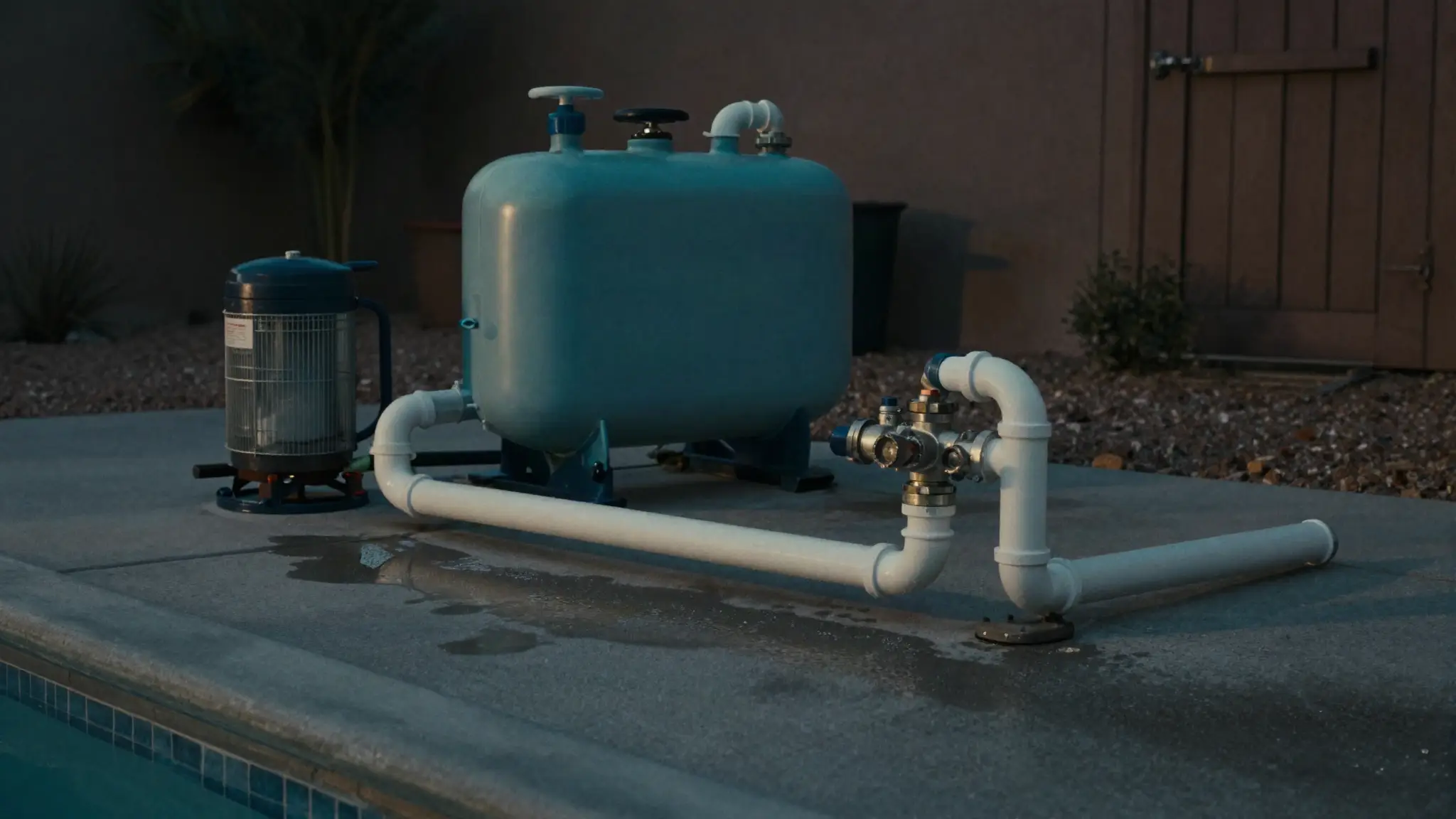
    pool valve leak at a diverter valve on the equipment pad
    Diverter, multiport, and check valves all rely on internal seals that wear with age.

    Multiport valves

    Found on many sand and DE filters, these contain several internal seals that wear with age. When they fail you may notice dripping, water leaking while filtering, or water flowing where it shouldn’t.

    Diverter valves

    These direct water between plumbing lines. Over time the internal seals wear out, letting water escape around the valve. Sometimes a simple seal solves it; other times the whole valve body needs replacing.

    Check valves

    Check valves keep water flowing in one direction. As they age, the flapper or internal seals can fail, causing leaks or poor performance — usually inexpensive to repair compared to larger equipment.

    PVC Pipes & Equipment Pad Plumbing Leaks

    Sometimes the equipment isn’t leaking at all — the real problem is the plumbing connecting everything. PVC pipes spend years expanding and contracting in the Arizona heat, and eventually that takes a toll: cracked PVC, failed glue joints, loose unions, broken fittings, and aging plumbing. The good news is these leaks are usually visible, making them easier to diagnose than underground plumbing problems.

    Why Pool Equipment Leaks Happen

    Pool equipment doesn’t usually fail overnight — most leaks happen because small parts wear out over time. Understanding why something is leaking helps you make a smarter repair decision.

    Age

    Nothing lasts forever. Rubber seals dry out, plastic becomes brittle, and moving parts wear down after years of daily use. That doesn’t mean your equipment is shot — just that some parts may need attention.

    Arizona sun & heat

    Months of intense sun and triple-digit temperatures shorten the life of O-rings, gaskets, plastic housings, PVC plumbing, and valve seals. Heat makes materials expand and contract, which eventually creates small leaks.
    High pressure

    Your equipment is designed for a certain pressure range. If pressure runs too high — a dirty filter, clogged plumbing, or another issue — it puts extra strain on pumps, filters, and seals, and over time that leads to leaks.

    Freeze damage

    It doesn’t happen often in Arizona, but it does happen. If water freezes inside equipment it expands, which can crack pump housings, PVC pipes, filter tanks, and valves — damage that may not show until the next time you run the system.

    Not sure what failed?

    Find the Real Source First

    The free assessment helps you avoid replacing a $1,500 pump over a $20 seal — answer a few questions and find out.

    Start the Assessment

    Is It a Water Leak or an Air Leak?

    Here’s something that surprises a lot of homeowners: not every “leak” involves water. Sometimes your pool has an air leak, and the symptoms can look similar.

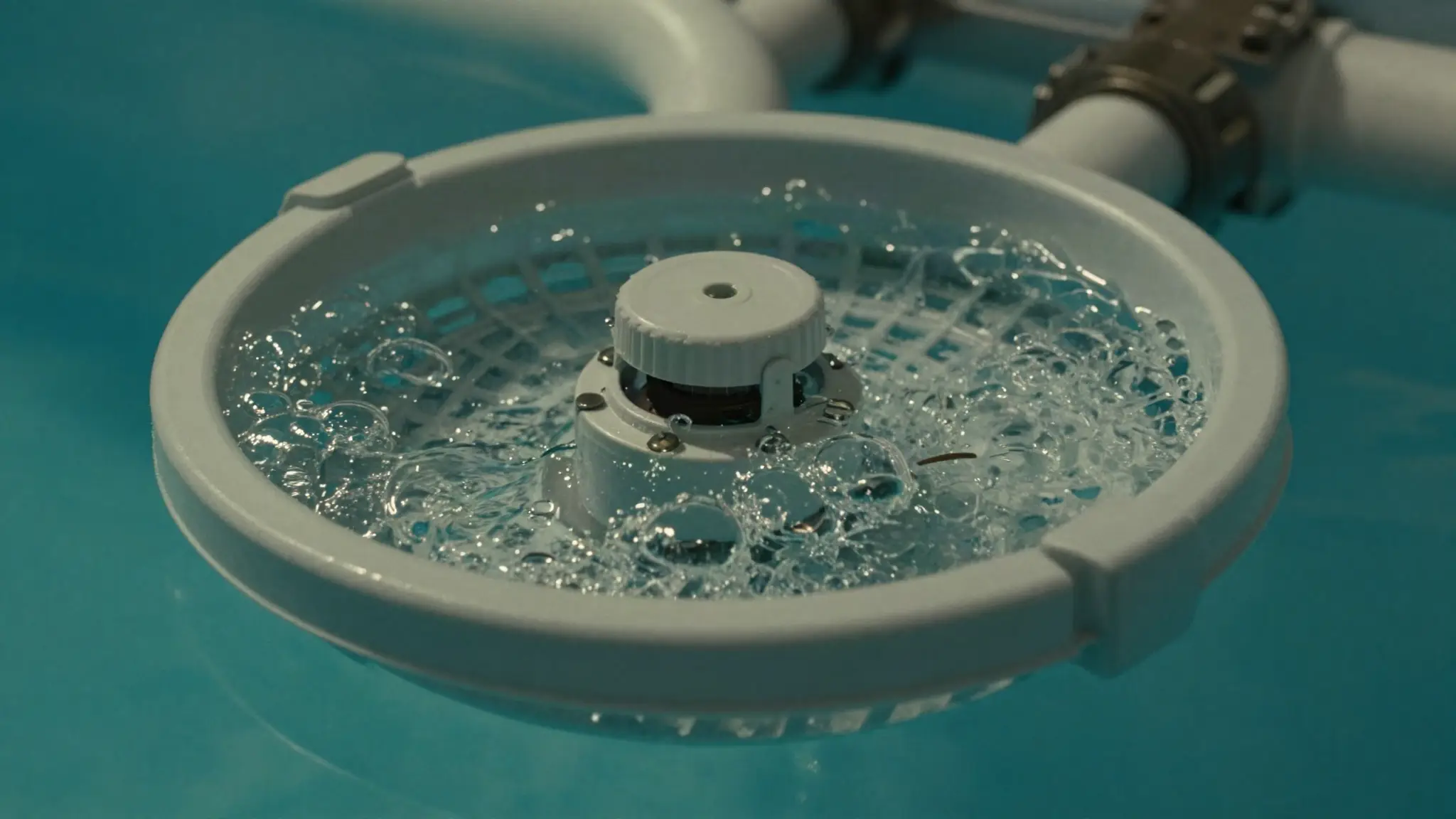
    air bubbles in the pool pump basket indicating a suction-side air leak
    Air bubbles in the pump basket point to a suction-side air leak, not water escaping.

    A water leak usually leaves visible clues — water dripping from equipment, wet concrete around the pad, a puddle that keeps coming back, or your pool level slowly dropping. An air leak is different: instead of water escaping, air gets pulled into the plumbing. Common signs are air bubbles in the pump basket, bubbles from the return jets, the pump struggling to stay primed, and reduced flow. Air leaks often come from loose fittings, cracked O-rings, or small suction-side plumbing problems — they don’t always waste water, but they hurt performance and can lead to bigger issues.

    Why Equipment Leaks Can Become Expensive

    Most equipment leaks aren’t expensive because of the repair — they’re expensive because of the wrong repair. Imagine replacing a $1,500 pump only to find the real problem was a $20 shaft seal. Or replacing a filter when the only thing leaking was a worn gasket. It happens more often than you’d think. Before approving a major repair, ask:

    • What exactly is leaking?
    • How was the leak confirmed?
    • Can the damaged part be repaired instead of replaced?
    • Is replacing the entire piece of equipment really necessary?

    A good technician should answer those clearly. If they can’t explain what failed — or why — it may be worth a second opinion.

    DIY Pool Equipment Leak Checks

    You don’t need to be a pool expert to do a few basic checks. Spending five or ten minutes at your equipment pad can sometimes save an unnecessary service call. You can safely: look for obvious dripping while the system runs, check around pipe connections for moisture, inspect O-rings for cracks or flattening, look for visible cracks in plastic housings, and take photos or videos if the leak comes and goes.

    What you shouldn’t do is start taking equipment apart — avoid opening a pressurized filter, disassembling a heater, cutting plumbing, or working on electrical components. If you’re not sure where the leak is coming from, it’s usually better to stop there and have the system inspected. (For the full at-home routine, see our DIY pool leak testing guide.)

    Repair or Replace Pool Equipment?

    One of the biggest questions homeowners ask. The answer depends on what failed, how old the equipment is, and what the repair costs.

    Repair usually makes sense when the equipment is relatively new, only one part has failed, the repair is straightforward, and the cost is much lower than replacement. Replacement may make sense when the equipment is nearing the end of its lifespan, multiple components are failing, the repair costs almost as much as a new unit, or a newer model would be significantly more efficient. There’s no one-size-fits-all answer — the important thing is knowing exactly what’s wrong before deciding.

    How Much Does Equipment Leak Repair Cost?

    There’s no single price, because every repair is different — a leaking O-ring costs far less than a cracked filter tank or a failed heat exchanger. In general, small repairs (O-rings, gaskets, loose fittings) are least expensive; medium repairs may involve valves, pump seals, or plumbing connections; larger repairs can include major pump components, heater repairs, or replacing damaged equipment. The biggest factor isn’t the price of the part — it’s making sure you’re fixing the right part. A proper diagnosis often saves far more than it costs.

    When Should You Call a Professional?

    Some equipment leaks are easy to spot; others are surprisingly hard because water travels before it drips onto the ground. It’s usually time to call a professional if you can’t tell where the water is coming from, your pool keeps losing water, the leak appears to be underground, equipment keeps leaking after you’ve repaired it, or the repair involves opening major equipment or cutting plumbing. Getting the diagnosis right first is usually the cheapest repair you’ll make — here’s how professional pool leak detection works.

    Frequently Asked Questions

    Why is my pool equipment leaking?

    Most equipment leaks are caused by worn seals, cracked fittings, aging components, or loose plumbing connections.

    Is a leaking pool pump serious?

    Not always. Many pump leaks come from replaceable parts like shaft seals or O-rings rather than the pump itself.

    Can a leaking pool pump be repaired?

    In many cases, yes. The repair depends on where the leak is coming from and the overall condition of the pump.

    Why is my pool equipment pad always wet?

    It could be condensation, recent maintenance, or a leak. If the area stays wet every day, it’s worth investigating further.

    Should I repair or replace my pool pump?

    If the pump is in good condition and only a small part has failed, a repair often makes sense. Older pumps with multiple problems may be better candidates for replacement.

    How much does pool equipment leak repair cost?

    Costs vary widely depending on the component and the repair. Simple seal replacements are much less expensive than replacing major equipment.

    Can I fix a pool equipment leak myself?

    Basic tasks like replacing an O-ring or tightening a loose fitting may be manageable for some homeowners. More complex repairs are usually best left to a professional.

    Why does my pool pump only leak when it’s running?

    That’s often a sign of a worn shaft seal, a loose fitting, or another component that’s only under pressure while the pump is operating.

    Don’t Replace Expensive Equipment Until You Know What’s Leaking

    Finding water around your pool equipment doesn’t automatically mean a major repair bill. Many leaks come from inexpensive parts that simply wear out over time.

    The smartest move is to confirm the source of the leak first. Once you know exactly what’s leaking, you can decide whether to repair it, replace it, or simply keep an eye on it. Understand your symptoms, review the common causes, and let the leak be professionally located before you approve anything expensive.

    Your next step

    Take the Pool Leak Assessment

    Tell us what you’re seeing at the equipment pad and we’ll help connect you with a trusted local specialist — or keep learning in our pool leak guides.

    Take the Assessment
  • DIY Pool Leak Testing: How to Find a Pool Leak Yourself

    DIY Pool Leak Testing · Complete Guide

    DIY Pool Leak Testing: How to Find a Pool Leak Yourself

    Before you call someone, here are the pool leak testing steps you can safely check yourself.

    Pool Leak DetectiveUpdated 202611 min read
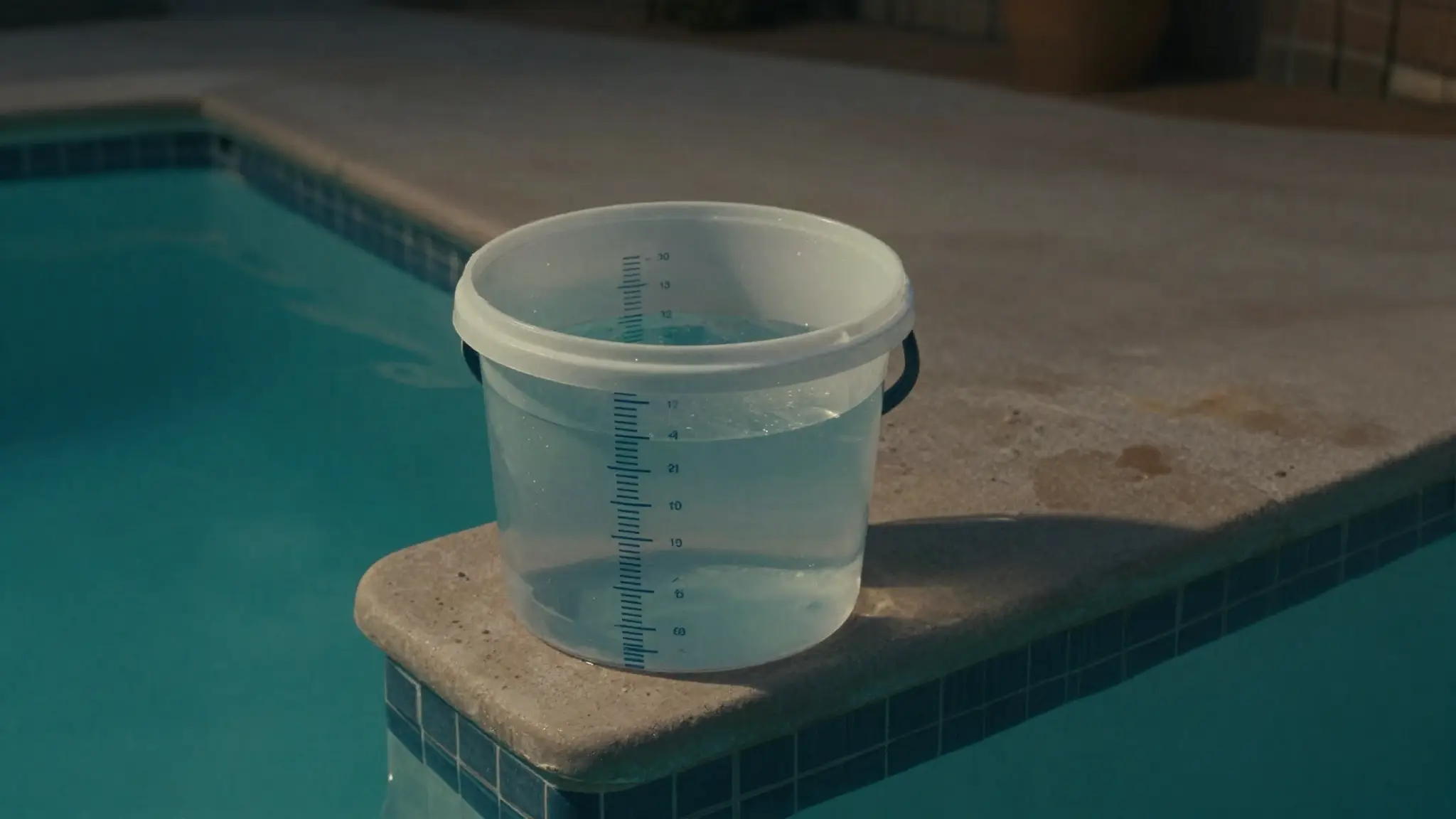
    DIY pool leak testing — a bucket test set up on the pool steps

    You walk outside, glance at your pool, and immediately notice something doesn’t look right. The water level seems lower… again. Now your mind starts racing. Is this just the Arizona heat? Did the kids splash half the pool out yesterday? Or am I looking at a leak that’s going to cost thousands?

    The truth is, not every pool that loses water has a leak — pools naturally lose some water every day, especially during a hot Arizona summer. The good news is there are several simple pool leak testing steps you can do yourself before scheduling a professional inspection. The not-so-good news? Figuring out whether you probably have a leak is much easier than figuring out exactly where that leak is. This guide walks through the same basic checks many homeowners perform before deciding whether it’s time to call a pro. (Not sure you even have a leak yet? Start with the signs of a pool leak.)

    First Question: Is Your Pool Actually Leaking?

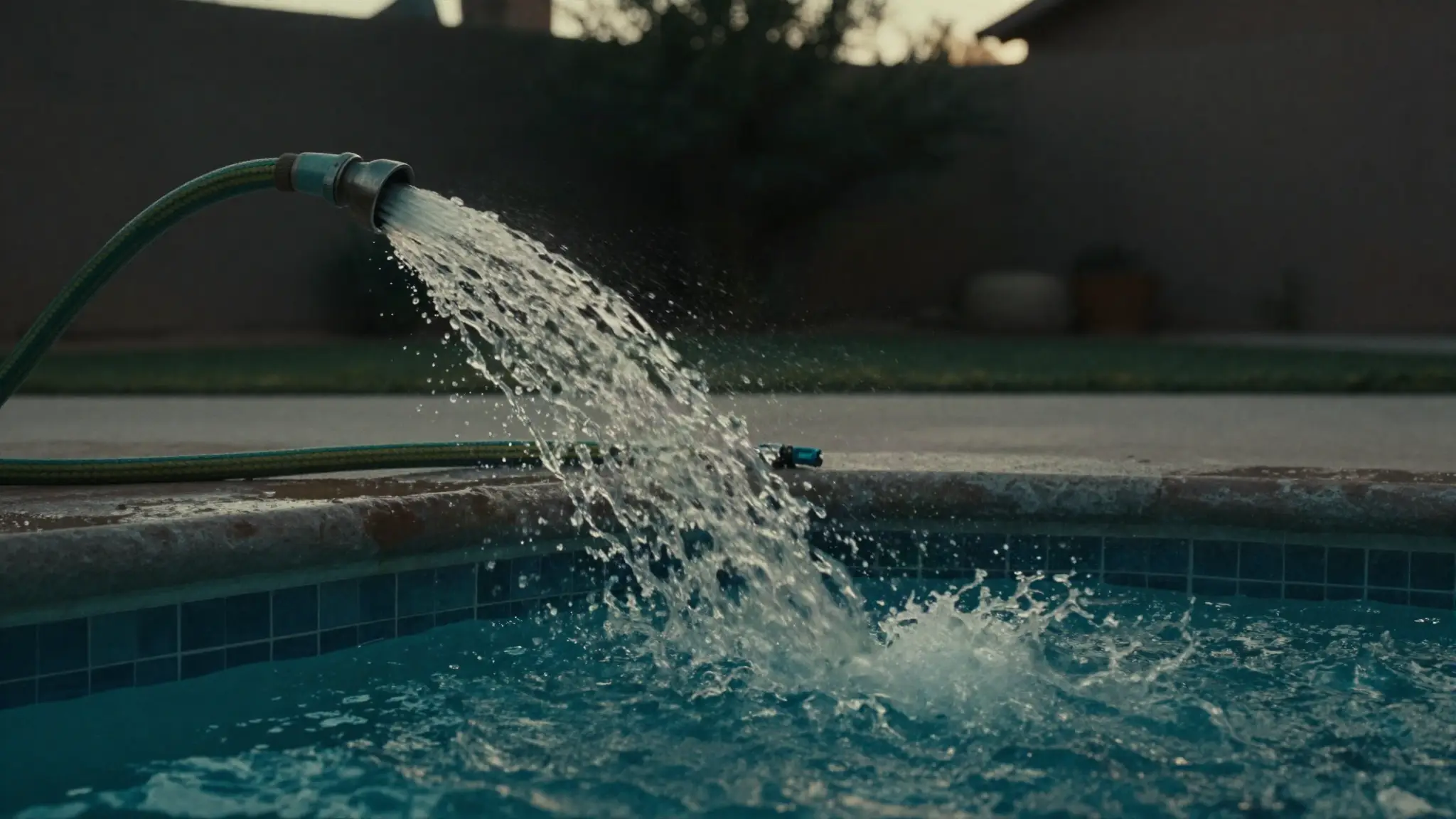
    Before you start looking for cracked pipes or broken plumbing, answer one simple question: is your pool actually losing more water than it should? A surprising number of homeowners assume they have a leak when the real culprit is normal water loss from Arizona heat, wind, low humidity, kids splashing, cannonballs, or vacuuming and backwashing the filter. That’s completely normal. What isn’t normal is adding water every couple of days or watching the level drop to the same spot over and over. If you’re constantly reaching for the hose, it’s time to investigate further.

    Perform the Bucket Test

    If there’s one DIY test every pool owner should know, it’s the bucket test. It takes about five minutes to set up, costs almost nothing, and can quickly tell you whether your pool is losing more water than normal evaporation. Here’s how it works:

    1. Fill a bucket with pool water.
    2. Place the bucket on a pool step so it’s partly submerged.
    3. Mark the water level inside the bucket.
    4. Mark the pool’s water level on the outside of the bucket.
    5. Turn off your automatic fill system if you have one.
    6. Wait 24 to 48 hours, then compare the two levels.

    If both dropped about the same amount, evaporation is probably the cause. If the pool dropped noticeably more than the bucket, there’s a good chance you have a leak. The bucket test won’t tell you where the leak is, but it’s one of the easiest ways to confirm whether you should keep investigating.

    Bucket test pointing to a leak?

    Take the Free 60-Second Assessment

    Answer a few quick questions about what you’re seeing and get your most likely cause before you spend a dollar.

    Take the Assessment

    Pay Attention to When You Lose Water

    One of the biggest clues isn’t how much water you’re losing — it’s when you’re losing it.

    If your pool loses water while the pump is OFF

    The problem is often something that leaks even when the system isn’t circulating water — pool shell cracks, skimmer leaks, return fittings, or static plumbing.

    If your pool only loses water while the pump is RUNNING

    Now you’re looking at a different set of possibilities. Water moving under pressure can expose leaks that stay hidden when the system is off — return lines, pressure-side plumbing, equipment leaks, or underground pipes. Knowing when the water disappears can save a lot of guessing later. (For the full breakdown, see what causes pool leaks.)

    Inspect the Pool Equipment Area

    Before you assume there’s a broken pipe under your deck, spend a few minutes looking at the equipment you can actually see — sometimes the leak is sitting right in front of you.

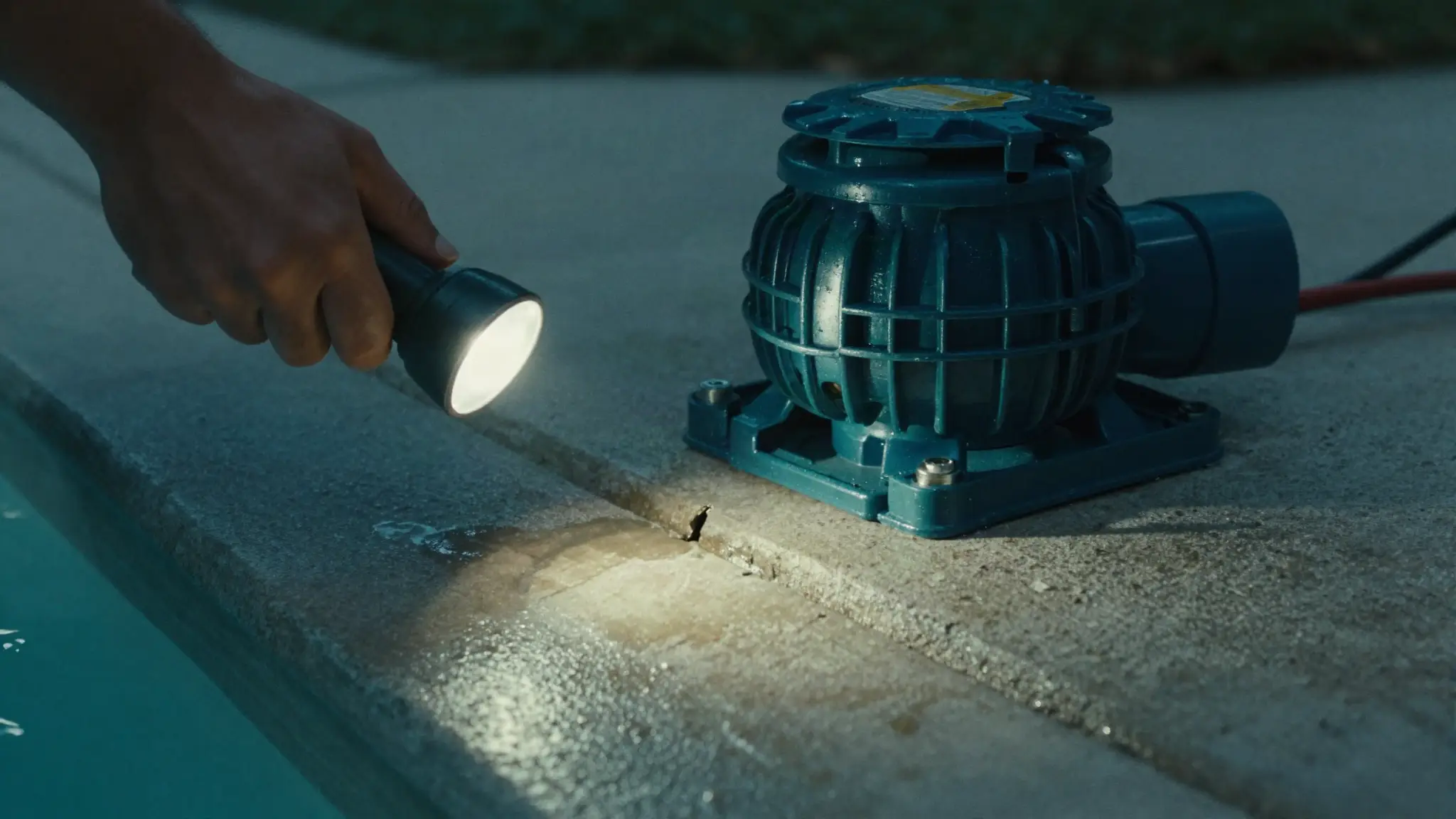
    checking a pool pump for leaks during DIY pool leak testing
    Start with what you can see: the pump, filter, and heater on the equipment pad.

    Check the pool pump

    Look for water around the base, dripping fittings, cracks in the housing, and worn seals. Even a slow drip can add up over time.

    Check the filter

    Inspect the tank, clamps, O-rings, and plumbing connections. White mineral deposits or damp spots often point to a slow leak.

    Check the heater

    If your pool has a heater, watch for rust or corrosion, water dripping underneath, and wet plumbing connections. Sometimes what looks like a plumbing leak is actually the heater itself.

    Check Any Pool Plumbing You Can See

    Not every plumbing leak is buried underground — some of the easiest leaks to find are hiding in plain sight around your equipment pad. Take a few minutes to inspect any exposed plumbing.

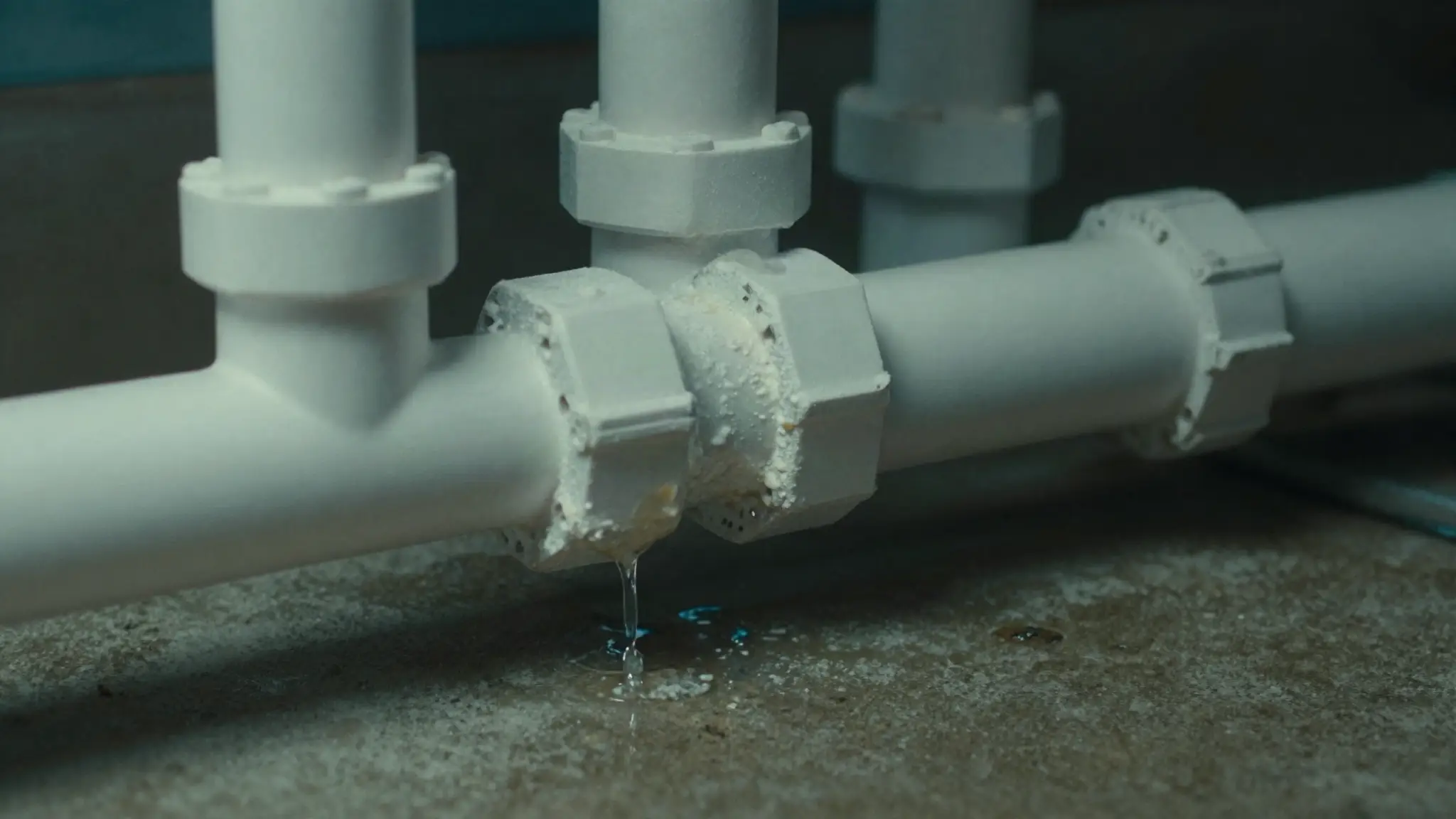
    inspecting exposed pool PVC plumbing for leaks at the equipment pad
    Exposed PVC joints and unions are easy to check — look for drips and calcium buildup.

    Look for water dripping from PVC joints, loose unions or fittings, cracks in exposed pipes, white calcium or mineral buildup, and damp spots that never seem to dry. Even a slow drip is worth attention — it might not explain inches of water loss a day, but it points to a repair that only gets worse if ignored.

    Inspect the Most Common Leak Areas

    Some parts of a pool are simply more likely to leak than others — and the good news is you can inspect many of them yourself.

    inspecting a pool skimmer for cracks and gaps during DIY pool leak testing
    The skimmer connects to both the pool shell and the plumbing — a classic leak point.

    Check the skimmer

    The skimmer is one of the most common leak spots because it connects to both the pool shell and the plumbing. Look for cracks around the skimmer opening, gaps between the skimmer and pool wall, and loose or deteriorating sealant. If your pool always stops losing water right around the bottom of the skimmer, that’s another clue the leak may be nearby.

    Check the return jets

    Return jets push filtered water back into your pool, and over time the fittings can loosen or develop small leaks. Look for cracks around the fitting, loose return eyeballs, and water loss that’s worse when the pump is running. Air bubbles from the returns point to the return side.

    Check the pool light

    Pool lights surprise a lot of homeowners. Inspect the area around the light niche for visible cracks, loose fixtures, and gaps around the housing. If your water consistently drops to the level of the light and then stops, it’s worth investigating.

    Check the main drain

    The main drain is much harder to inspect yourself since it’s at the bottom of the pool. You can look for obvious damage, but don’t assume the drain is leaking just because the level is dropping — and don’t drain your pool to inspect it, which can create a whole new set of problems. If you suspect the main drain, it’s usually best to let a professional test it.

    Try a Dye Test

    Once you’ve found an area that looks suspicious, a dye test can help you see whether water is actually being pulled into it. With the pool water as still as possible, slowly release a small amount of leak-detection dye or food coloring near small cracks, the skimmer, return fittings, around the pool light, or any area you suspect.

    doing a dye test for a pool leak — dye pulled toward a crack in the pool wall
    If the dye gets pulled into a crack or fitting, that’s a strong sign water is escaping there.

    Just remember: a dye test only works when you already have a suspected leak location. It won’t magically tell you where an underground pipe is leaking or find a hidden plumbing problem beneath your deck. Think of it as a way to confirm a suspicion — not discover a mystery.

    Can You Find Underground Leaks Yourself?

    This is where most DIY projects hit a wall. Underground plumbing leaks are difficult because you can’t actually see the pipes. Even if you notice a wet spot in your yard, there’s no guarantee the leak is directly underneath it — water follows the path of least resistance and can travel several feet through the soil before it reaches the surface. That’s why professionals use pressure testing, electronic listening equipment, and line tracing instead of simply digging where the ground looks wet. If you’ve checked everything above ground and still can’t find the problem, an underground plumbing leak becomes much more likely.

    DIY Leak Tools: Are They Worth It?

    There are plenty of DIY leak detection tools online. Some are useful; others mostly collect dust in the garage.

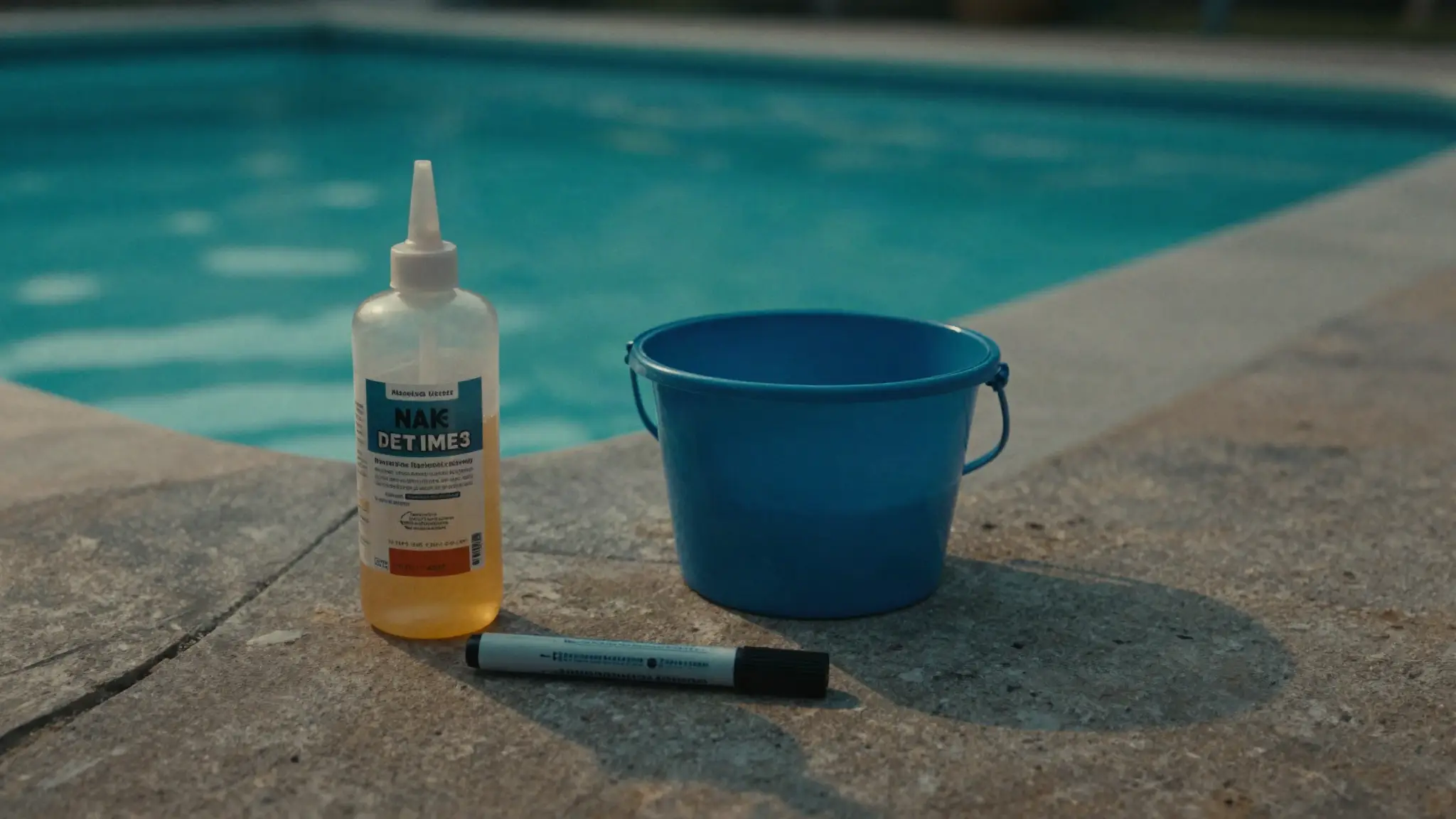
    DIY pool leak testing tools — a leak-detection dye kit on the pool deck
    A dye kit, a bucket, and a marker cover most DIY pool leak testing.

    Dye kits

    Inexpensive and effective for checking cracks, skimmers, return fittings, and pool lights — a great starting point when you already have a specific area to inspect.

    Pressure testing kits

    These let homeowners test individual plumbing lines, but you need to know how your pool’s plumbing is laid out and how to isolate each line correctly — otherwise it’s easy to misread the results.

    Electronic leak detection equipment

    The gear you often see professionals using. Impressive, but expensive and takes experience to interpret. For most homeowners, it doesn’t make sense to buy equipment you’ll use once.

    Common DIY Mistakes

    Trying a few simple tests is a smart idea. Guessing? That’s where things get expensive. A few mistakes we see all the time:

    Digging before you know where the leak is

    One wet spot in the yard doesn’t automatically mean that’s where the pipe is leaking. Pool plumbing rarely runs in a straight line, and water travels underground before it surfaces. Digging first often means repairing your landscaping… and still not finding the leak.

    Replacing parts “just to see”

    It’s tempting to think “maybe it’s the pump,” so you replace the pump — and a week later the pool is still losing water. The same happens with filters, valves, skimmers, and fittings. Replacing parts without confirming they’re leaking can cost far more than the leak itself.

    Assuming every crack is the problem

    Not every crack leaks, and not every leak comes from a crack. Some cracks are only cosmetic; others may have nothing to do with the water loss you’re seeing.

    Buying every leak-repair product online

    Those “seal your leak in minutes” products have their place, but they’re not a cure-all. If you don’t know where the leak is, adding sealers or patches is mostly just guessing.

    DIY Repairs: What You Can Safely Fix

    Once you’ve found the problem, you might wonder if you can fix it yourself. Sometimes yes — sometimes it’s better to leave it alone.

    Repairs many homeowners can handle

    If you’re comfortable with basic pool maintenance, you may be able to tighten a loose plumbing connection, replace a worn O-ring, replace a leaking drain plug, tighten a return fitting, or replace a simple gasket. These are usually inexpensive and don’t require specialized equipment.

    Repairs better left to a professional

    Some jobs are more complicated than they look: underground plumbing repairs, structural pool cracks, main drain repairs, underground return lines, and major equipment failures. These often require specialized tools, pressure testing, or excavation — and attempting them without experience can make the repair much more expensive.

    When DIY Stops Being Enough

    DIY testing is great for answering one question: “do I probably have a leak?” Professional leak detection answers a different one: “exactly where is the leak?” If you’ve done the bucket test, checked your equipment, inspected the obvious areas, and your pool is still losing water, you’ve probably reached the point where more guessing won’t help. It’s usually time to call a professional if:

    • You’re adding water every few days.
    • The bucket test points to a leak.
    • You can’t find the source.
    • The leak appears to be underground.
    • Your pool only loses water when the pump is running.
    • You suspect a structural crack.
    • Repairs may require cutting concrete or digging.

    A professional can usually confirm the exact location before any repairs begin — which helps you avoid paying to fix the wrong problem. Our complete pool leak detection guide walks through exactly how that works.

    How to Prepare Before Calling a Pro

    You don’t need to be an expert before scheduling an inspection, but the more information you can give the technician, the easier it is to narrow down the problem. Before you call, try to write down:

    • About how much water your pool is losing
    • Whether the leak gets worse with the pump on or off
    • Where you’ve noticed wet spots
    • Any cracks or damage you’ve seen
    • Photos or short videos of the symptoms
    • Any recent pool repairs or equipment replacements

    This gives the technician a head start and makes the inspection more efficient.

    Frequently Asked Questions

    Can I find a pool leak myself?

    Sometimes. Simple tests like the bucket test, a visual inspection, and a dye test can help you narrow down the problem. Hidden plumbing leaks usually require professional equipment.

    What is the easiest way to test for a pool leak?

    The bucket test is the easiest and most reliable first step. It helps you determine whether you’re losing more water than normal evaporation.

    How accurate is the bucket test?

    It’s very good at telling you if your pool is leaking. It just can’t tell you where the leak is.

    Can dye testing find every pool leak?

    No. Dye testing only works when you already suspect a specific area, such as a crack, skimmer, or pool light.

    Can I find an underground pool leak myself?

    It’s possible but difficult. Underground leaks often require pressure testing and specialized equipment to pinpoint the exact location.

    Do I need special equipment?

    Not for the basic checks in this guide. A bucket, a marker, and some leak-detection dye are enough for most DIY inspections.

    When should I call a pool leak company?

    If you’ve confirmed abnormal water loss but still can’t find the source, it’s usually time to have the pool professionally tested.

    Your Next Step

    DIY pool leak testing is the perfect first move — it tells you whether you probably have a leak without spending a dime.

    But if you’ve worked through these steps and your pool is still losing water, don’t keep guessing. Understand your symptoms, review the common causes, and then let the leak be professionally located so any repair is based on evidence, not a hunch.

    Your next step

    Take the Pool Leak Assessment

    Tell us what your testing turned up and we’ll help connect you with a trusted local specialist — or keep learning in our pool leak guides.

    Take the Assessment
  • What Causes Pool Leaks? Every Common Cause Explained

    Pool Leak Causes · Complete Guide

    What Causes Pool Leaks? Every Common Cause Explained

    Your pool is losing water — but where is it actually coming from? Here’s every common cause, in plain English.

    Pool Leak DetectiveUpdated 202612 min read
    what causes pool leaks — an aging Arizona backyard pool showing signs of wear

    If you’re adding water every few days, you’ve probably already started imagining the worst. Maybe you’ve noticed a wet spot in the yard. Maybe there’s a crack in the plaster. Or maybe the water level just keeps getting lower and you have no idea why.

    Here’s the frustrating part about pool leaks: the place where you notice the problem usually isn’t where the leak actually is. That soggy patch of grass doesn’t automatically mean there’s a broken pipe underneath it. A crack in the pool doesn’t always mean the shell is leaking. Even a dropping water level doesn’t guarantee a major repair ahead of you.

    Pools are made up of dozens of different parts, and water can travel a surprising distance before it finally shows itself. The good news? Once you understand the most common places leaks happen, it’s much easier to know what questions to ask and what to test yourself. If you’re not yet sure whether you even have a leak, start with our guide to pool leak symptoms — then come back here to understand the cause.

    The 5 Main Places Pool Leaks Usually Come From

    Almost every pool leak falls into one of these five categories:

    • Plumbing leaks — in the pipes that move water between your pool and the equipment, above ground or buried.
    • Equipment leaks — your pump, filter, heater, and valves all handle water under pressure, and seals wear out.
    • Pool structure leaks — cracks in the shell, damaged plaster, or loose tile.
    • Fittings & fixtures — skimmers, return jets, pool lights, and main drains all pass through the pool wall.
    • Water features & other systems — attached spas, waterfalls, and auto-fill systems have their own plumbing.

    If you’re not sure which category your leak falls into, don’t worry — that’s exactly what professional leak detection is designed to figure out. And if you want the full walkthrough of how the process works, see our complete pool leak detection guide.

    Not sure what’s causing it?

    Take the Free 60-Second Assessment

    Answer a few quick questions and see the most likely cause of your water loss before you spend a dollar.

    Take the Assessment

    Underground Plumbing Leaks

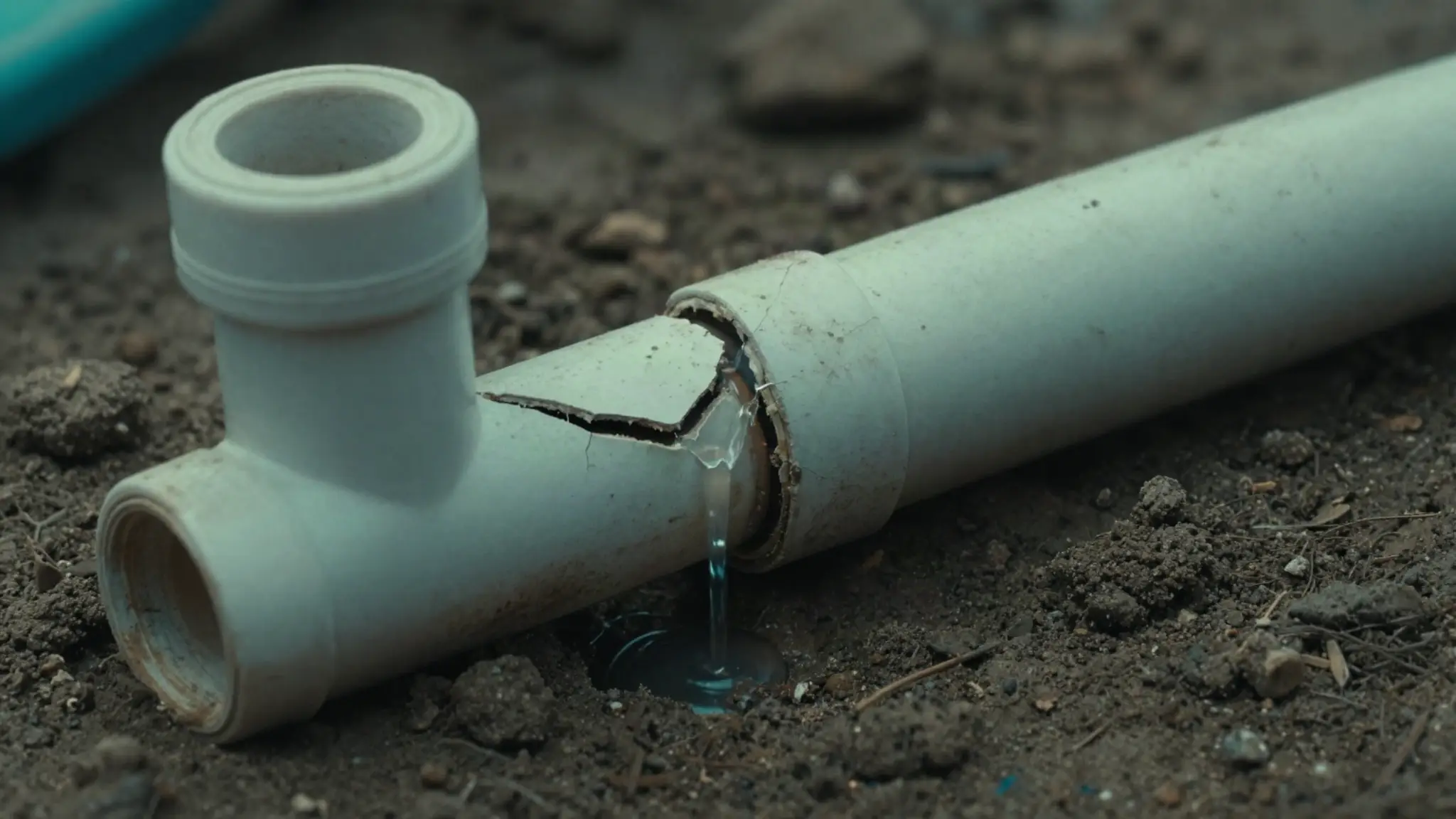
    When most homeowners hear the words “pool leak,” this is what they picture — a broken pipe buried somewhere under the deck. While that does happen, it’s only one possibility. Your pool has several underground lines carrying water back and forth between the pool and the equipment, and a leak can develop almost anywhere along that system.

    broken underground PVC pool pipe leaking water — a common cause of pool leaks
    Aging PVC, shifting soil, and bad glue joints are common causes of underground plumbing leaks.

    Some of the most common causes include aging PVC pipe, shifting soil, poor glue joints, cracked fittings, tree roots, and years of pressure changes. One clue homeowners often notice is that the pool loses more water when the pump is running — because pressurized plumbing is in use while the system is on. Other signs include wet areas around the pool, air bubbles in the return jets, the pump losing prime, and constantly adding water. Remember: water doesn’t always surface directly above the leak — it can travel through the soil first, which is why underground pipe leak detection uses pressure testing.

    Pool Equipment Leaks

    Not every leak is hiding underground — sometimes the problem is sitting in plain sight next to your pool. Your equipment pad contains several components that move thousands of gallons of water every day. As they age, seals wear out, plastic becomes brittle, and fittings start dripping. Many are straightforward pool leak repairs once the source is confirmed.

    leaking pool pump seal dripping water — a common pool equipment leak cause
    Pumps are one of the most common equipment leaks — often just a worn seal or O-ring.

    Pool pump leaks

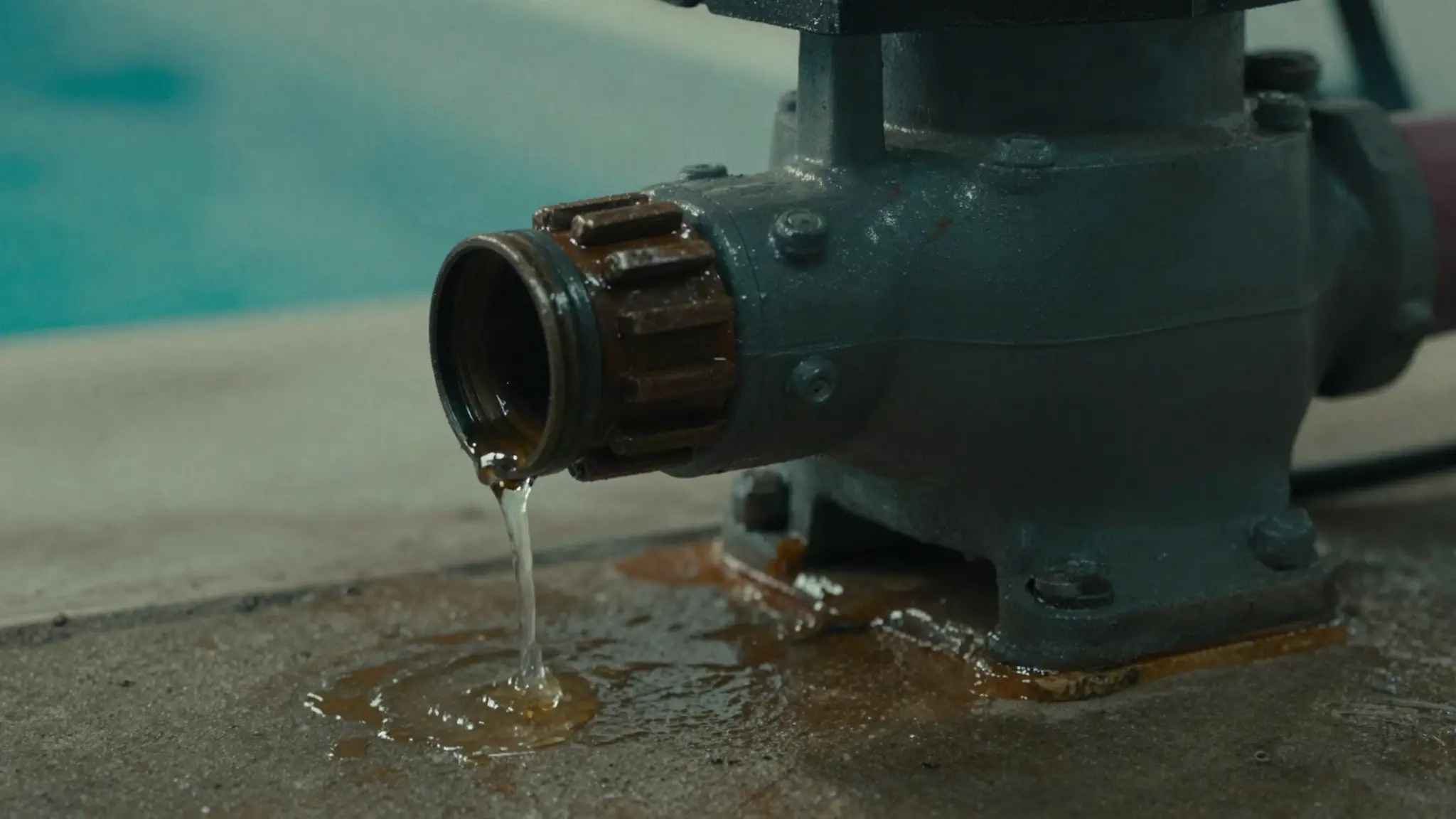
    Pumps are one of the most common places for leaks — usually from worn shaft seals, a cracked pump housing, loose unions, damaged O-rings, or drain plugs. Some leaks only appear while the pump is running, which makes them easy to miss.

    Pool filter leaks

    Your filter is built to handle pressure, but over time cracked filter tanks, worn gaskets, loose clamps, failing O-rings, and plumbing connections can leak. Sometimes the repair is as simple as replacing a seal.

    Pool heater leaks

    A heater leak can come from inside the unit or the plumbing connected to it — corrosion, internal heat-exchanger failure, loose connections, or worn seals. If water is collecting underneath the heater, have it inspected before assuming the whole unit needs replacing.

    Pool valve leaks

    Valves control where water flows, and like any moving part they wear out — aging seals, cracked valve bodies, worn internal parts, or loose fittings. Many valve repairs are relatively straightforward once the source is identified.

    Skimmer Leaks

    Your skimmer is one of the hardest-working parts of your pool — constantly pulling water off the surface and sending it to the pump. Because it’s built into the pool wall, it’s also one of the most common places for leaks to develop. Over time, the plastic skimmer and the concrete around it expand and contract at different rates, and that movement can create small gaps where water slowly escapes.

    gap between a pool skimmer and the surrounding concrete causing a leak
    Separation between the skimmer body and the pool shell is a classic leak point.

    Other common causes include cracks in the skimmer body, separation between the skimmer and pool shell, failed sealant, and aging materials. One clue many homeowners notice is that the water level always seems to stop dropping right around the skimmer opening — a strong hint, but not proof, since other leaks can create similar symptoms.

    Return & Suction Line Leaks

    Return line leaks

    After your water passes through the filter, it’s pushed back into the pool through the return lines. Because these pipes are under pressure whenever the pump runs, a damaged return line often leaks more while the system is on. Common causes are broken underground pipes, cracked fittings, poor glue joints, shifting soil, and age. Signs include losing more water while the pump runs, air bubbles from the return jets, wet spots near the pool or equipment, and trouble maintaining pressure.

    Suction line leaks

    Suction lines do the opposite — they pull water from the pool to the pump. When these leak, they often pull air into the system instead of pushing water out, creating a different set of symptoms: air bubbles in the pump basket, the pump losing prime, reduced circulation, and strange pump noises. Because they don’t always leave obvious wet spots, they can be tricky to diagnose without professional testing.

    Too many possible causes?

    Let’s Narrow It Down for You

    The free Pool Leak Assessment reads your symptoms and points to the most likely cause — in about a minute.

    Start the Assessment

    Main Drain Leaks

    The main drain sits at the bottom of your pool and helps circulate water through the filtration system. Thankfully, main drain leaks are less common than many homeowners think. When they do happen, the cause is usually a cracked drain fitting, the plumbing connected to the drain, or a failed seal around the drain assembly. Many homeowners panic assuming a main drain leak means draining or tearing the pool apart — but professional leak detection confirms whether the drain is actually leaking before anyone talks major repairs.

    Pool Light & Light Niche Leaks

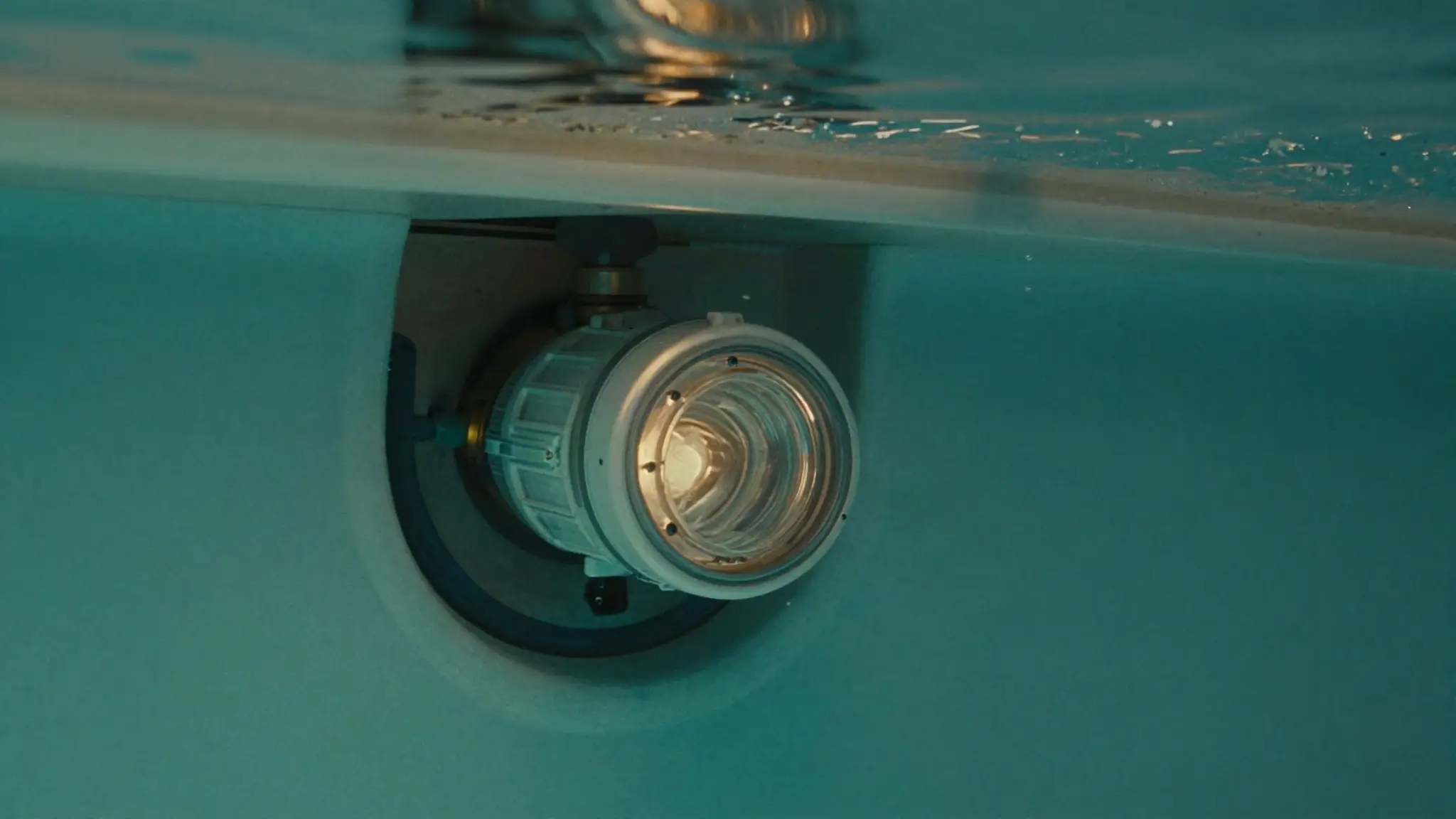
    Pool lights surprise a lot of homeowners. The light itself usually isn’t the problem — the leak is often around the housing behind it (the light niche) or inside the conduit that protects the electrical wiring. Common causes include failed seals, aging conduit, cracks around the niche, and improper installation.

    pool light niche where leaks commonly develop behind the fixture
    The niche and conduit behind a pool light are common, easily-missed leak points.

    A clue many homeowners notice is that the water level stops dropping right around the height of the pool light. Again, that’s a clue — not a diagnosis. The only way to know for sure is to test it.

    Structural Pool Leaks

    Finding a crack in your pool is enough to make anyone nervous — the first thought is usually “this is going to cost a fortune.” The truth is a little more reassuring: not every crack leaks, and not every leaking crack is a major structural problem. Pool structures naturally move over time, and Arizona’s heat, shifting soil, and years of expansion and contraction can create small cosmetic cracks that never leak.

    cracked and aging pool plaster shell — a structural cause of pool leaks
    Concrete cracks, aging plaster, and failed tile or coping can all become leak points.

    Concrete cracks

    Concrete and gunite pools develop cracks from soil movement, settlement, age, and structural stress. Some are cosmetic; others need professional crack repair.

    Plaster problems

    Plaster protects your pool’s surface but doesn’t last forever — surface cracks, hollow spots, and areas where plaster is separating. Not every plaster issue leaks, but damaged plaster shouldn’t be ignored.

    Tile & coping problems

    Loose tiles don’t always mean a leak — sometimes it’s worn grout or aging materials. Other times, movement around the pool creates openings where water escapes. Common issues: loose tile, missing grout, cracked coping, and failed expansion joints.

    Vinyl Liner & Fiberglass Pool Leaks

    Vinyl liner pool leaks

    If you own a vinyl liner pool, your leak will usually come from different places than a concrete pool — the liner itself is often the culprit. Common causes are small tears, punctures, aging vinyl, and loose fittings around returns or skimmers. The good news is that many liner leaks can be repaired without replacing the entire liner.

    Fiberglass pool leaks

    Fiberglass pools are incredibly durable but not leak-proof. Most fiberglass leaks happen around plumbing connections, return fittings, skimmers, lights, and small shell damage. Actual shell failures are less common than many homeowners fear — confirm the source through proper testing before assuming the shell has cracked.

    Pool Features That Can Leak

    When most people think about pool leaks, they picture the pool itself. But if your pool has extra features, those can leak too.

    Waterfalls

    Waterfalls look great, but they add more plumbing, fittings, and seals — any of which can wear out. Common causes: cracked plumbing, loose fittings, worn seals, and small cracks hidden behind the rockwork. Because waterfalls recirculate water, a leak can be hard to spot until the pool loses water more quickly than normal.

    Attached spas

    An attached spa has its own plumbing, jets, valves, and fittings, so it can leak even if the pool is perfectly fine — the focus of spa leak detection. Signs: the spa loses water faster than the pool, the level stops at the same point every time, or the leak worsens when the spa runs.

    Automatic fill systems

    Sometimes homeowners think they don’t have a leak because the water always looks full — the auto-fill system keeps replacing the lost water, so the problem stays hidden while the water bill climbs. If your fill valve seems to run more than usual, it’s worth finding out why.

    Why Pool Leaks Become More Common as Pools Age

    Pools don’t suddenly wake up one day and decide to leak — most problems happen slowly. Rubber seals dry out. PVC pipes shift slightly. Plaster ages. Equipment wears down. Years of Arizona heat cause everything to expand and contract thousands of times. That doesn’t mean an older pool is a bad pool; it just means more parts have had more time to wear out. A well-maintained 25-year-old pool may have fewer problems than a neglected 10-year-old one. The takeaway: age increases the chances of a leak, but maintenance often makes the biggest difference.

    Can You Prevent Pool Leaks?

    You can’t prevent every leak — but you can catch many of them before they turn into expensive repairs. A few simple habits go a long way:

    • Keep an eye on your water level.
    • Fix small equipment leaks early.
    • Replace worn O-rings and seals.
    • Don’t ignore wet spots around the pool.
    • Pay attention if your water bill suddenly increases.
    • Have unusual symptoms checked before approving repairs.

    Think of it like changing the oil in your car — a little maintenance today can save you from a much bigger bill later.

    How Do You Know What’s Actually Causing It?

    Here’s the frustrating part: many different leaks create the exact same symptoms. A dropping water level doesn’t automatically mean underground plumbing. A crack doesn’t automatically mean structural damage. A wet spot doesn’t automatically mean the pipe below it is broken. That’s why experienced leak detection companies don’t guess — they work through the possibilities one by one using visual inspections, pressure testing, dye testing, electronic listening equipment, and acoustic leak detection. Each test eliminates possibilities until the real source is confirmed, because the right repair depends entirely on what’s actually leaking — not what someone thinks is leaking.

    What Happens After You Find the Cause?

    Once the leak has been confirmed, everything gets much easier. Instead of wondering what’s wrong, you can focus on the repair that actually solves the problem. In most cases: the technician explains exactly where the leak is, recommends the repair options, gives you an estimate before any work begins, and you decide whether to move forward. Sometimes it’s a relatively inexpensive repair; sometimes it’s a larger project. Either way, you’ll be making a decision based on evidence instead of guesswork.

    Frequently Asked Questions

    What is the most common cause of a pool leak?

    Equipment leaks, underground plumbing issues, skimmers, return fittings, and structural cracks are among the most common causes. The only way to know for sure is to locate the leak first.

    Can a pool leak fix itself?

    No. In fact, most leaks slowly get worse over time. Waiting usually leads to more water loss and, in some cases, more expensive repairs.

    Are pool leaks always expensive to fix?

    Not at all. Some repairs involve replacing a seal or fitting and cost far less than homeowners expect. Others are more involved. That’s why it’s important to identify the leak before talking about repair costs.

    How do I know where my pool is leaking?

    The symptoms can point you in the right direction, but they can’t confirm the source. Professional leak detection is designed to pinpoint the exact location before repairs begin.

    Can a cracked pool always be repaired?

    Many cracks can be repaired successfully. The best repair depends on whether the crack is cosmetic, structural, or actually causing the leak.

    Does an old pool leak more often?

    Older pools are more likely to develop leaks simply because materials wear out over time. Regular maintenance can greatly reduce the risk.

    Should I repair a pool leak right away?

    If you know your pool is leaking, it’s usually better to deal with it sooner than later. Even a slow leak can waste a surprising amount of water and may lead to additional damage if ignored.

    Don’t Pay for Repairs Until You Know What You’re Fixing

    A pool leak is stressful enough without wondering if you’re about to spend money on the wrong repair.

    The good news is that most leaks can be found. And once you know where the water is escaping, you can make a much smarter decision about what to do next. If you think your pool has a leak, don’t let anyone jump straight to expensive repairs without showing you what’s actually wrong. Start by understanding your symptoms, then let the leak be properly located — so any repair is based on evidence, not guesswork.

    Your next step

    Take the Pool Leak Assessment

    Tell us what you’re seeing and we’ll help connect you with a trusted local specialist — or keep learning in our pool leak guides.

    Take the Assessment
  • Pool Leak Symptoms: How to Tell If Your Pool Has a Leak

    Pool Leak Symptoms · Complete Guide

    Pool Leak Symptoms: How to Tell If Your Pool Has a Leak

    Is your pool losing water — or is something actually wrong? Here’s how to read the signs before you spend a dollar.

    Pool Leak DetectiveUpdated 202611 min read
    topping off an Arizona pool that keeps losing water — pool leak symptoms

    You walk outside with your morning coffee and something catches your eye. Your pool looks… lower. Maybe it’s only an inch. Maybe you’ve been adding water every few days and telling yourself, “it’s probably just the Arizona heat.”

    Then the questions start. Is this normal? Am I about to spend thousands of dollars? Do I actually have a leak, or am I overthinking it?

    The truth is, every pool loses some water. Between evaporation, splash-out, and kids turning the backyard into a water park, it’s completely normal to top off your pool once in a while. But there comes a point where “normal” turns into something else.

    The good news? Most pools don’t go from perfectly fine to catastrophic overnight. They usually leave clues first — you just need to know what to look for. In this guide we’ll walk through the most common pool leak symptoms, explain what they could mean, and help you decide when it’s time to bring in a professional. And if you want to understand the whole process end to end, our complete pool leak detection guide covers what happens after the symptoms point to a real leak.

    Noticing several of these signs?

    Take the Free 60-Second Assessment

    Answer a few quick questions about your symptoms and see what they most likely point toward — before you spend a dollar.

    Take the Assessment

    How Much Water Loss Is Normal in a Pool?

    This is the first question almost every pool owner asks — and it’s a good one. A little water loss is completely normal. In fact, during a hot Arizona summer, your pool can lose about ¼ to ½ inch of water per day from evaporation alone. Wind, low humidity, direct sunlight, and how often the pool is used all play a role. Your pool may also lose water from:

    • Kids splashing and cannonballs (the neighborhood favorite)
    • Backwashing the filter
    • Cleaning or vacuuming
    • Water carried away on swimsuits and pool toys

    None of that means you have a leak. What isn’t normal is needing to grab the hose every couple of days because the water keeps disappearing. If you’re constantly adding water or the level is dropping much faster than it used to, it’s worth taking a closer look.

    The Biggest Signs Your Pool May Have a Leak

    A single symptom doesn’t always mean your pool is leaking. But if you start noticing two or three of these together, there’s a much better chance something needs attention. Common pool leak symptoms include:

    • Your water level drops faster than usual.
    • You’re adding water every few days.
    • Your water bill suddenly goes up.
    • Wet or soggy areas appear around the pool.
    • Your equipment pad never seems to dry out.
    • Air bubbles are coming from the return jets.
    • The pool loses water overnight.
    • The water level always stops at the same spot.
    soggy wet spots and damp soil around a pool deck — a common pool leak symptom
    Wet or soggy areas around the pool are one of the most common outward signs of a leak.

    Some of these point toward plumbing. Others may suggest an equipment issue or a problem with the pool itself. The important thing is not to jump to conclusions — the symptom tells you where to start looking, not necessarily where the leak actually is. Our guide to what causes pool leaks breaks down each possibility.

    What To Do If You Think Your Pool Has a Leak

    Don’t panic. And don’t let someone convince you to replace a bunch of expensive equipment before anyone has confirmed where the leak actually is. Here’s a better approach.

    Step 1: Confirm the water loss.

    Before assuming the worst, compare your pool’s water loss to normal evaporation. A simple bucket test is a great place to start.

    Step 2: Look for obvious clues.

    Walk around your pool. Check the equipment pad. Look for wet spots. See if the water always drops to the same level. Sometimes the signs are easier to spot than you think.

    Step 3: Don’t start replacing random parts.

    This is where a lot of homeowners waste money. A leaking pump, cracked skimmer, broken return fitting, and underground plumbing leak can all cause similar symptoms — but they require completely different repairs. Replacing parts without finding the source is just guessing.

    Step 4: Get help if the symptoms continue.

    If you’ve ruled out evaporation and your pool keeps losing water, it’s time to have the leak properly located. Finding the source first usually leads to a faster, less expensive repair.

    Is Your Pool Losing Water Overnight?

    Losing water during the day isn’t unusual — the sun is beating down, the temperature is over 100 degrees, and evaporation is working overtime. Overnight is different. Once the sun goes down, evaporation slows way down too. So if your pool is still losing a significant amount of water while everyone is asleep, that’s a stronger sign that something else may be going on. Common possibilities include:

    • A plumbing leak
    • A leak in the pool shell
    • Equipment that’s leaking after the pump shuts off
    • A skimmer or return fitting that’s allowing water to escape

    It doesn’t automatically mean you have a major problem — but it’s definitely worth paying attention to.

    Why Is My Pool Water Level Dropping Every Day?

    If you’re dragging the hose out every day, your pool is trying to tell you something. Daily water loss usually means the same thing is happening over and over again. Maybe it’s a small plumbing leak that leaks every time the pump runs. Maybe it’s an equipment leak slowly dripping all day. Or maybe your pool is simply losing more water than normal because of the weather.

    The key is looking at the whole picture. Are you also seeing wet spots? Has your water bill gone up? Do you notice air bubbles in the return jets? The more symptoms you have, the easier it becomes to narrow down what’s actually happening.

    Wet Spots Around Your Pool: What Do They Mean?

    A soggy patch of grass. A damp spot next to the deck. Soil that never seems to dry out. It’s easy to see something like that and think, “well… I found the leak.” Maybe. But maybe not.

    One thing that surprises a lot of homeowners is that water doesn’t always show up where it’s leaking. It can travel through the ground before it finally reaches the surface, which means the wet spot you’re looking at could be several feet away from the actual problem. And wet ground doesn’t always mean a pool leak either — broken irrigation lines, poor drainage, or overwatering your landscaping can create the same symptoms. That’s why it’s important to look at the wet area alongside everything else you’re noticing, not by itself.

    When Does Your Pool Lose Water? This Tells You a Lot.

    One of the easiest ways to narrow down a leak is to pay attention to when your pool loses water. You don’t need to be a leak detection expert — just noticing a pattern can provide helpful clues.

    air bubbles coming from a pool return jet — a sign of a suction-side pool leak
    Air bubbles from the return jets often point toward a suction-side or plumbing issue.

    Your pool loses water when the pump is off

    If the water keeps dropping even when the pump isn’t running, the leak could be somewhere in the pool itself — the pool shell, the skimmer, a return fitting, a light niche, or a suction-side plumbing issue. That doesn’t guarantee one of those is the problem; it just helps point the inspection in the right direction.

    Your pool loses water only when the pump is running

    This usually points somewhere different. If the leak only appears while water is moving through the plumbing, there’s a better chance the issue is on the pressure side of the system — return lines, underground plumbing, equipment connections, or valves and fittings. Again, it’s not a diagnosis; it’s another clue that helps narrow down the possibilities.

    Does Your Pool Always Stop at the Same Spot?

    This is one of the biggest clues homeowners miss. If your pool keeps dropping to the exact same level and then suddenly stops, pay attention — that stopping point can help narrow down where the leak might be.

    Water stops at the skimmer

    If the water level settles right around the bottom of the skimmer opening, the skimmer or the plumbing connected to it may need to be inspected.

    Water stops at the return jets

    If the water consistently stops around the return fittings, those fittings or the plumbing behind them could be part of the problem.

    Water stops at the pool light

    Pool lights are a surprisingly common place for leaks to develop. If the water level settles near the light fixture, the niche or conduit behind the light may need a closer look.

    Seeing a pattern?

    Let’s Read Your Symptoms Together

    The free Pool Leak Assessment turns what you’re noticing into a most-likely cause — in about a minute.

    Start the Assessment

    Pool Equipment Leak Symptoms

    Not every pool leak is hiding underground. Sometimes the problem is sitting out in the open. Your equipment pad is home to your pump, filter, heater, valves, and plumbing connections. As these parts age, seals wear out, fittings loosen, and small leaks can develop. Common warning signs include:

    water pooling and dripping around a pool pump and filter — a pool equipment leak symptom
    Water pooling around the equipment pad is often the easiest leak symptom to spot.
    • Water pooling around the equipment pad
    • Dripping from the pump or filter
    • Water spraying from plumbing connections
    • Air bubbles in the pump basket
    • The pump losing prime
    • Rust or mineral buildup around equipment

    The good news is that equipment leaks are often easier to repair than underground plumbing leaks — many are simple pool leak repairs. The challenge is confirming that’s actually where the water is coming from before replacing parts.

    Signs Your Pool Plumbing May Be Leaking

    Pool plumbing spends its entire life underground, so it’s easy to forget it’s even there — until something goes wrong. Unlike an equipment leak, you usually can’t see an underground plumbing leak. Instead, you notice the symptoms:

    • The pool loses more water while the pump is running.
    • Wet spots appear in the yard.
    • Air keeps getting into the system.
    • The pump struggles to maintain pressure.
    • Your water bill suddenly jumps.

    Because the plumbing is buried beneath your deck or landscaping, it’s almost impossible to know exactly where the leak is without proper testing. That’s why digging based on a guess usually ends up costing more than finding the leak first.

    Structural Pool Leak Warning Signs

    Finding a crack in your pool can be stressful. Most homeowners immediately jump to the worst-case scenario — “my pool is falling apart.” Fortunately, that’s not always true. Many cracks are cosmetic and don’t leak at all — our pool structure leaks guide covers each type. Others do need attention, but you won’t know which is which just by looking. Some warning signs that deserve a closer look include:

    crack in a pool shell with staining — a structural pool leak warning sign
    A crack doesn’t automatically mean a major repair — but it’s worth confirming whether it’s actually leaking.
    • Cracks that seem to be getting larger
    • Water loss along with visible cracks
    • Loose or missing tiles
    • Wet soil around the outside of the pool
    • Sections of the deck that are sinking or shifting

    The important thing to remember: a crack doesn’t automatically mean you need a major repair. It simply means it’s worth finding out whether that crack is actually allowing water to escape — which is exactly what structural crack diagnosis is for.

    Pool Leak Symptoms by Pool Type

    Not every pool leaks in the same way. The type of pool you own can change where problems are most likely to happen — a concrete pool, fiberglass pool, and vinyl liner pool all have different materials and weak points.

    Concrete pool leak symptoms

    Concrete pools are extremely durable, but over time they can develop issues from age and movement: cracks in the pool shell, damaged plaster, loose tile, leaking plumbing behind the structure, and issues around lights or fittings. Many surface cracks are cosmetic — the question is whether water is escaping through the damaged area.

    Fiberglass pool leak symptoms

    Fiberglass pools have fewer structural issues than some other types, but they can still leak — usually water loss around fittings, cracks or damage in the shell, plumbing connection issues, or problems around steps and attachments. Because fiberglass pools are one manufactured piece, a leak isn’t always obvious from the surface.

    Vinyl pool leak symptoms

    Vinyl liner pools have their own common leak points: water dropping faster than expected, tears or holes in the liner, wrinkles or movement in the liner, and leaks around fittings, lights, or returns. Sometimes the leak is easy to spot; other times a small hole hides underwater and slowly drains thousands of gallons.

    Weird Signs That Might Point to a Leak

    Some pool leak symptoms aren’t as obvious as a dropping water level. Homeowners often search because they notice something strange but aren’t sure if it connects to a leak. Let’s look at a few common ones.

    White calcium deposits around your pool

    white calcium deposits around pool tile — a possible pool leak symptom
    Calcium deposits near cracks or fittings can be worth investigating.

    Seeing white crusty buildup around your pool can make you wonder, “is water escaping somewhere?” Sometimes calcium deposits come from normal water chemistry, evaporation, or mineral buildup. But if you notice deposits appearing near cracks, fittings, or areas where water seems to be moving, it’s worth investigating.

    A suddenly higher water bill

    A higher water bill doesn’t always mean your pool is leaking — it could be increased usage, landscaping needs, seasonal changes, or irrigation problems. But if your habits haven’t changed and you’re constantly adding water to your pool, a leak becomes a possibility. Small leaks can waste a surprising amount of water over time.

    Your spa is losing water

    If you have an attached spa, don’t assume the pool and spa share the same problem. Spas have their own jets, plumbing lines, valves, and equipment connections — a spa can leak even when the pool itself is fine. That’s the focus of spa leak detection.

    Should You Stop Using Your Pool If You Think It’s Leaking?

    The answer depends on what’s happening. If your pool is losing a small amount of water and everything appears normal, you may not need to stop using it immediately. However, you should pay closer attention if:

    • The water level is dropping quickly
    • The pump is struggling
    • You notice electrical issues around lights or equipment
    • The pool is approaching a dangerously low water level

    Running pool equipment without enough water can create additional problems. And if you suspect an electrical issue — especially around underwater lights or equipment — it’s better to stop using the pool until it’s checked. The goal isn’t to panic. It’s simply to avoid turning a small problem into a bigger one.

    Frequently Asked Questions

    How do I know if my pool has a leak?

    Common signs include losing water faster than normal, adding water frequently, wet areas around the pool, higher water bills, air bubbles in the system, or the water stopping at the same level repeatedly.

    How much water loss is normal in a pool?

    Some water loss is expected from evaporation, weather, and normal pool use. If you’re constantly adding water or losing more than expected, it may be worth investigating.

    Why does my pool lose water overnight?

    Overnight water loss can be a sign of a leak because evaporation slows when the sun goes down. Possible causes include plumbing leaks, equipment leaks, or structural issues.

    Can a pool leak fix itself?

    No. While some leaks may appear to slow down when the water reaches a certain level, the underlying issue usually remains.

    Can I find a pool leak myself?

    You can check for some obvious signs and perform basic tests like a bucket test. However, locating hidden plumbing or structural leaks usually requires professional equipment.

    What is the most common sign of a pool leak?

    The most common sign is simply losing water faster than normal and needing to refill the pool more often than you should.

    Should I repair a pool leak immediately?

    It depends on the severity, but ignoring a leak too long can lead to wasted water and potentially more expensive repairs.

    Don’t Guess. Understand What Your Pool Is Telling You.

    A pool losing water doesn’t automatically mean you’re facing a huge repair bill. Sometimes it’s evaporation. Sometimes it’s a simple equipment issue. Sometimes it’s a plumbing or structural problem that needs attention.

    The biggest mistake homeowners make is jumping straight into repairs before understanding what’s actually happening. The first step isn’t spending money — it’s getting answers. Once you know which symptoms you have, the next move is to have the leak properly located so any repair is based on facts, not guesses.

    Your next step

    Take the Pool Leak Assessment

    Tell us what you’re seeing and we’ll help connect you with a trusted local specialist — or keep learning in our pool leak guides.

    Take the Assessment
  • The Swimming Pool Leak Detection Guide That Saves You $1,000s on Repairs

    Pool Leak Detection · Complete Guide

    The Swimming Pool Leak Detection Guide That Saves You $1,000s on Repairs

    Everything you need to know before paying for a pool leak repair.

    Pool Leak DetectiveUpdated 202612 min read
    Arizona backyard swimming pool losing water at dusk — swimming pool leak detection guide

    Think Your Pool Has a Leak? Don’t Panic Yet.

    If your pool is suddenly losing water, your mind probably goes straight to the worst-case scenario: “Great… this is going to cost me thousands of dollars.”

    That’s exactly what most homeowners think. The problem is, a lot of pools lose water for reasons that aren’t nearly as serious as people imagine. It might be normal evaporation, a small equipment leak, a loose fitting, or something that costs far less to fix than replacing underground plumbing or tearing up your deck.

    The expensive mistakes usually happen when people start guessing. Maybe someone replaces a pump that wasn’t leaking. Maybe they start digging in the wrong place. Or maybe they approve a repair without really understanding what the problem is. That’s what this guide is here to help you avoid.

    By the time you’re finished reading, you’ll understand how to tell if you actually have a leak, where leaks usually happen, how professionals find them, what leak detection costs, when you can check things yourself, and how to avoid paying for repairs you don’t actually need.

    Not sure if you even have a leak?

    Take the Free 60-Second Assessment

    Answer a few quick questions and find the most likely cause before you spend a dollar.

    Take the Assessment

    What Is Pool Leak Detection?

    Pool leak detection is exactly what it sounds like — finding where your pool is losing water before anyone starts repairing anything. Think of it like getting an X-ray before surgery. If your doctor guessed where the problem was, you’d probably find another doctor. The same idea applies to your pool.

    professional pool leak detection equipment testing a swimming pool
    Leak detection uses specialized equipment to find the source before any repair begins.

    A pool can leak from dozens of different places, including the plumbing, equipment, skimmer, lights, return fittings, spa, or even the pool shell itself. Until someone confirms the source, nobody knows which repair — if any — you actually need. That’s why professional pool leak detection almost always comes first.

    Instead of replacing random parts and hoping for the best, a specialist works to identify the exact location of the leak so you can make an informed decision. Sometimes the repair is surprisingly simple. Sometimes it’s more involved. Either way, it’s a lot better than spending money on the wrong fix.

    How Do You Know If Your Pool Has a Leak?

    Here’s the tricky part: every pool loses some water. Arizona heat, wind, low humidity, and kids doing cannonballs all lower your water level, so seeing the water drop doesn’t automatically mean something is wrong. The real question is whether your pool is losing more water than it should. Some of the most common warning signs include:

    • You’re adding water every few days.
    • Your water bill suddenly jumps.
    • The pool loses water faster than normal.
    • Wet spots start showing up around the pool.
    • The water always stops at the exact same level.
    • You notice air bubbles coming from the return jets.
    • The equipment pad always seems wet.

    None of these symptoms prove you have a leak by themselves — but together they paint a pretty good picture. If you’re still not sure, our guide to pool leak symptoms walks through each sign step by step.

    Think your pool is leaking?

    See What Your Symptoms Point Toward

    The free Pool Leak Assessment reads your symptoms the way a specialist would — in about a minute.

    Start the Assessment

    Where Do Pool Leaks Usually Happen?

    One of the biggest surprises for homeowners is learning there isn’t just one place a pool can leak. Modern pools have a lot of moving parts, and any one of them can be the culprit.

    pool equipment leak at the pump and filter equipment pad
    The equipment pad — pumps, filters, valves, and plumbing connections — is one of the first places to check.

    Pool Equipment

    Pumps, filters, heaters, valves, and plumbing connections can all develop leaks as seals wear out over time. Many of these are simple pool leak repairs.

    The Skimmer

    The skimmer is one of the most common places leaks develop, especially around the plastic body where it meets the concrete.

    pool skimmer where leaks commonly develop between the plastic body and concrete
    Skimmer leaks often form where the plastic body meets the surrounding concrete.

    Return Fittings

    These fittings send clean water back into your pool. Cracks or loose fittings can allow water to escape behind the pool wall.

    Pool Lights

    Many homeowners never realize the light niche can leak until the water level consistently stops just below the light.

    Underground Plumbing

    Broken pipes beneath your deck or yard can waste a surprising amount of water without ever creating a visible puddle — which is why underground pipe leak detection uses pressure testing to pinpoint them.

    underground pool pipe leak detection with pressure testing on exposed PVC plumbing
    Underground leaks are located with pressure testing before any digging begins.

    The Pool Shell

    Concrete, plaster, fiberglass, tile, and expansion joints can all develop cracks over time. When they do, structural crack repair may be needed — but only after the crack is confirmed as the source.

    crack in a swimming pool shell plaster that can cause a leak
    A visible crack isn’t always the actual source of the leak — diagnosis comes first.

    Spas & Water Features

    If your pool has an attached spa, waterfall, or spillway, those systems have their own plumbing that can leak independently — the focus of spa leak detection.

    The important thing to remember is this: every one of these problems requires a different repair. That’s why finding the leak comes before fixing it.

    How Long Does Pool Leak Detection Take?

    Most pool leak detection appointments take 1 to 3 hours, but there’s no magic number. If the leak is coming from a pump seal or a cracked fitting, it might be found pretty quickly. If it’s hiding somewhere underground or only happens when the system is running, it can take longer. A few things that affect how long an inspection takes:

    • The size of your pool
    • Whether you have a spa or water features
    • How many symptoms you’re experiencing
    • Whether the leak is easy to reproduce
    • Whether multiple tests are needed

    The important thing isn’t how fast they finish. It’s whether they actually find the leak before recommending repairs.

    How Accurate Is Professional Leak Detection?

    One of the first questions homeowners ask is: “What if they can’t find it?” It’s a fair question. Professional leak detection is very accurate, but no honest company should promise they’ll find every leak in every situation. Some leaks only happen under certain conditions. Others are so small they take more time to isolate.

    What experienced leak detection companies do have is specialized equipment and a process for narrowing the problem down instead of guessing. The best companies will explain what they tested, what they found, what they ruled out, and why they recommend the next step. If someone immediately recommends expensive repairs without showing you how they reached that conclusion, it’s okay to ask questions. You’re the one paying the bill.

    How Much Does Pool Leak Detection Cost?

    This is usually the question people ask after Googling, “Do I even have a leak?” The honest answer is that pricing varies depending on your location, the size of your pool, and how complex the inspection is. A basic inspection costs much less than replacing plumbing that didn’t need replacing — which is exactly why leak detection often saves homeowners money.

    Imagine replacing a pool pump because someone “thought” it was the problem, only to discover the real leak was a cracked return fitting. Now you’ve paid for a new pump and still have a leak. A professional inspection is designed to answer one question first: where is the water actually escaping? Once you know that, you can make a much smarter decision about repairs.

    When comparing companies, don’t just look for the lowest price — ask what’s included. A good inspection should clearly explain what was tested, what they found, whether the leak was confirmed, and what repairs, if any, are recommended. Sometimes paying a little more for a thorough inspection saves you thousands in unnecessary work later.

    Can You Find a Pool Leak Yourself?

    Sometimes. If you’re comfortable doing a little troubleshooting, there are a few simple things you can check before calling anyone. You can perform a bucket test to compare evaporation to water loss, use food coloring around a suspected crack or fitting, look for wet soil or dripping equipment, and check whether the water always drops to the same level.

    These DIY checks can help you gather clues. What they usually can’t do is tell you exactly where an underground pipe is leaking or which plumbing line has failed — that’s where specialized equipment makes a big difference. Think of DIY pool leak testing as narrowing down the possibilities, not making a final diagnosis. If you’ve tried the basics and still don’t know where the water is going, it’s probably time for a professional inspection.

    When Should You Call a Professional?

    Not every situation requires a leak detection company, but there are a few signs that usually mean it’s time to stop guessing. Consider scheduling an inspection if:

    • You’re adding water every few days.
    • Your pool loses much more water than normal evaporation.
    • Your water bill suddenly jumps.
    • You notice wet spots around the pool or yard.
    • Your pump keeps losing prime.
    • Air bubbles are coming from the return jets.
    • The water level always stops at the same place.
    • You’ve already tried the bucket test and still aren’t sure.

    The sooner you know what’s actually happening, the easier it usually is to make a smart repair decision.

    Ready for a second opinion?

    Get a Clear Next Step in About a Minute

    Tired of guessing? The free assessment helps you understand what’s really going on before you approve expensive repairs.

    Take the Free Assessment

    How to Avoid Getting Ripped Off

    Let’s be honest: most homeowners aren’t worried about paying for a repair. They’re worried about paying for the wrong repair. That’s what makes pool leaks so stressful — unless you’ve dealt with one before, it’s hard to know whether you’re getting an honest diagnosis or an expensive guess. A trustworthy company should have no problem answering a few simple questions. Ask them:

    • How did you confirm that’s where the leak is?
    • Can you show me the evidence?
    • Are there any other possible causes?
    • Can I get a written estimate?
    • Exactly what am I paying to repair?

    If the repair is expensive, don’t feel rushed into making a decision. It’s perfectly reasonable to get a second opinion, especially if someone recommends tearing up your deck or replacing major equipment. A good company wants you to understand the problem. A bad one just wants your approval. The more you understand before signing anything, the harder it is for anyone to sell you something you don’t actually need.

    What Happens After the Leak Is Found?

    Finding the leak is a big step — but it’s not the finish line. Once the source has been confirmed, the technician should explain where the leak is, what’s causing it, what repair options you have, what the repair is likely to cost, and whether it needs immediate attention or can wait.

    This is where a lot of homeowners breathe a sigh of relief, because not every leak turns into a massive repair bill. Some leaks are as simple as replacing a worn O-ring, tightening a fitting, or repairing a small section of plumbing. Others may involve more planning if the leak is underground or in the pool’s structure. The important thing is that you’re making a decision based on facts — not guesses. That’s the entire purpose of leak detection.

    Does Homeowners Insurance Cover Pool Leaks?

    Unfortunately, there’s no one-size-fits-all answer. Whether homeowners insurance covers a pool leak depends on what caused the damage and the details of your policy. For example, sudden and accidental damage may be treated differently than normal wear and tear, aging equipment, or gradual deterioration. That’s why it’s always worth calling your insurance company before assuming you’re covered — or assuming you’re not. If you’re considering filing a claim, ask whether leak detection is covered, whether the repair itself is covered, whether damage to surrounding deck or landscaping is covered, and what your deductible is.

    Frequently Asked Questions

    Can a pool leak fix itself?

    Unfortunately, no. Leaks almost always stay the same or get worse over time. Even a small leak can waste thousands of gallons of water if it’s ignored.

    Is it safe to keep using my pool if I think it has a leak?

    It depends on where the leak is and how severe it is. A small equipment leak may not require you to stop using the pool right away, but significant water loss or structural concerns should be inspected as soon as possible.

    What’s the most common place for a pool to leak?

    Some of the most common leak locations include skimmers, return fittings, pool equipment, underground plumbing, lights, and cracks in the pool shell.

    Is professional leak detection really worth it?

    In many cases, yes. Paying to accurately locate the leak can be much less expensive than replacing the wrong equipment or digging in the wrong place.

    Can I repair the leak myself?

    Some simple equipment leaks can be DIY projects if you’re comfortable with basic repairs. But if you don’t know exactly where the leak is, finding it should always come before trying to fix it.

    For more answers, visit our complete Pool Leak Detection FAQ.

    What Happens If You Ignore a Pool Leak?

    It depends on what’s causing the leak. Some leaks stay small for a while. Others get worse every time the pump runs or the pool loses more water. The problem is, there’s no easy way to tell which one you have without finding the source first. Waiting a week or two usually isn’t a disaster. Waiting months can be a different story. Here are a few things that can happen if a leak is ignored:

    • Higher water bills. Even a slow leak can waste thousands of gallons of water over time.
    • A bigger repair bill. Small plumbing leaks can become larger breaks, and minor cracks can continue to spread.
    • Damage around the pool. Water leaking underground can soften the soil beneath decking, patios, or landscaping.
    • Extra wear on your equipment. Constantly adding water changes your pool’s chemical balance, which can strain your equipment and raise maintenance costs.

    That doesn’t mean every leak is an emergency. Some repairs are simple; others can wait a little while if they’re monitored. The important thing is knowing what you’re dealing with instead of hoping it goes away on its own. Once the leak has been located, you’ll have a much better idea of how urgent the repair is and what your options are.

    The Bottom Line

    If there’s one thing to remember from this guide, it’s this: don’t approve a repair until someone can show you where the leak actually is.

    A pool can leak from dozens of different places, and every one of them has a different solution. Replacing parts without confirming the source is one of the fastest ways to spend money you didn’t need to spend. A good leak inspection gives you something every homeowner wants: answers. Whether the repair turns out to be a simple fix or something more involved, you’ll be making your decision based on facts — not guesses. That’s the idea behind Pool Leak Detective. Know more before you spend more.

    Your next step

    Take the Pool Leak Detection Assessment

    Talk to a local specialist or continue learning in our pool leak resource center — but start by understanding your symptoms.

    Take the Assessment